
Great white pelican
Pelecanus onocrotalus
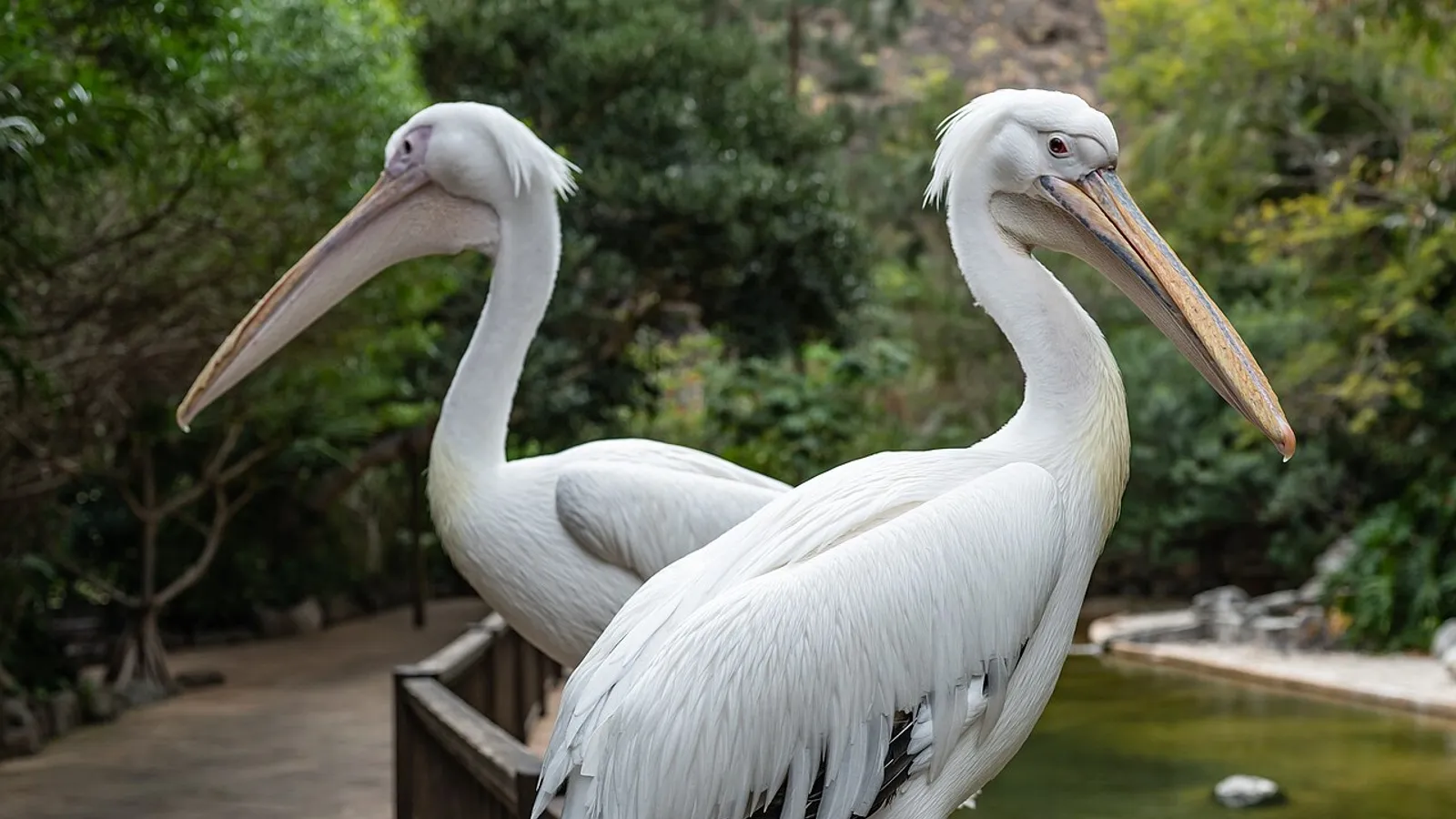
— Where the name comes from
Pelecanus is from the Greek pélekys, the axe, perhaps for the shape of the bill. Onocrotalus, oddly, means “with the cry of an ass”, from ónos, donkey, and krótalon, castanet: the bird’s harsh call. The huge bill, with its skin pouch, is one of the most recognisable fishing tools in the winged world.
— Facts
- Group
- Birds · Aves
- Order
- Pelicans and allies
- Habitat
- Shallow lakes, lagoons, deltas, marshes
- Range
- South-eastern Europe, Africa, western Asia
- Size
- 140–180 cm, wingspan 226–360 cm
- Diet
- Fish eater — fish gathered in the bill pouch
- Lifespan
- 15–25 years
— Characteristics
- 01
The throat pouch holds up to 13 litres of water: a living fishing net.
- 02
It fishes in groups, forming a half-circle that drives the fish towards the shore.
- 03
For all its bulk it soars elegantly on thermals.
— What sets it apart
The pelican does not use its pouch to store fish, as the belief goes, but as an instant trawl net: it opens it under water, takes in fish and liquid together, then contracts the throat to push out as much as thirteen litres of water while keeping only the catch. In the Middle Ages, by contrast, the legend spread that it tore open its own breast to feed its young on its blood, and for that it became, in Christian art, a symbol of sacrifice.
