
Little brown bat
Myotis lucifugus
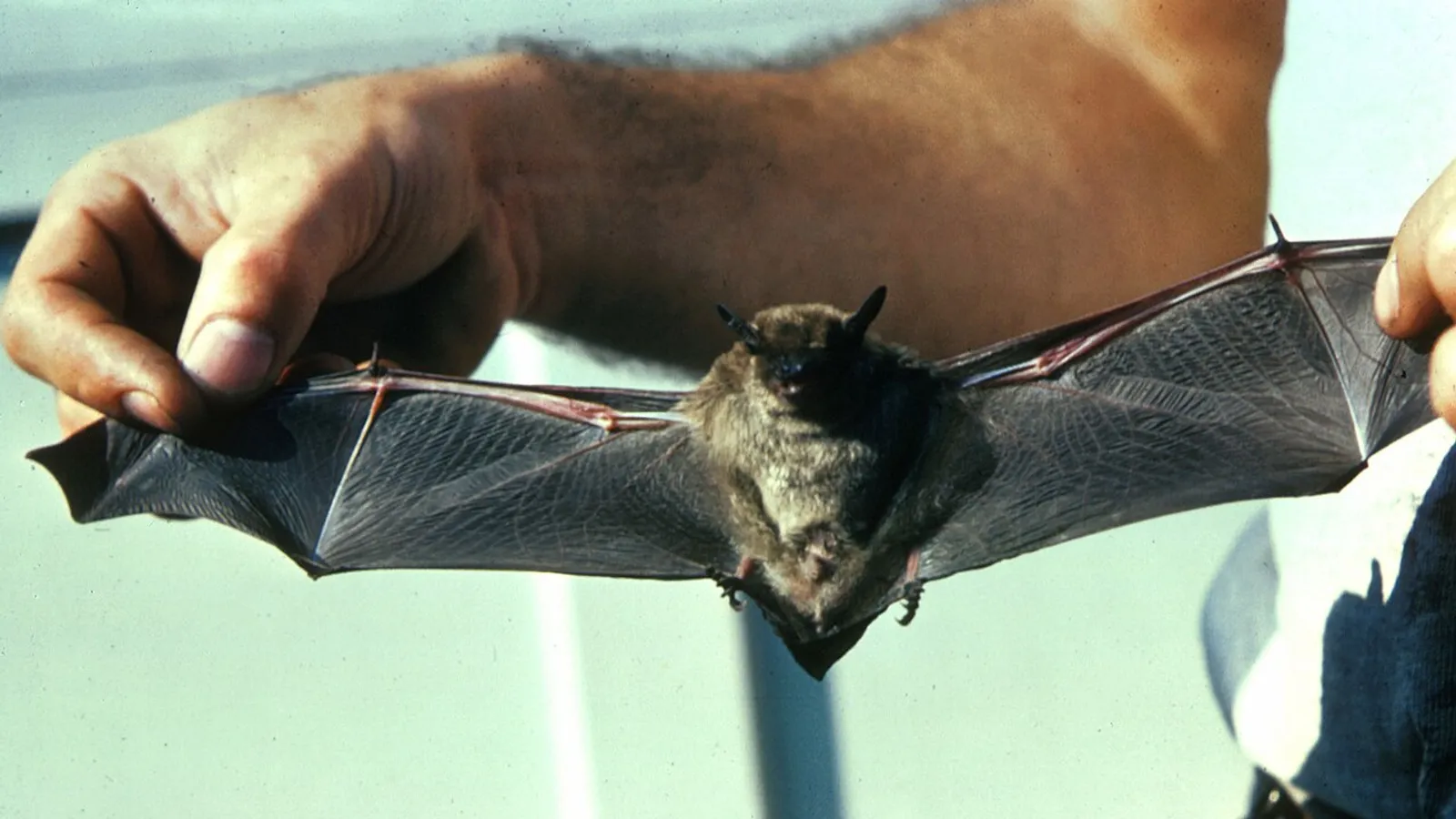
— Where the name comes from
Lucifugus is “light-fleeing”, from the Latin lux and fugere — the same construction as “lucifugous”, an adjective used of insects that flee the lamp. It is a name that describes a behaviour rather than an anatomical feature, and for a species that until twenty years ago was the most abundant mammal in North America it has become sadly apt: today it hides from us as well.
— Facts
- Group
- Mammals · Mammalia
- Order
- Bats
- Habitat
- Attics, barns, caves; hunting over ponds, clearings and streetlights
- Range
- North America, from Alaska to northern Mexico
- Size
- 4.1–5.4 cm of body, 25 cm wingspan, 5–14 g
- Diet
- Insectivore — mosquitoes, midges, moths
- Lifespan
- Up to 34 years
— Characteristics
- 01
It can catch over a thousand insects in an hour of hunting.
- 02
It was the commonest bat in North America until 2006.
- 03
White-nose syndrome has killed over 90% of them across vast regions.
— What sets it apart
In 2006, in a cave near Albany, somebody photographed bats with a white fuzz on their muzzles. It was Pseudogymnoascus destructans, a European fungus arrived by accident that grows on the skin of hibernating animals and wakes them repeatedly, making them burn their fat reserves months before spring. They starve in their sleep. In fifteen years it has killed millions and carried the continent’s commonest species onto the endangered list: one of the fastest wildlife collapses ever documented.
