
Bechstein's bat
Myotis bechsteinii
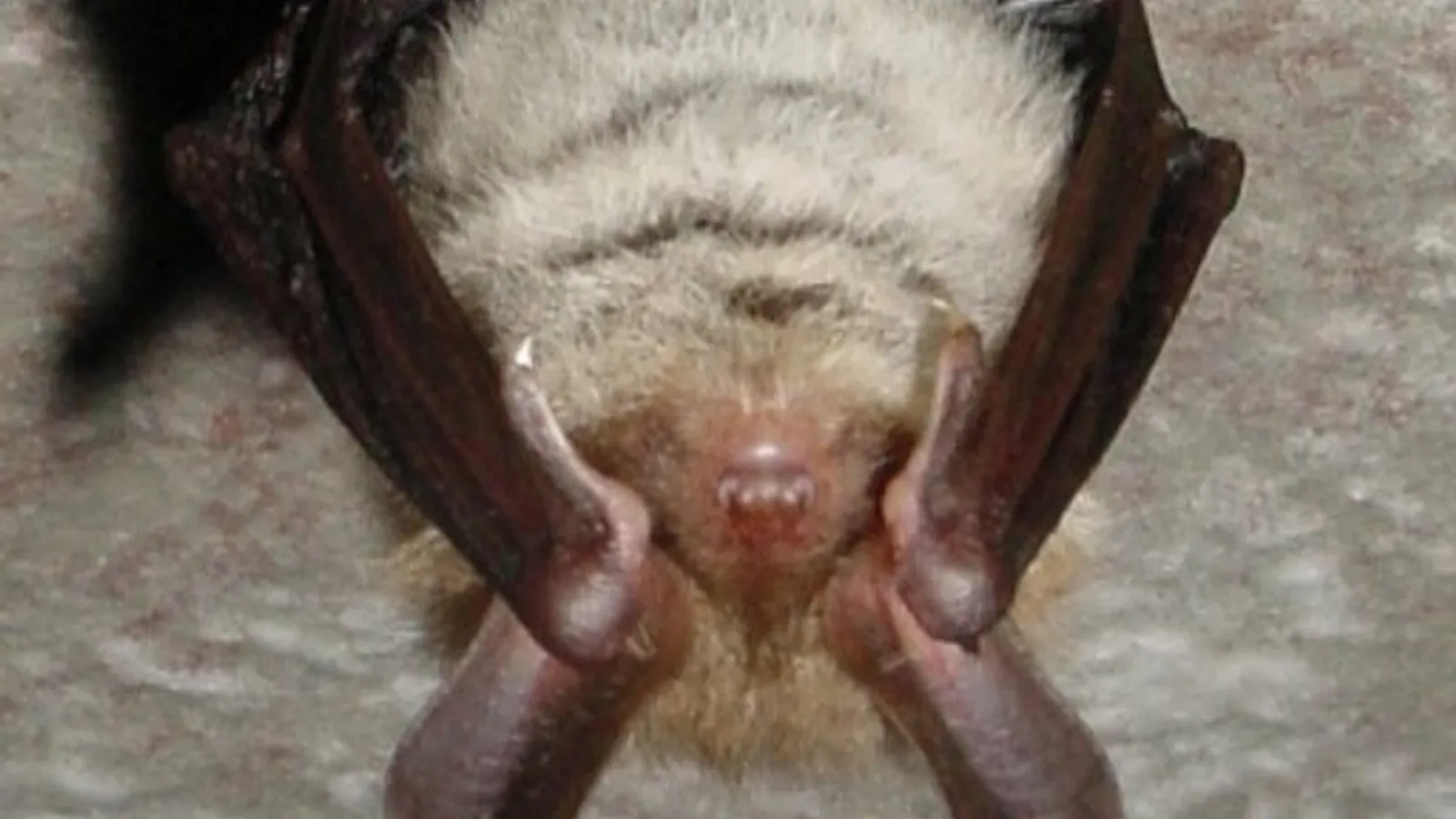
— Where the name comes from
Bechsteinii recalls Johann Matthäus Bechstein, a German naturalist and forester at the turn of the 19th century, among the first in Europe to argue that insect-eating birds should be protected because they were useful to woodland — an idea that then seemed eccentric. It is fitting that his name belongs to a species that cannot live outside mature forest.
— Facts
- Group
- Mammals · Mammalia
- Order
- Bats
- Habitat
- Mature deciduous woodland with many hollow trees; it rarely leaves the wood
- Range
- Europe, from Spain to the Caucasus; rare and local everywhere
- Size
- 4.5–5.5 cm of body, 28 cm wingspan, 7–13 g
- Diet
- Insectivore — insects picked directly off leaves and trunks
- Lifespan
- Up to 21 years
— Characteristics
- 01
It has very long ears, second in Europe only to the long-eared bats’.
- 02
The females return all their lives to the wood where they were born.
- 03
It depends on old hollow trees: in coppiced woodland it disappears.
— What sets it apart
It is the bat that never leaves home. The females are extremely faithful to their natal site — they return every year to give birth in the same wood where they were born, often in the same trees — and hardly mix with neighbouring colonies. It follows that populations are genetically isolated and that an emptied wood is not recolonised of its own accord, even if there is a full one two kilometres away. Conserving this species is not done by protecting the animal but the individual hollow trees, one by one.
