
Rock dove
Columba livia
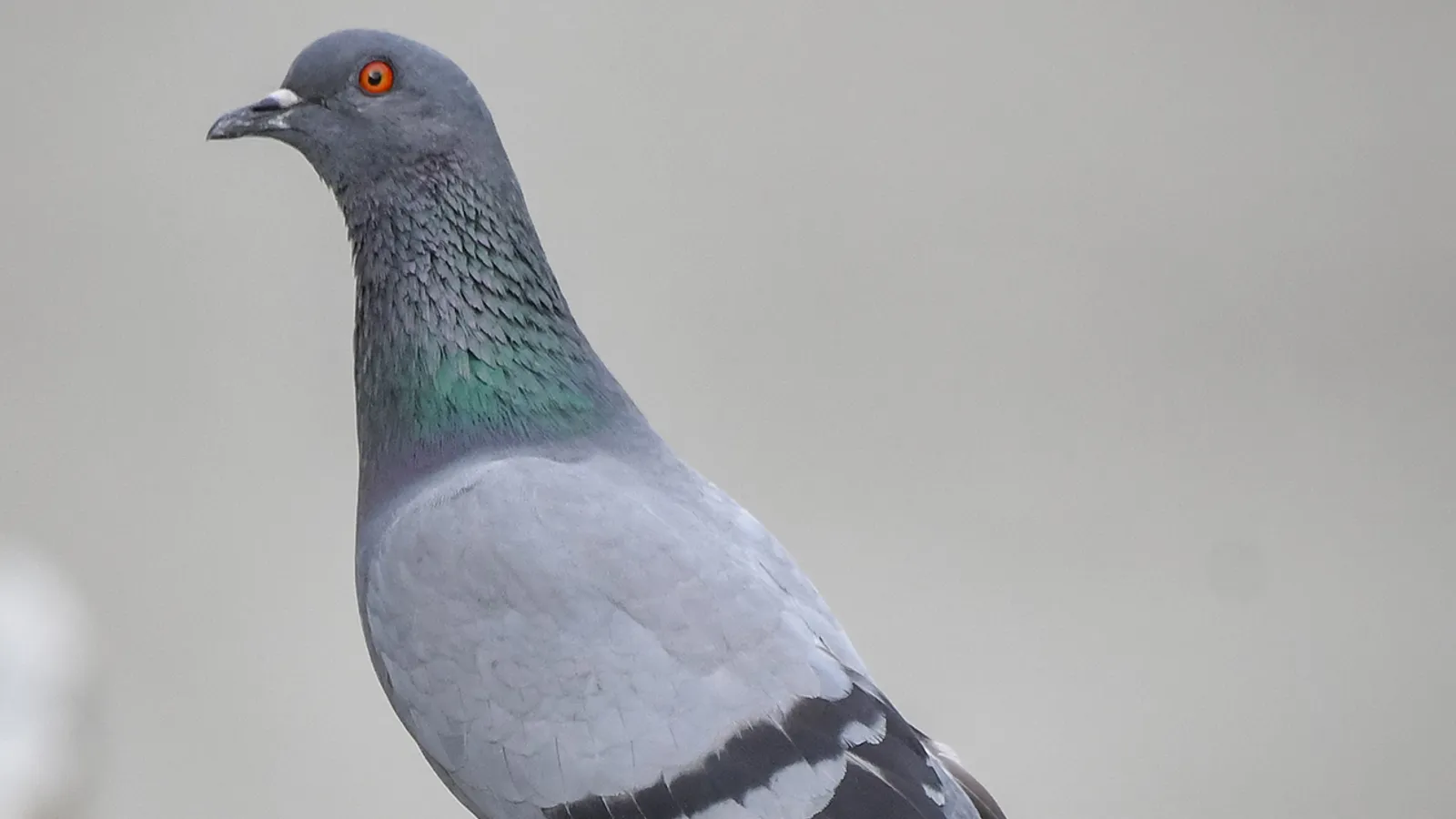
— Where the name comes from
Columba probably comes from the Greek kólymbos, the diver, for the way it drops in a plunge during courtship. Livia is the Latin lividus, the blue-grey of a bruise. The city pigeon is not a species of its own: it is this one, escaped from the dovecotes, which swapped cliffs for cornices and stayed.
— Facts
- Group
- Birds · Aves
- Order
- Pigeons and doves
- Habitat
- Sea and inland cliffs in the wild; cities, bridges and silos everywhere
- Range
- Native to Europe, North Africa and Asia; now worldwide
- Size
- 29–37 cm, wingspan 62–72 cm, 240–380 g
- Diet
- Seeds, grain, scraps, crumbs
- Lifespan
- 6 years in the wild, over 15 in captivity
— Characteristics
- 01
Both parents feed the young on a secretion produced in the crop.
- 02
It finds its way home from hundreds of kilometres, even under cloud.
- 03
It drinks by dipping its bill and sucking, instead of tipping its head back.
— What sets it apart
Darwin opens On the Origin of Species with pigeons. He bred them himself, joined two London fanciers’ clubs and studied their grotesque breeds — pouters, fantails, tumblers — because they let him make a point: from one wild animal, this one, human selection had in a few centuries produced forms so different that an ornithologist would have put them in separate genera. If a breeder could do that in two hundred years, he argued, nature could do it in a million.
