
Common wood pigeon
Columba palumbus
— Where the name comes from
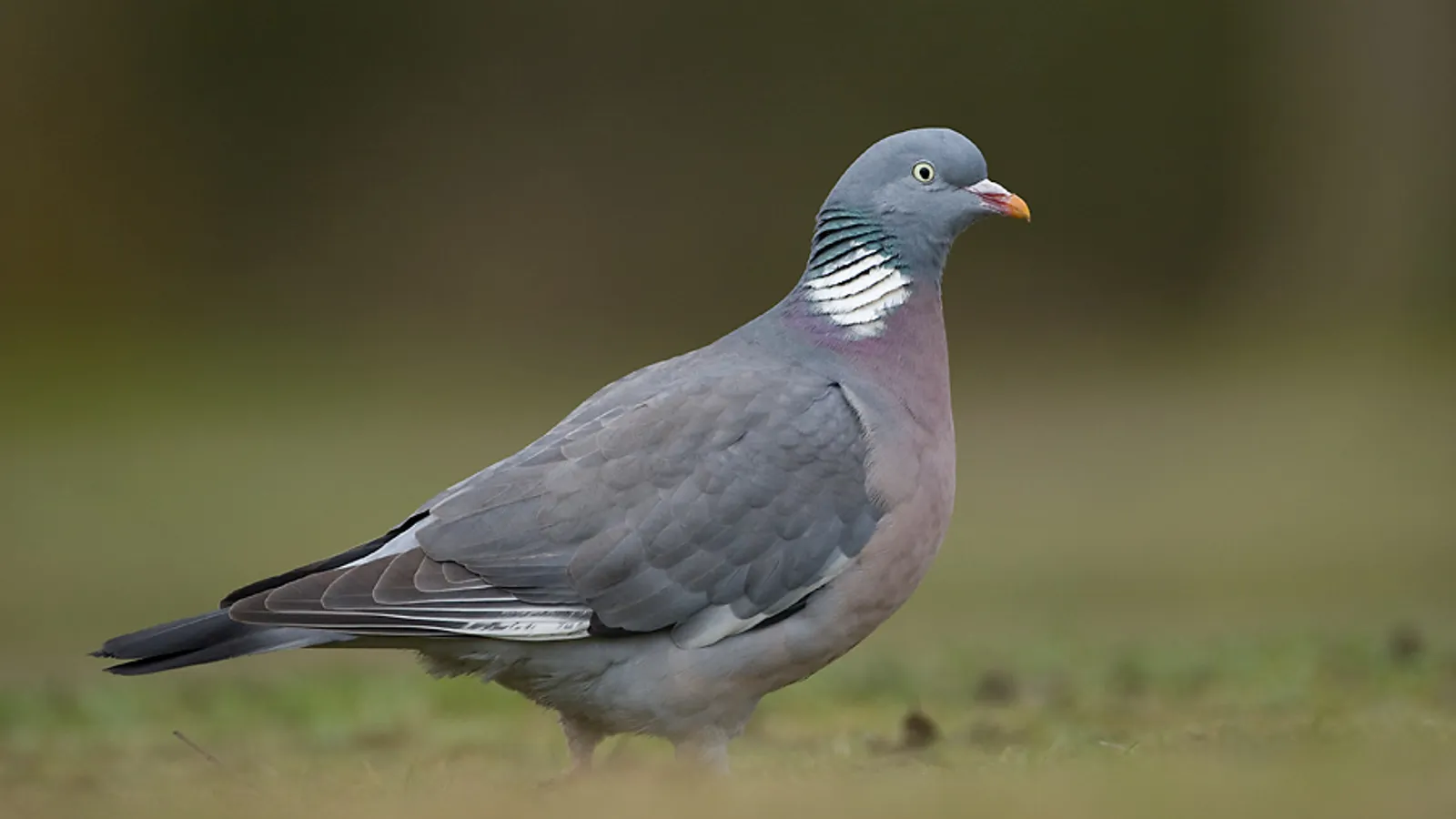
Palumbus was the Latin for the pigeon of the woods, distinct from the columba of the cliffs: the language of Rome already had two words for two species we now keep in the same genus. The Italian name is an augmentative of colombo, and for once it is deserved — it is the largest European pigeon, and on a stubble field the difference is plain.
— Facts
- Group
- Birds · Aves
- Order
- Pigeons and doves
- Habitat
- Woodland, arable farmland, town parks, tree lines
- Range
- Europe, North Africa, western Asia
- Size
- 38–44 cm, wingspan 68–80 cm, 460–570 g
- Diet
- Acorns, beech mast, seeds, shoots, crops
- Lifespan
- 5 years in the wild
— Characteristics
- 01
It has a white neck patch that the young lack.
- 02
Taking off, it claps its wings together with a sharp crack.
- 03
The nest is a platform of twigs so thin the eggs show through from below.
— What sets it apart
It produces milk. In the crop of both parents, male and female, the wall thickens and sloughs off into cells rich in fat and protein which are regurgitated to the young: it is called crop milk, it holds more protein than cow’s milk and carries immune factors, and its production is governed by prolactin, the same hormone that runs lactation in mammals. Among all the birds in the world only pigeons, flamingos and male emperor penguins do it.
