
European turtle dove
Streptopelia turtur
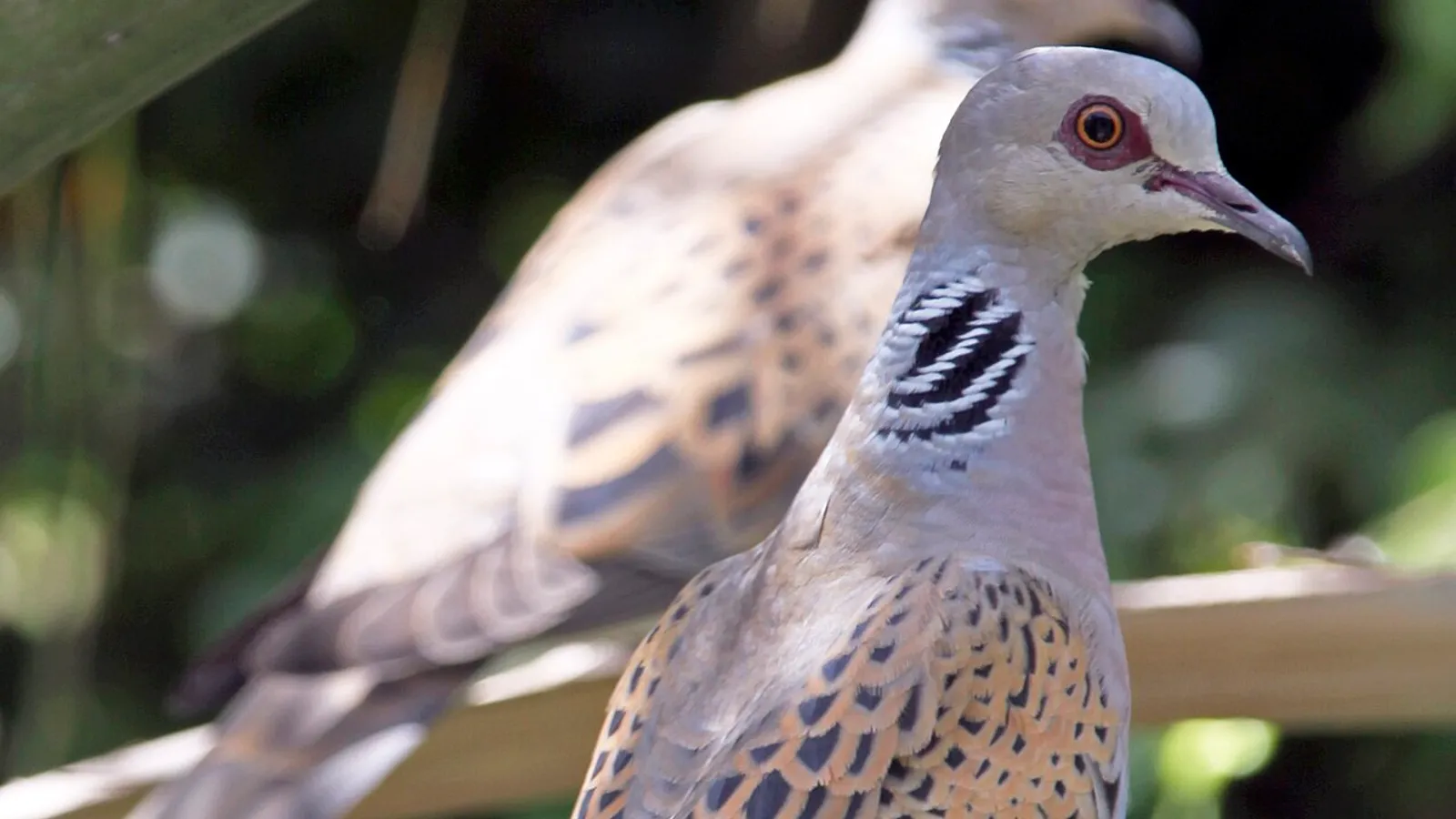
— Where the name comes from
Turtur is pure sound: the Romans wrote down as best they could the hoarse, subdued purring of this bird, “tur-tur”, and from it come the Italian tortora, the French tourterelle and the English turtle dove — which has nothing whatever to do with turtles, though in English that is now impossible to explain. Streptopelia is “collared dove”, from streptós and péleia.
— Facts
- Group
- Birds · Aves
- Order
- Pigeons and doves
- Habitat
- Copses, hedges, olive groves, waste ground with weed seeds
- Range
- Europe, North Africa and western Asia; winters in the Sahel
- Size
- 26–28 cm, wingspan 47–53 cm, 130–180 g
- Diet
- Seeds of wild herbs, grain, small fruit
- Lifespan
- 4 years in the wild
— Characteristics
- 01
It has a black and white striped patch on each side of the neck.
- 02
It is the only entirely migratory European pigeon.
- 03
The call is a soft purring heard from the tree lines in summer.
— What sets it apart
It is the bird of the Bible and of weddings, and in forty years nearly eighty per cent of it has vanished. There is no single cause: the weeds it took its seeds from were cleared out of the fields, and along the migration route it was shot in millions. In 2021 the countries of the western flyway suspended hunting in a coordinated way, and in the seasons that followed the numbers began to climb again: one of the few recent cases in which a decision taken in a room showed up immediately in the sky.
