Nicobar pigeon
Caloenas nicobarica
— Where the name comes from
Caloenas joins the Greek kalós, “beautiful”, and oinás, an ancient name for the wild pigeon: “beautiful pigeon”. Nicobarica refers to the Nicobar Islands, in the Indian Ocean, where it was first described.
— Facts
- Group
- Birds · Aves
- Order
- Pigeons and doves
- Habitat
- Wooded islets, mangroves and coastal forest
- Range
- From the Andaman and Nicobar Islands to Indonesia, the Philippines, New Guinea and the Solomons
- Size
- 40 cm, 460–600 g
- Diet
- Seeds, fallen fruit, some invertebrates
- Lifespan
- 10–15 years
— Characteristics
- 01
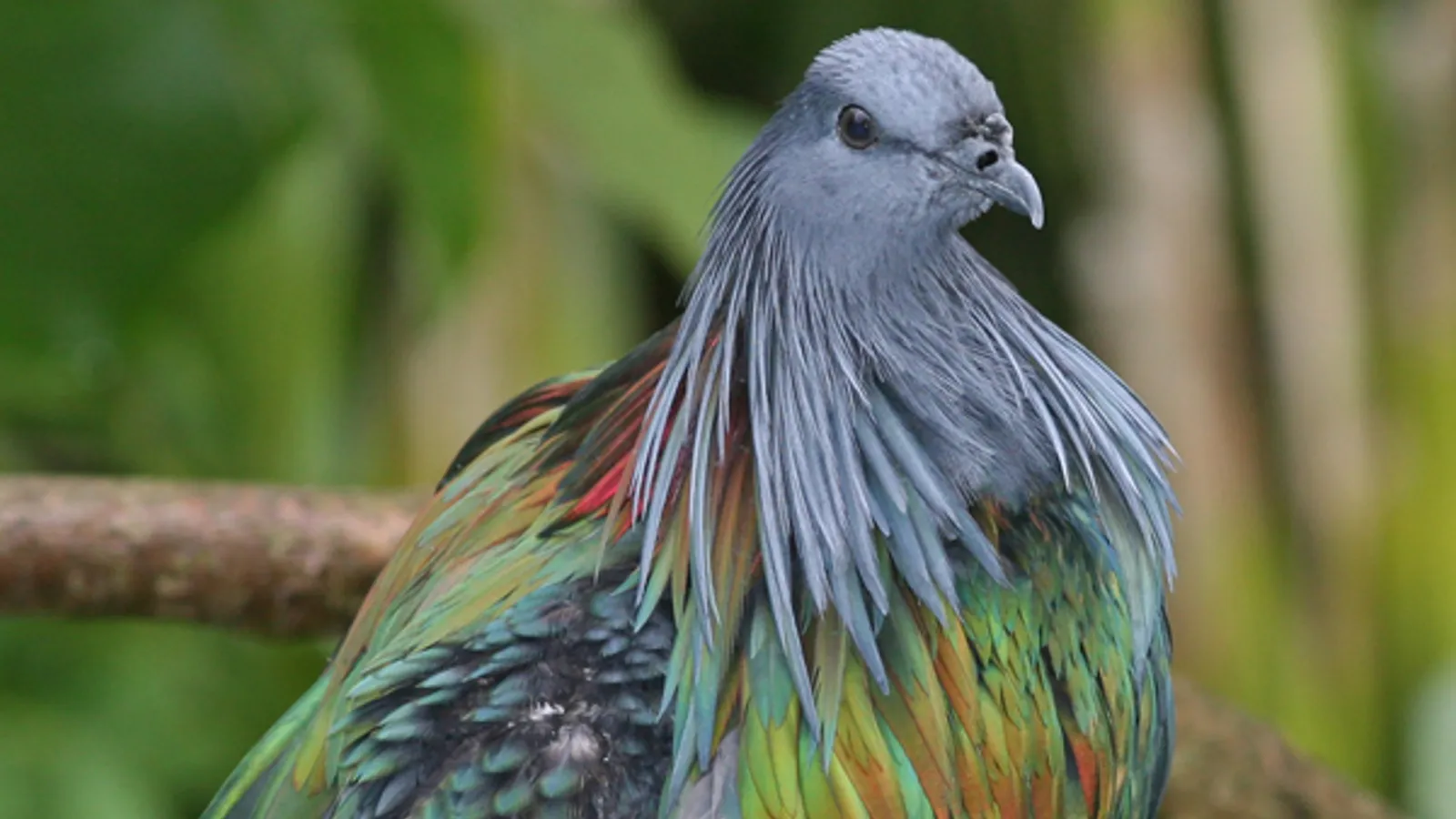
It has long, metallic neck feathers of green, blue and copper.
- 02
Its tail is short and white, visible from far away.
- 03
It flies from island to island in flocks, often by night.
— What sets it apart
It is the closest living relative of the dodo. In 2002 a team of researchers managed to extract DNA from a dodo specimen kept in Oxford and compared it with that of dozens of pigeons: the dodo and the Rodrigues solitaire, both extinct, sit right next to the Nicobar pigeon. Its way of life helps us imagine what happened: the dodo’s ancestors were probably pigeons able to hop from island to island like this one, and once they reached Mauritius, with no predators, they stopped flying.