Common pheasant
Phasianus colchicus
— Where the name comes from
The name says twice where it comes from. Phasianus is the bird of the Phasis, the river of Colchis, today’s Georgia, and colchicus means “of Colchis”: the land of the Golden Fleece, and legend had it that the Argonauts brought the first pheasants back to Greece. From the Latin phasianus come the Italian fagiano, the French faisan and the English pheasant.
— Facts
- Group
- Birds · Aves
- Order
- Gamebirds
- Habitat
- Woodland edges, farmland, hedgerows, reedbeds
- Range
- Native from the Caucasus to China and Korea; introduced to Europe, North America, New Zealand
- Size
- Male 60–89 cm including tail, 0.9–1.4 kg; female smaller
- Diet
- Seeds, grain, berries, insects
- Lifespan
- 1–3 years in the wild
— Characteristics
- 01
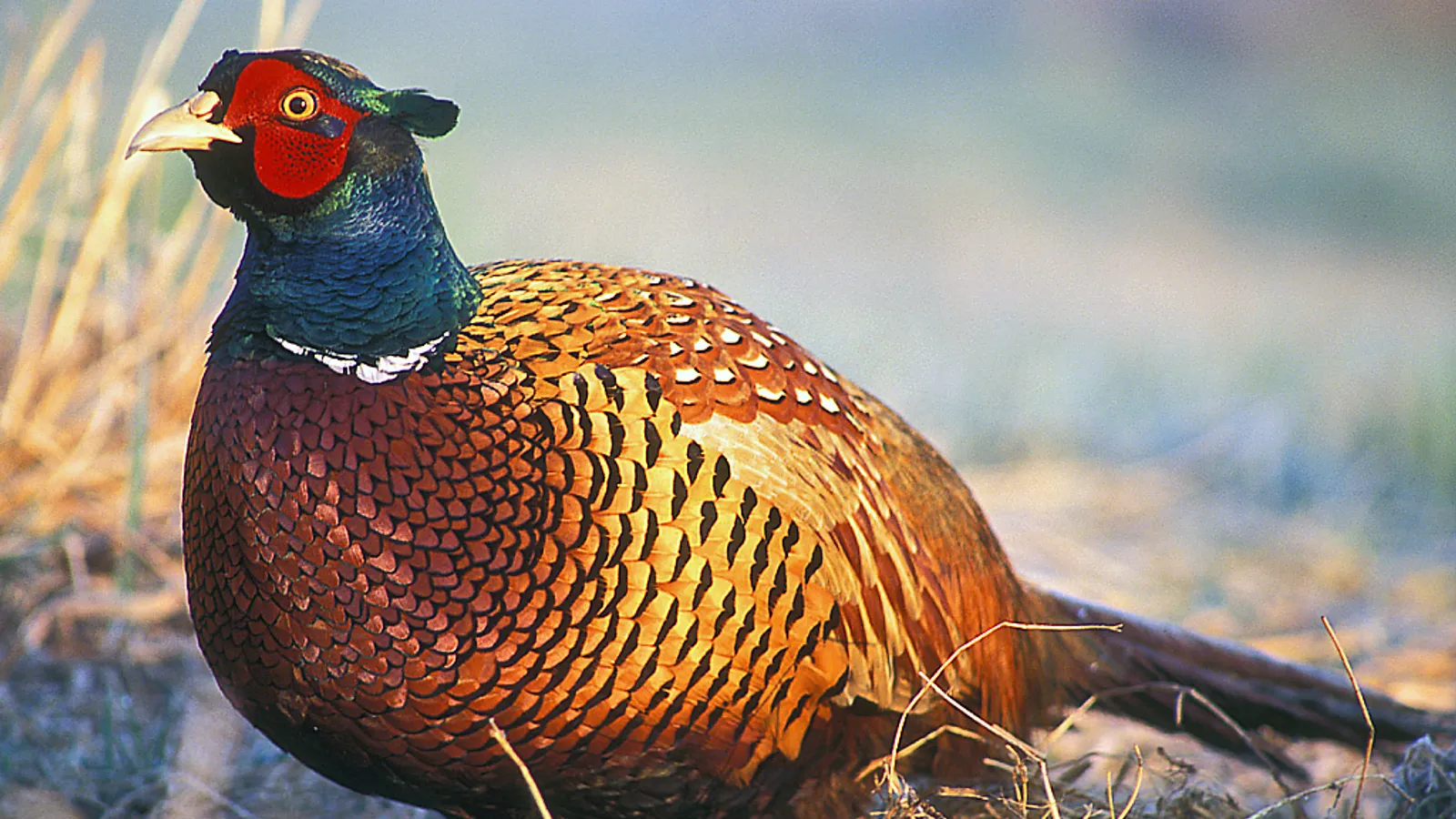
The male has a bare red face and a long barred tail.
- 02
It takes off almost vertically, with a sudden whirr of wings.
- 03
In spring a male guards a group of females.
— What sets it apart
In Europe it is an animal brought by people, and it still is. The Romans spread it, then medieval nobles for hunting, and today in many countries the wild populations are propped up by pheasants reared and released every year: in the United Kingdom alone tens of millions are let go each season, so many that by late summer their combined weight exceeds that of all the country’s wild breeding birds put together. The pheasant crossing a country road was almost always born in a pen.