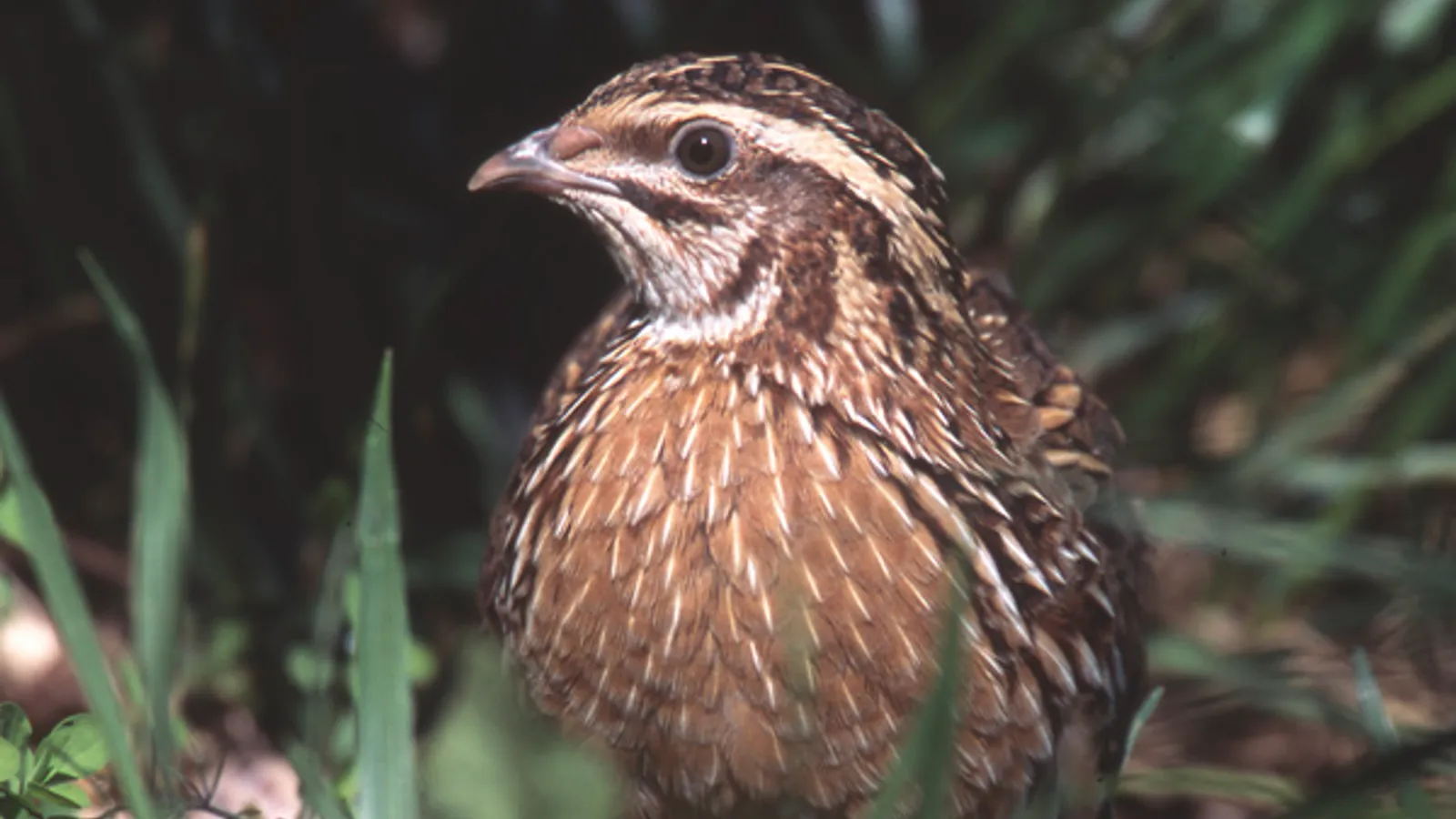
Common quail
Coturnix coturnix
— Where the name comes from
Coturnix was the Latin name of the quail, repeated twice in Linnaeus’s manner for the most typical species of a genus. The Italian quaglia comes instead from the medieval Latin quaccula, a word of imitative origin which, like the English quail and the French caille, echoes its call in some way.
— Facts
- Group
- Birds · Aves
- Order
- Gamebirds
- Habitat
- Grassland, cereal and hay fields, pasture
- Range
- Europe, western Asia and Africa; European birds winter south of the Sahara
- Size
- 16–18 cm, 70–140 g
- Diet
- Seeds, shoots, insects
- Lifespan
- 2–3 years
— Characteristics
- 01
It is the only European gamebird that migrates all the way to Africa.
- 02
The male sings a three-note call that is heard far more often than he is seen.
- 03
When in danger it prefers to run through the grass rather than fly.
— What sets it apart
It can poison whoever eats it. The condition has a name, coturnism, and has been described since antiquity: in the Book of Numbers the Israelites in the desert feast on a flock of quail and are struck by a plague, and Greek and Roman physicians noted that passing quail made people ill in certain seasons. Today we know it causes a breakdown of muscle, and that it happens above all with birds caught during the spring migration; the substance responsible is still uncertain, and suspicion falls on the seeds of certain plants the quail eat without harm.