
Black woodpecker
Dryocopus martius
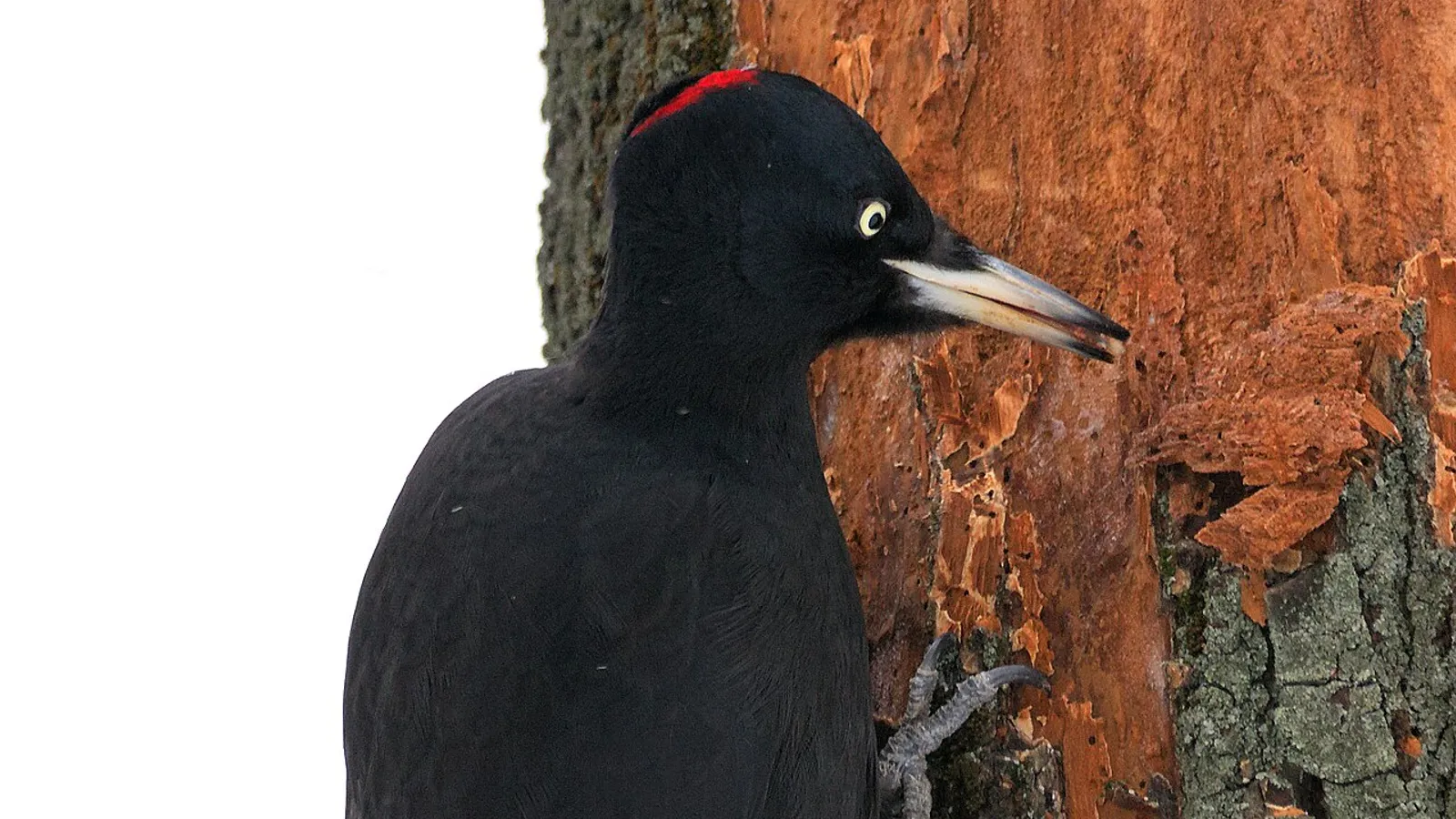
— Where the name comes from
Dryocopus is “tree-cutter”, from drŷs, the oak, and kóptō, to strike. Martius means “of Mars”, and it picks up the same old association between woodpeckers and the god of war that lies inside the name Picus: a red cap on an entirely black body has been read for centuries as a helmet.
— Facts
- Group
- Birds · Aves
- Order
- Woodpeckers and toucans
- Habitat
- Mature beech and conifer forest with large trees
- Range
- Europe and northern Asia as far as Japan
- Size
- 45–57 cm, wingspan 64–84 cm, 250–400 g
- Diet
- Carpenter ants, larvae of wood-boring beetles
- Lifespan
- 14 years in the wild
— Characteristics
- 01
It is the largest woodpecker in Europe, the size of a crow.
- 02
It digs oval nest holes, not round, in beech trunks clear of low branches.
- 03
The drumming carries two kilometres and lasts up to three seconds.
— What sets it apart
Every year it digs a new cavity, and last year’s becomes somebody else’s house. Tengmalm’s owl, the nuthatch, the goldeneye, dormice, forest bats, swarms of wild bees and pine martens all depend on its holes: European forest inventories count dozens of species that would have nowhere to live without it. Ecologists call it a keystone species, which means it is possible to lose a whole wood full of animals by removing a single bird.
