
European robin
Erithacus rubecula
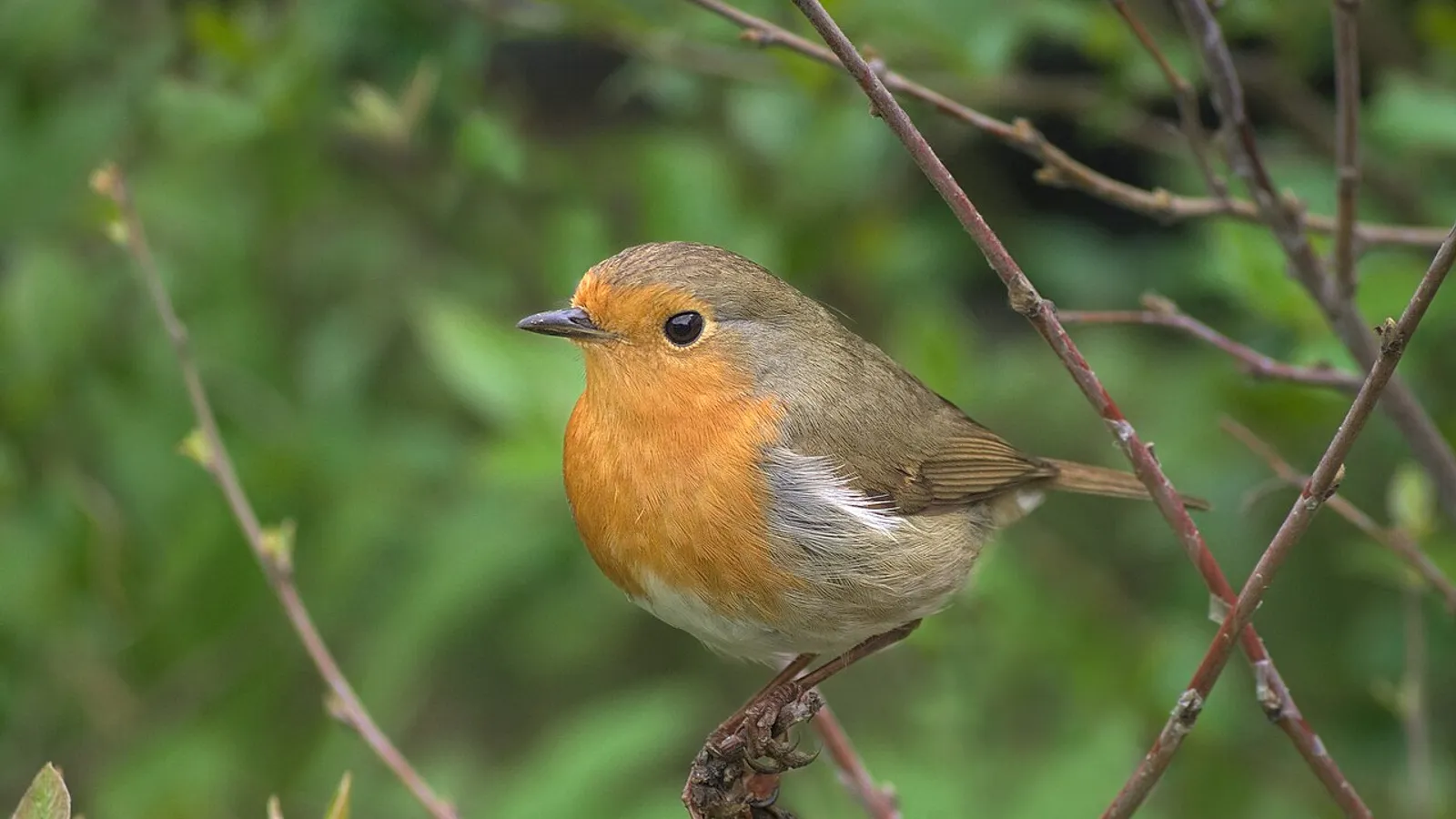
— Where the name comes from
The Italian name simply describes the breast. The Latin rubecula is a diminutive, “little red one”. Erithacus is a bird mentioned by Aristotle, of uncertain identity. Curiously the breast is not red but orange: the word “orange” did not exist in English, or in many European languages, before the fruit arrived.
— Facts
- Group
- Birds · Aves
- Order
- Passerines
- Habitat
- Undergrowth, hedgerows, gardens
- Range
- Europe, North Africa, western Asia
- Size
- 12.5–14 cm, 16–22 g
- Diet
- Insectivore, and berries in winter
- Lifespan
- 2 years on average, with records past 12
— Characteristics
- 01
Territorial all year round, even between birds of the same sex.
- 02
Sings at night too, under the artificial light of cities.
- 03
Follows large animals that turn the soil — once wild boar, now garden spades.
— What sets it apart
The robin migrates at night, navigating by the Earth’s magnetic field, and appears to do it with its eyes. A protein in the retina, cryptochrome, is thought to enter a quantum state sensitive to the tilt of the field lines, laying a compass over the visual scene. If that is right, the robin sees north — and magnetoreception is the first quantum effect observed in biology.
