
White stork
Ciconia ciconia
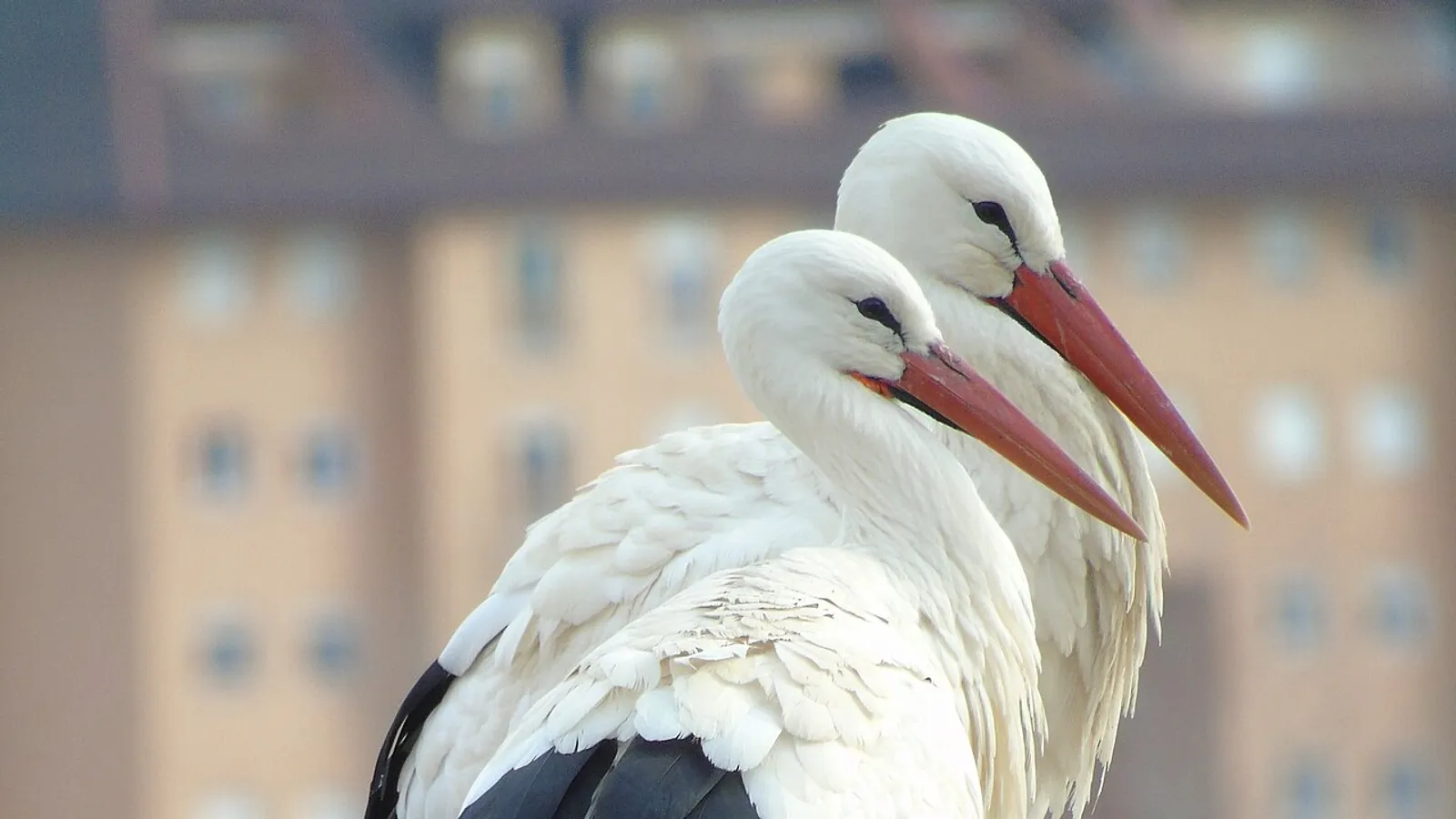
— Where the name comes from
From the Latin ciconia, itself perhaps onomatopoeic: the stork does not sing, it claps its bill in a rhythmic clatter. The name is doubled in the binomial, following Linnaeus’s habit with type species.
— Facts
- Group
- Birds · Aves
- Order
- Storks
- Habitat
- Wet grassland, rice fields, pasture
- Range
- Europe and western Asia, wintering in Africa
- Size
- 100–115 cm, 155–215 cm wingspan
- Diet
- Carnivore — frogs, insects, rodents
- Lifespan
- 25–30 years
— Characteristics
- 01
It lacks developed syringeal muscles: it communicates by clattering its bill.
- 02
Migrates on thermals, avoiding long sea crossings.
- 03
Nests readily on roofs and bell towers.
— What sets it apart
In 1822, in Germany, a stork was shot down with an 80 cm African spear lodged in its neck — and it had flown thousands of kilometres like that. That Pfeilstorch, the “arrow stork”, was the first material proof that in winter birds do not hibernate in the mud or transform themselves, as was believed: they go to Africa. Migration was demonstrated by an animal that had carried back the weapon of the man who missed it.
