Bluethroat
Luscinia svecica
— Where the name comes from
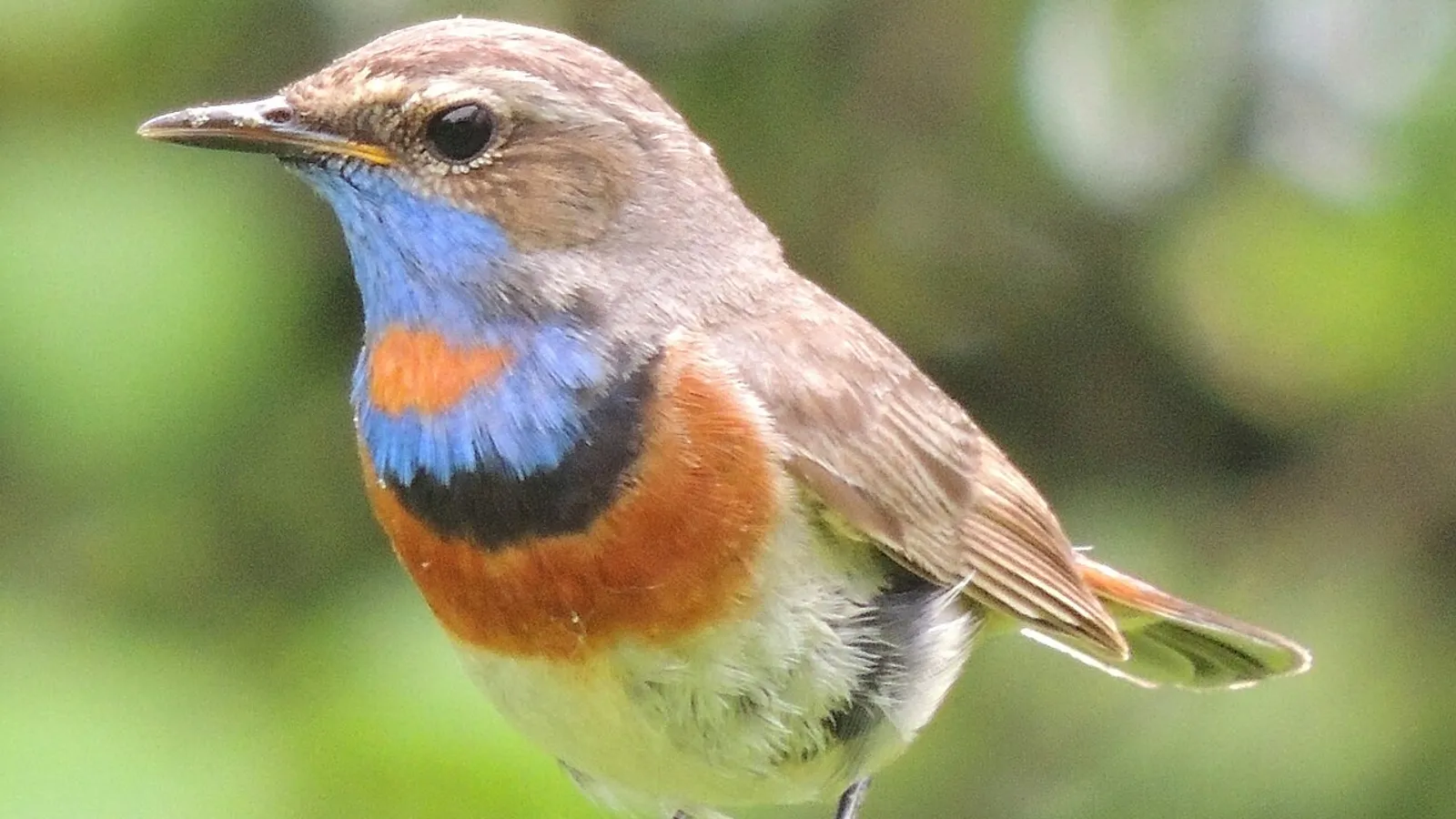
Luscinia is Latin for nightingale, and the bluethroat is a close relative. Svecica means “Swedish”, because Linnaeus described it in Sweden. The Italian name, “blue breast”, refers to the male’s blue throat, which in some populations has a red star in the centre and in others a white one.
— Facts
- Group
- Birds · Aves
- Order
- Passerines
- Habitat
- Damp thickets, tundra willow scrub, the edges of reedbeds
- Range
- Eurasia and western Alaska; winters in North Africa, the Middle East and India
- Size
- 13–14 cm, 15–23 g
- Diet
- Insects, spiders, berries
- Lifespan
- A few years
— Characteristics
- 01
The male has a blue throat edged with black and orange.
- 02
At the base of its tail it shows two rufous patches when it spreads it.
- 03
It is a skilled mimic, weaving other birds’ voices into its song.
— What sets it apart
Its blue is brighter than we can see. The throat feathers also reflect in the ultraviolet, a part of the spectrum birds perceive and we do not. In the 1990s a Scandinavian experiment covered the throats of some males with a cream that absorbs ultraviolet, leaving the visible colour unchanged: the females noticed, and those males did less well. It was one of the first studies to show that birds have ornaments meant for eyes other than ours.