Fieldfare
Turdus pilaris
— Where the name comes from
Turdus is Latin for thrush. Pilaris is the epithet Linnaeus gave it, and its original meaning is uncertain. In English it is the fieldfare, which in Old English meant “traveller of the fields”: it reaches Britain in autumn in large flocks from the north, and spreads over open fields.
— Facts
- Group
- Birds · Aves
- Order
- Passerines
- Habitat
- Birch and conifer woods for breeding; fields, orchards and hedges in winter
- Range
- Breeds in northern Europe and Siberia; winters in western and southern Europe
- Size
- 25 cm, 80–140 g
- Diet
- Earthworms and insects in summer, berries and fallen fruit in winter
- Lifespan
- A few years on average
— Characteristics
- 01
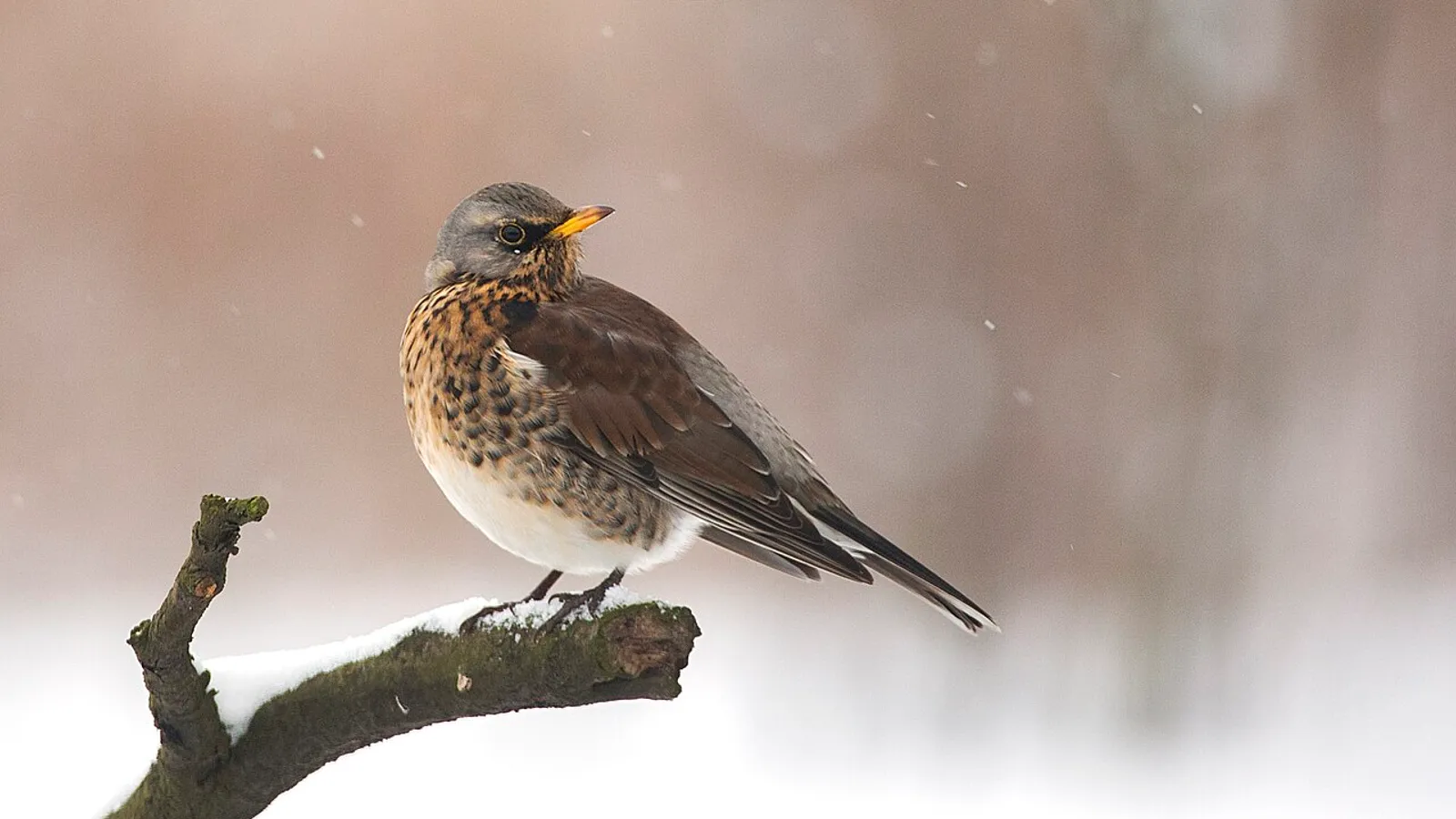
It has a grey head and rump, a chestnut back and a spotted breast.
- 02
In winter it moves about in noisy flocks, often with redwings.
- 03
It nests in loose colonies among the trees.
— What sets it apart
It defends itself by bombing. When a crow, a jay or a bird of prey approaches the colony, the fieldfares rise together, line up above the intruder and drop their droppings on it with surprising aim. It is not merely humiliating: soiled feathers lose their waterproofing and insulation, and a predator hit repeatedly can be in real trouble, so much so that small songbirds nesting near fieldfare colonies suffer less predation.