
West Atlantic trumpetfish
Aulostomus maculatus
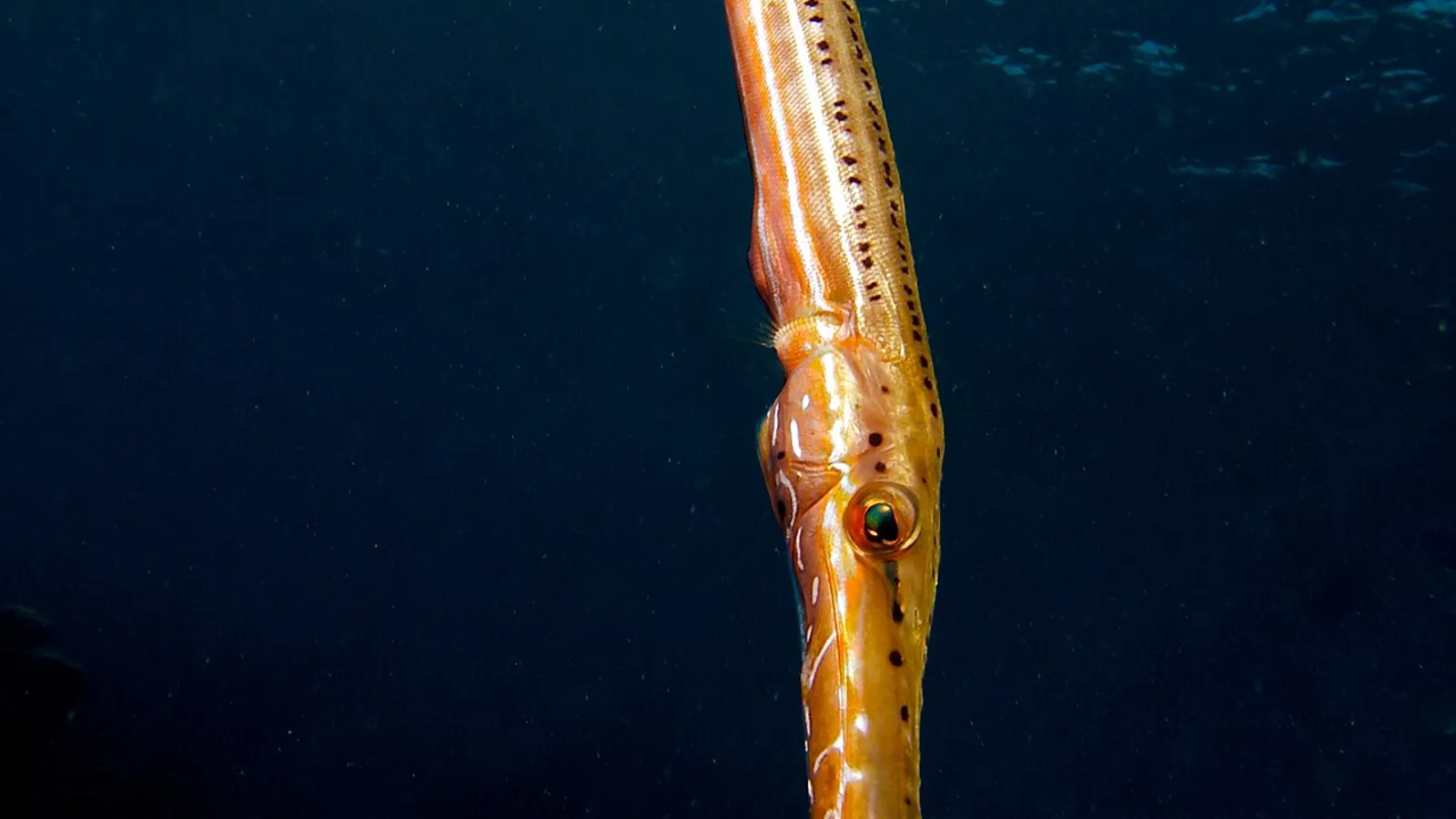
— Where the name comes from
Aulostomus is “flute mouth”, from aulós, the wind instrument, and stóma: the snout is a tube a third of the animal long ending in a tiny mouth that snaps open. Maculatus gives the spots. The Italian name chose a different wind instrument for the same shape.
— Facts
- Group
- Fish · Actinopterygii · Chondrichthyes
- Order
- Pipefishes and seahorses
- Habitat
- Coral reefs and bottoms with gorgonians down to 25 metres
- Range
- The tropical western Atlantic, from Florida to Brazil
- Size
- 60–80 cm, up to 100 cm; 200–500 g
- Diet
- Small fish and shrimp taken by surprise
- Lifespan
- 10 years
— Characteristics
- 01
It hangs head down and vertical among the gorgonians, motionless.
- 02
It changes colour rapidly from brown to bright yellow.
- 03
The mouth expands suddenly and sucks the prey in with the water.
— What sets it apart
It hunts by hiding behind somebody else. It falls in alongside a large, peaceable fish — a parrotfish, a grouper, even a turtle — and swims beside or right above it, keeping to the far side from the prey it has picked out: the victims see a harmless herbivore coming and do not flee, until the tube appears from behind. Ethologists call the tactic shadow stalking; one might say the trumpetfish travels under a false name.
