
Live sharksucker
Echeneis naucrates
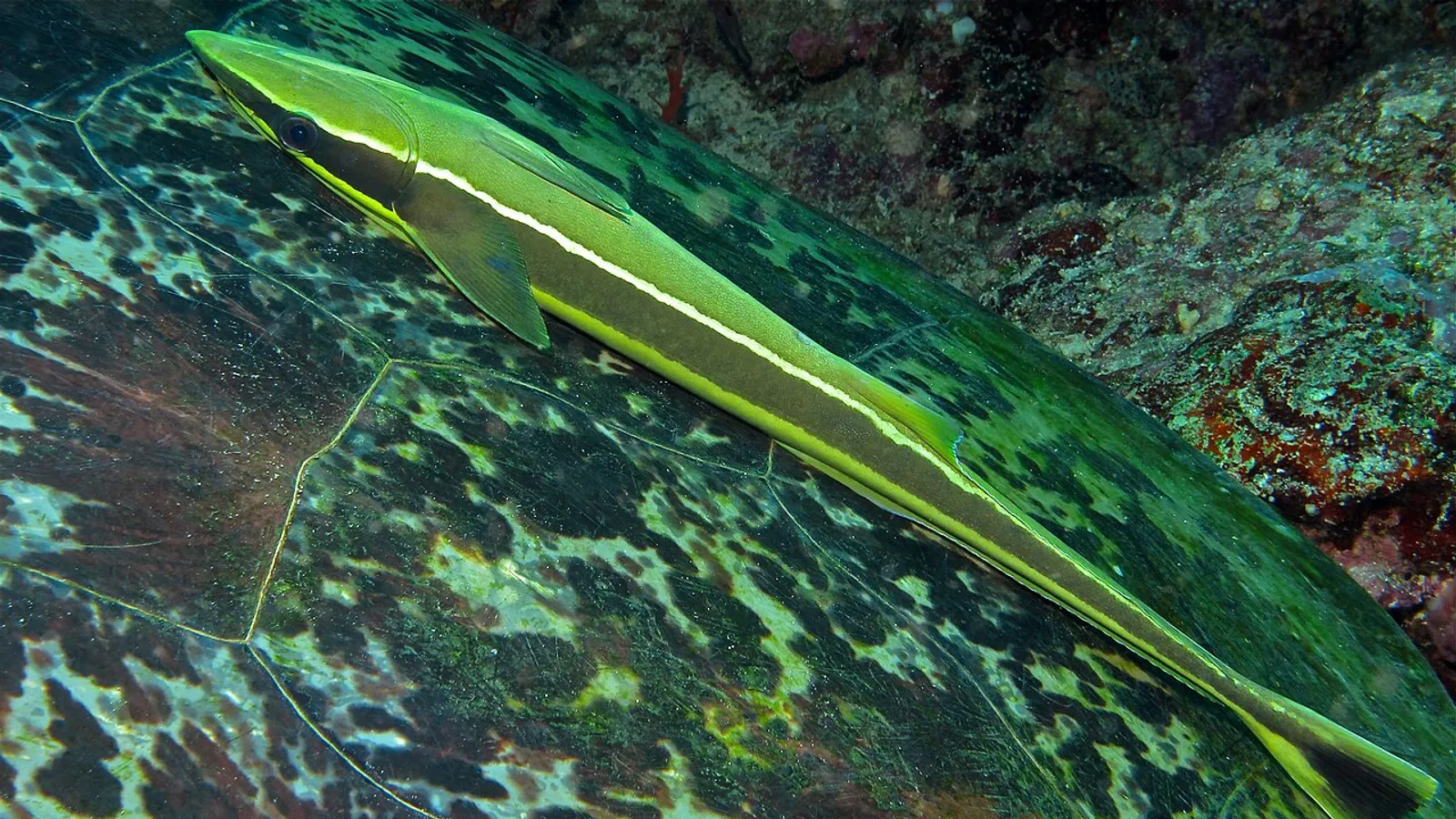
— Where the name comes from
Echeneis is “ship holder”, from échō and naûs, and naucrates is “ship master”: both names come from the ancient conviction that these fish, fastening to a hull, could stop a vessel under way. Remora, in Latin, means literally “delay”, and it is the same word used in Italian for an obstacle.
— Facts
- Group
- Fish · Actinopterygii · Chondrichthyes
- Order
- Perch-likes
- Habitat
- Attached to sharks, rays, turtles, cetaceans and ships
- Range
- Tropical and subtropical seas worldwide
- Size
- 60–90 cm, up to 110 cm; 1–2 kg
- Diet
- Parasites of the host, scraps from its meals, plankton
- Lifespan
- 4 years
— Characteristics
- 01
The adhesive disc on its head is the modified first dorsal fin.
- 02
It detaches and swims freely when it chooses, then fastens on again.
- 03
It also enters sharks’ mouths and gills to eat their parasites.
— What sets it apart
Pliny the Elder relates that at Actium Mark Antony’s flagship was halted because a remora had fastened to the hull, and that this was the reason for the defeat: the idea that a half-kilo fish could hold a quinquereme was shared throughout antiquity and left the word “remora” in our vocabulary. The disc on its head is in fact a dorsal fin turned into a series of movable lamellae, and its adhesion is so efficient that several laboratories have copied it to design grips and surgical patches.
