
Steephead parrotfish
Chlorurus microrhinos
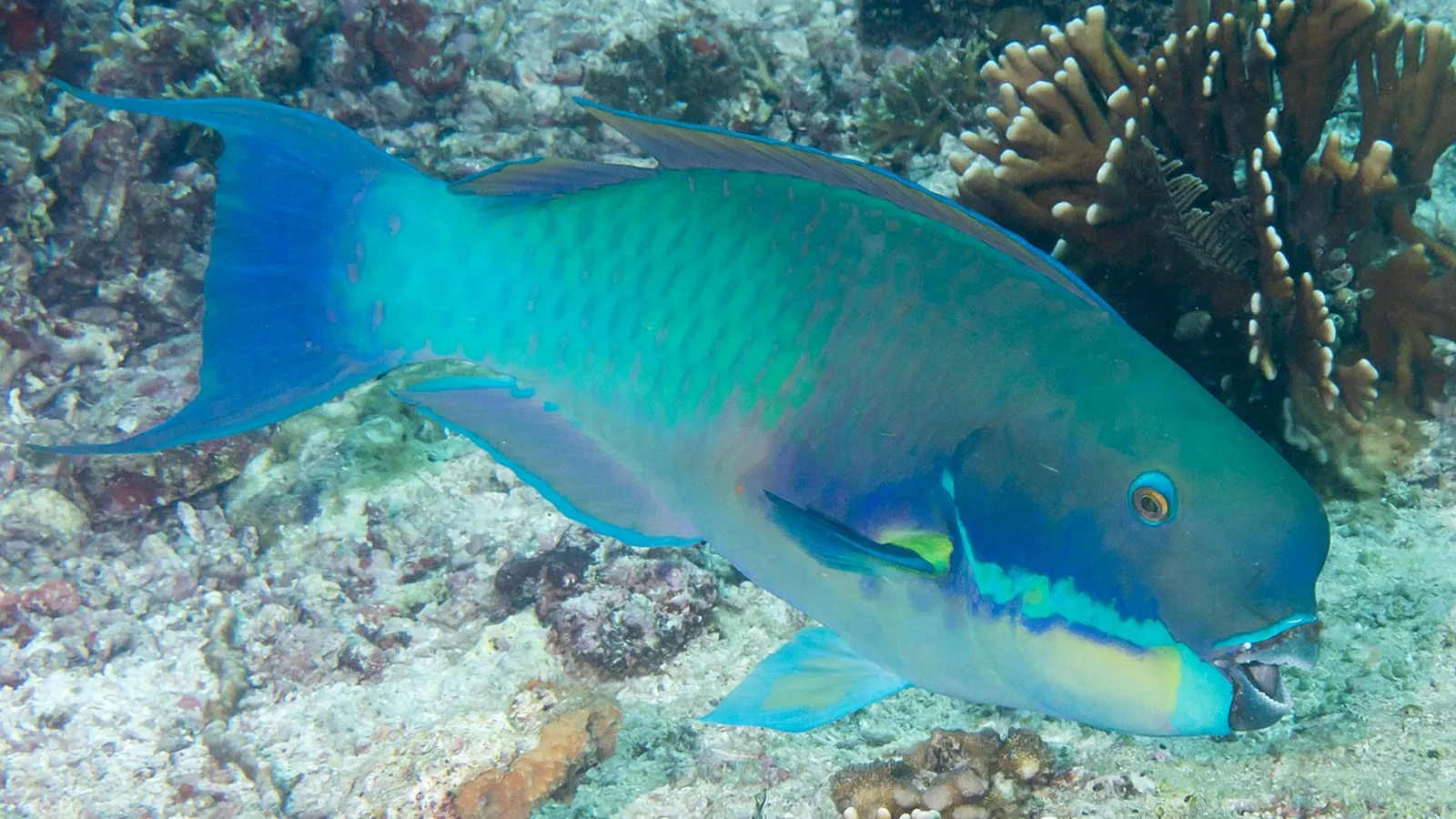
— Where the name comes from
Chlorurus is “green tail”, from chlōrós and ourá; microrhinos means “small-nosed”, for the blunt profile of the head. The common name, in every language, looks at the teeth: they are fused into two cutting plates that protrude from the lips and resemble a parrot’s beak to an uncanny degree.
— Facts
- Group
- Fish · Actinopterygii · Chondrichthyes
- Order
- Perch-likes
- Habitat
- Coral reefs and lagoons down to 30 metres
- Range
- The tropical western Pacific
- Size
- 40–70 cm, 3–5 kg
- Diet
- Algae rasped off the coral, along with the coral itself
- Lifespan
- 15 years
— Characteristics
- 01
It has a second set of jaws in the throat that grinds the swallowed coral.
- 02
At night it secretes a mucus cocoon that wraps it as it sleeps.
- 03
It is born female and the largest become male, changing colour too.
— What sets it apart
The white beaches of the tropics are largely its droppings. Rasping algae off the surface of the coral it swallows the calcareous skeleton, mills it with a pharyngeal grinder and voids it as very fine sand: a single adult can produce several hundred kilos a year, and in the Maldives it has been estimated that most of the sand on some islands has passed through parrotfish. The mucus cocoon it sleeps in, incidentally, serves to hide its scent from night-feeding parasites.
