
Raccoon butterflyfish
Chaetodon lunula
— Where the name comes from
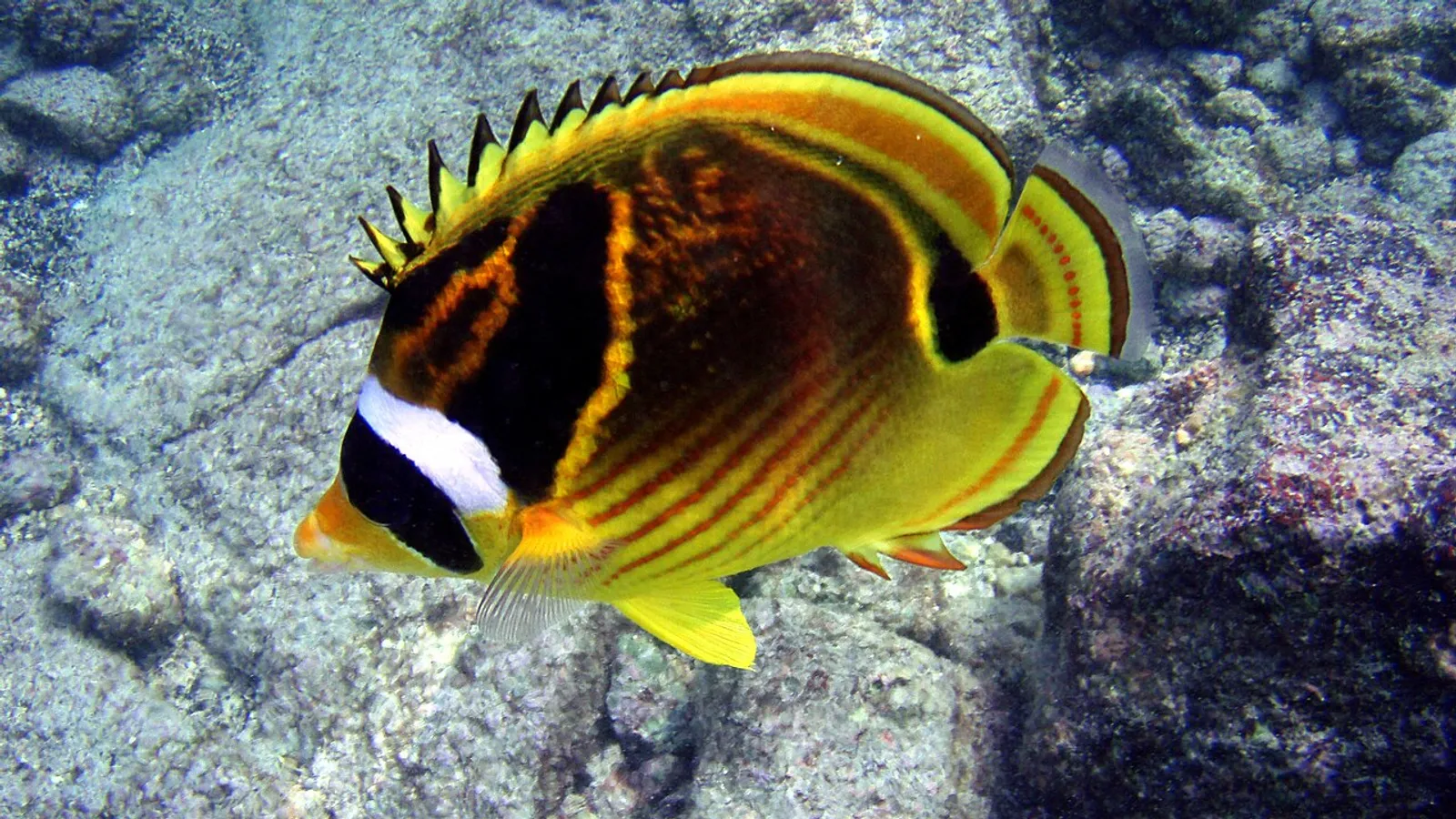
Chaetodon is “bristle tooth”, from chaítē, hair, and odoús: the mouth carries rows of extremely fine teeth like brushes, suited to picking polyps off coral. Lunula, “little moon”, describes the white crescent behind the head. The black mask over the eyes gives the common name.
— Facts
- Group
- Fish · Actinopterygii · Chondrichthyes
- Order
- Perch-likes
- Habitat
- Coral reefs and tide pools down to 30 metres
- Range
- The tropical Indo-Pacific, from the Red Sea to Hawaii
- Size
- 15–20 cm, 100–200 g
- Diet
- Coral polyps, anemones, worms, algae
- Lifespan
- 10 years
— Characteristics
- 01
The black band hides the eye, while a dark spot near the tail fakes another.
- 02
It forms stable pairs that stay together for years.
- 03
The very deep, thin body lets it turn on the spot among coral branches.
— What sets it apart
It hides its head and pretends to have one at the other end. The dark band across the eye makes it hard to place, while the black spot near the tail works as a false eye: the predator aims there and the fish darts the other way. It is the same trick as the butterflies it is named after, arrived at by an entirely independent route. The pairing, on the other hand, is no trick: these fish keep company for years and nearly always swim within centimetres of each other.
