
Ocellaris clownfish
Amphiprion ocellaris
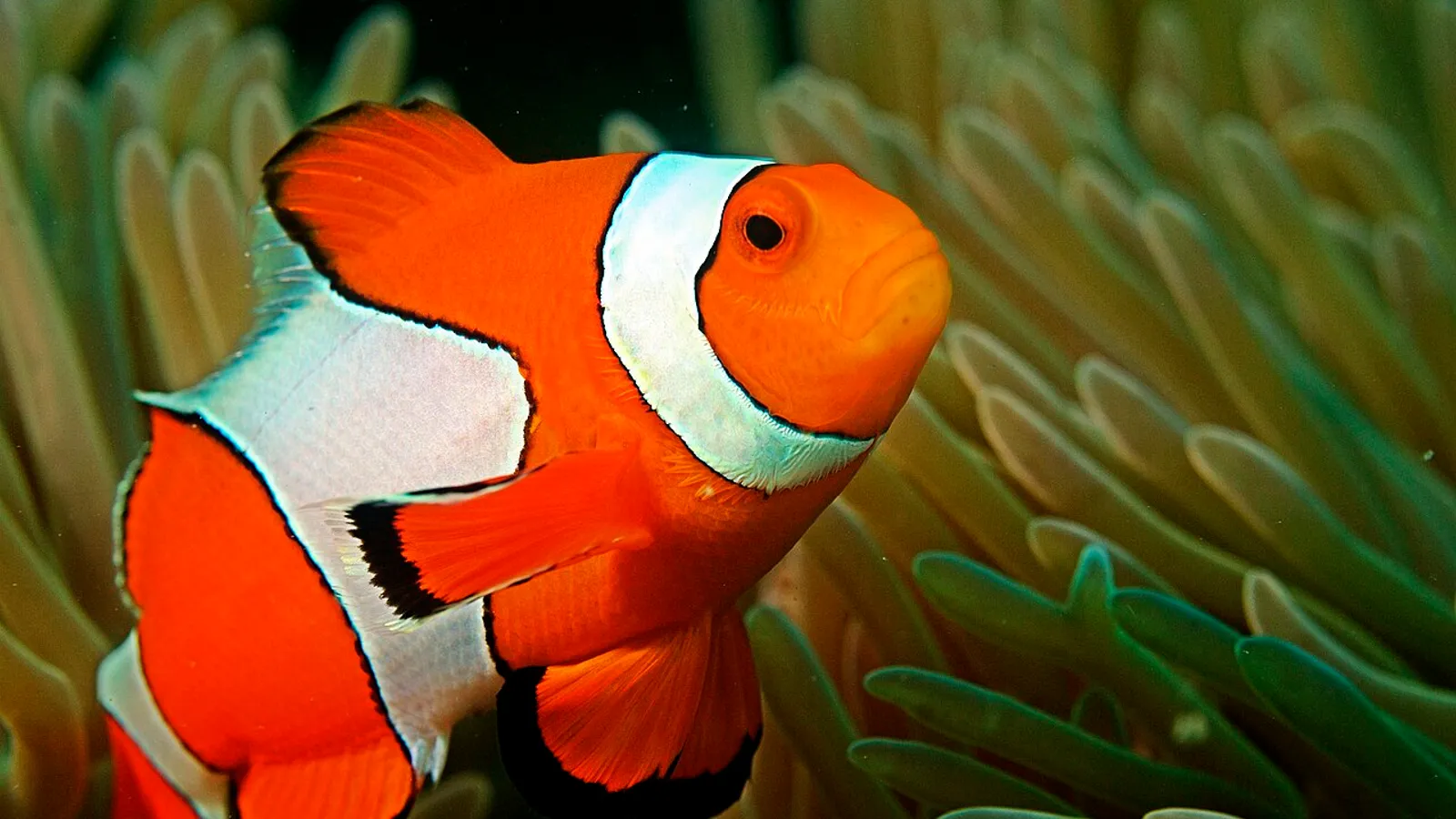
— Where the name comes from
Amphiprion joins the Greek amphí, “on both sides”, and príōn, “saw”: the serrated plates on either side of the head. Ocellaris, Latin, points to the ocelli, the eye-like spots.
— Facts
- Group
- Fish · Actinopterygii · Chondrichthyes
- Order
- Perch-likes
- Habitat
- Coral reef, in symbiosis with sea anemones
- Range
- The western Indo-Pacific
- Size
- 8–11 cm
- Diet
- Omnivore — zooplankton, algae
- Lifespan
- 6–10 years
— Characteristics
- 01
A layer of mucus shields it from the anemone’s stinging cells.
- 02
Lives in strictly ranked groups on a single anemone.
- 03
Defends its host from butterflyfish that graze on the tentacles.
— What sets it apart
All clownfish are born male. The group has a single female, the largest; below her the dominant male, then the juveniles. When the female dies, the dominant male changes sex and takes her place, and the largest juvenile becomes the new breeder. Which makes the plot of a well-known animated film, biologically speaking, a good deal more unsettling than you remember.
