
Humphead wrasse
Cheilinus undulatus
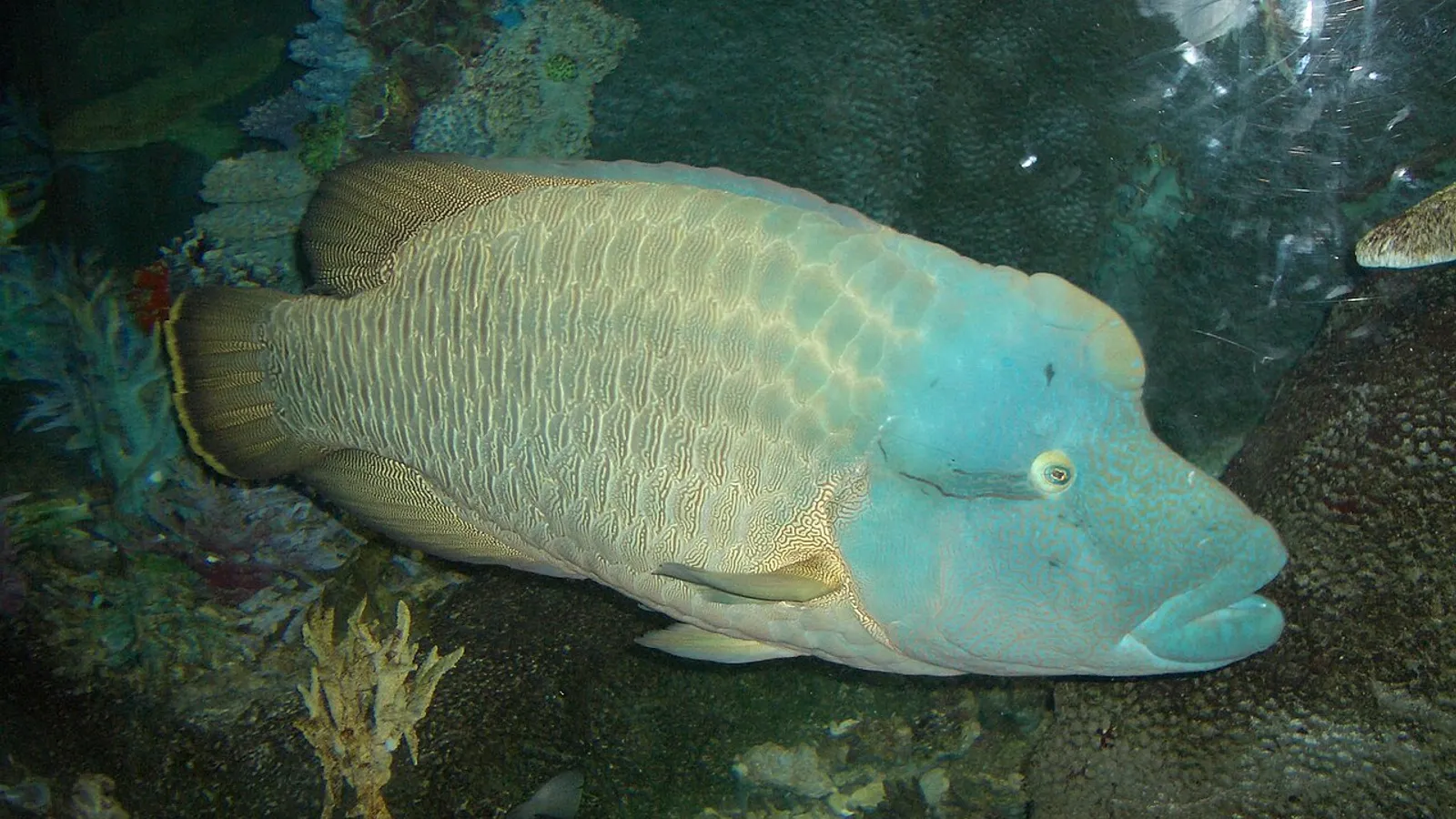
— Where the name comes from
Cheilinus comes from the Greek cheîlos, the lip, and these fish have exceptionally fleshy ones; undulatus describes the wavy pattern covering the body like handwriting. The common name comes from the bump adult males develop on the forehead, which reminded the French of Napoleon’s bicorne hat.
— Facts
- Group
- Fish · Actinopterygii · Chondrichthyes
- Order
- Perch-likes
- Habitat
- Outer reef slopes, channels and walls down to 100 metres
- Range
- The tropical Indo-Pacific, from the Red Sea to Polynesia
- Size
- 100–150 cm, up to 230 cm; 30–100 kg, record 190 kg
- Diet
- Molluscs, urchins, crustaceans, fish, crown-of-thorns starfish
- Lifespan
- 30 years
— Characteristics
- 01
It is the largest wrasse in the world.
- 02
It is born female and some become male at around nine years old.
- 03
It is one of the few fish that eats crown-of-thorns starfish.
— What sets it apart
It eats what nothing else will touch: crown-of-thorns starfish, venomous urchins, toxic boxfish, stinging sea slugs. On a reef where crown-of-thorns explode and devour the coral, the presence of these fish is one of the few natural brakes. The trouble is that it is also the most prized fish in the Asian live reef fish trade: in Hong Kong restaurants an adult is worth thousands of euros, and divers take it using cyanide sprayed on the coral, which stuns it and kills everything else.
