
Red lionfish
Pterois volitans
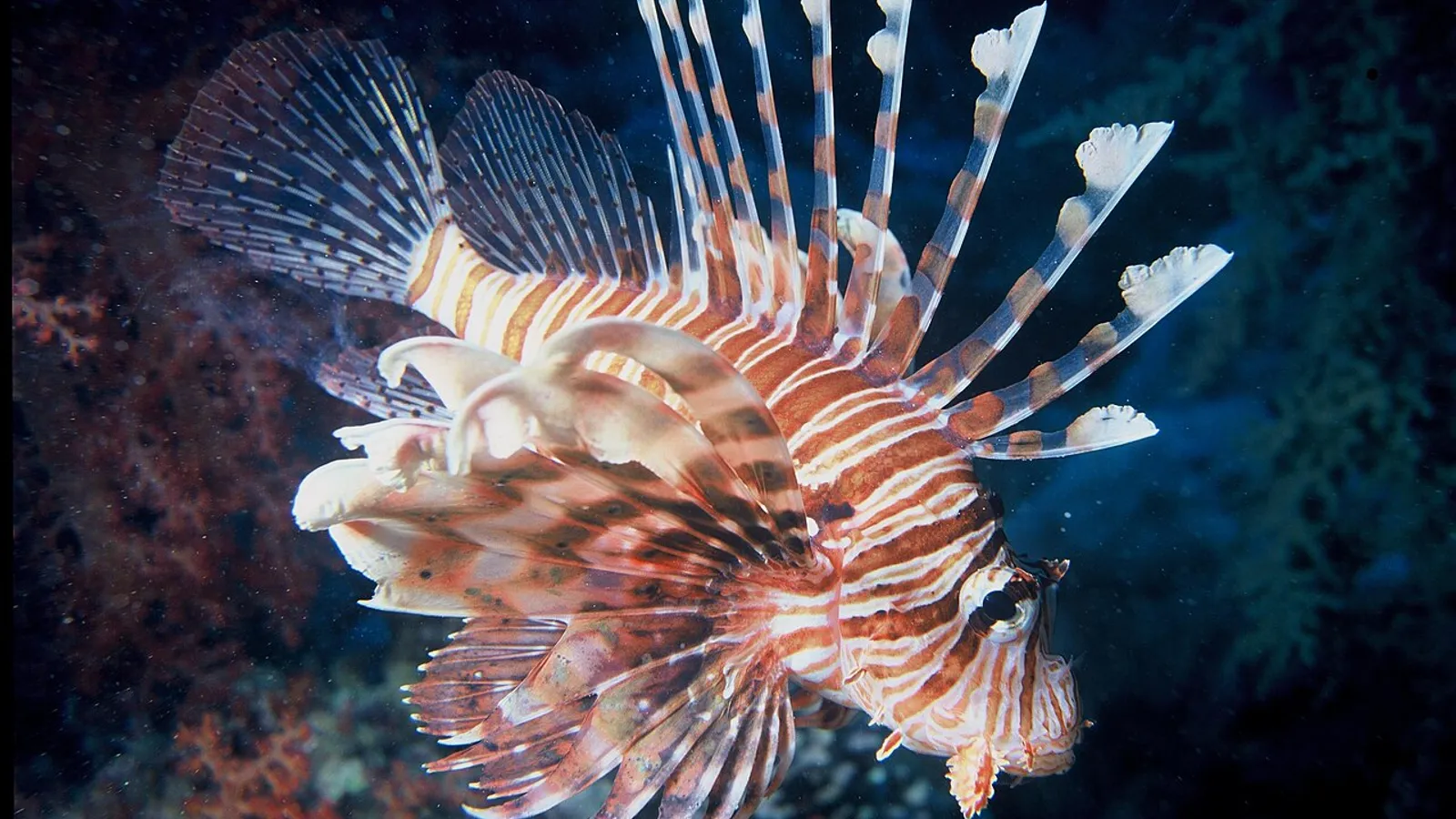
— Where the name comes from
Pterois is from the Greek pterón, wing or feather, from the pectoral fins spread like wings; volitans is Latin, “fluttering”, from the way it hovers in the water. The common name evokes a lion’s mane, formed by the long venomous rays. It is splendid and formidable at once.
— Facts
- Group
- Fish · Actinopterygii · Chondrichthyes
- Order
- Scorpionfishes
- Habitat
- Coral reefs and rocky bottoms
- Range
- Native to the Indo-Pacific; invasive in the western Atlantic
- Size
- 30–38 cm
- Diet
- Carnivore — small fish and crustaceans
- Lifespan
- 10–15 years
— Characteristics
- 01
The fins carry venomous spines that cause intense pain in humans.
- 02
It herds prey into a corner with its fins spread like a fan, then swallows it in a flash.
- 03
It has almost no natural predators outside its home range.
— What sets it apart
The lionfish is living proof that a beautiful animal can become a calamity: released by accident or by boredom from aquariums into the Atlantic, it has invaded the Caribbean, where no predator knows it and no prey fears it. It devours fry and small fish at an unsustainable rate, wrecking the reefs. The response of many communities has been surprising: put it on the menu. Fishing derbies and recipes have turned the invader into a delicacy, the only “predator” that seems to keep it in check.
