
Long-spine porcupinefish
Diodon holocanthus
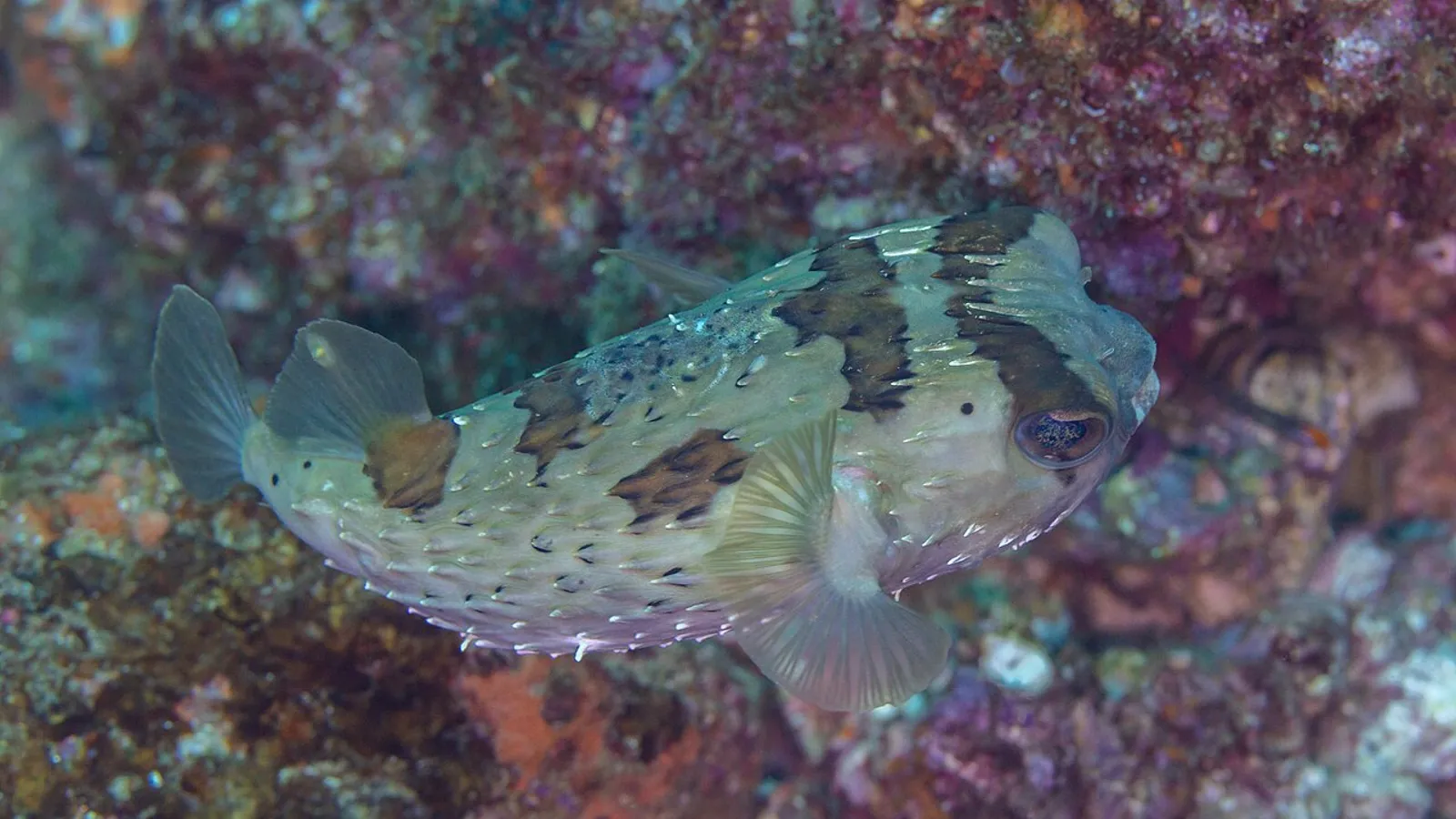
— Where the name comes from
Diodon is Greek for “two teeth”, from dýo, two, and odoús, tooth: the jaws are fused into two cutting plates; holocanthus, “all spines”, from hólos, whole, and ákantha, spine. The common name comes from the spines that, when it inflates, turn it into a ball as bristling as a porcupine.
— Facts
- Group
- Fish · Actinopterygii · Chondrichthyes
- Order
- Pufferfishes
- Habitat
- Coral reefs and shallow sandy bottoms
- Range
- Tropical seas worldwide
- Size
- 20–30 cm, up to 50 cm
- Diet
- Carnivore — molluscs, urchins, crabs, crushed with its beak
- Lifespan
- 5–10 years
— Characteristics
- 01
It swallows water and swells like a balloon, raising every spine.
- 02
The fused beak-like jaws crush the hardest shells and armour.
- 03
Many related species contain a powerful poison, tetrodotoxin.
— What sets it apart
The porcupinefish defends itself by becoming unswallowable: threatened, it gulps water fast and inflates until it has trebled in volume, raising spines that make it a bristling sphere impossible to bite. It is a costly and stressful transformation, a last resort. Many of its relatives, the pufferfish, add to this a lethal poison, tetrodotoxin, a thousand times more potent than cyanide: the same that in Japan makes fugu a dish for specially licensed chefs.
