
Blackfin icefish
Chaenocephalus aceratus
— Where the name comes from
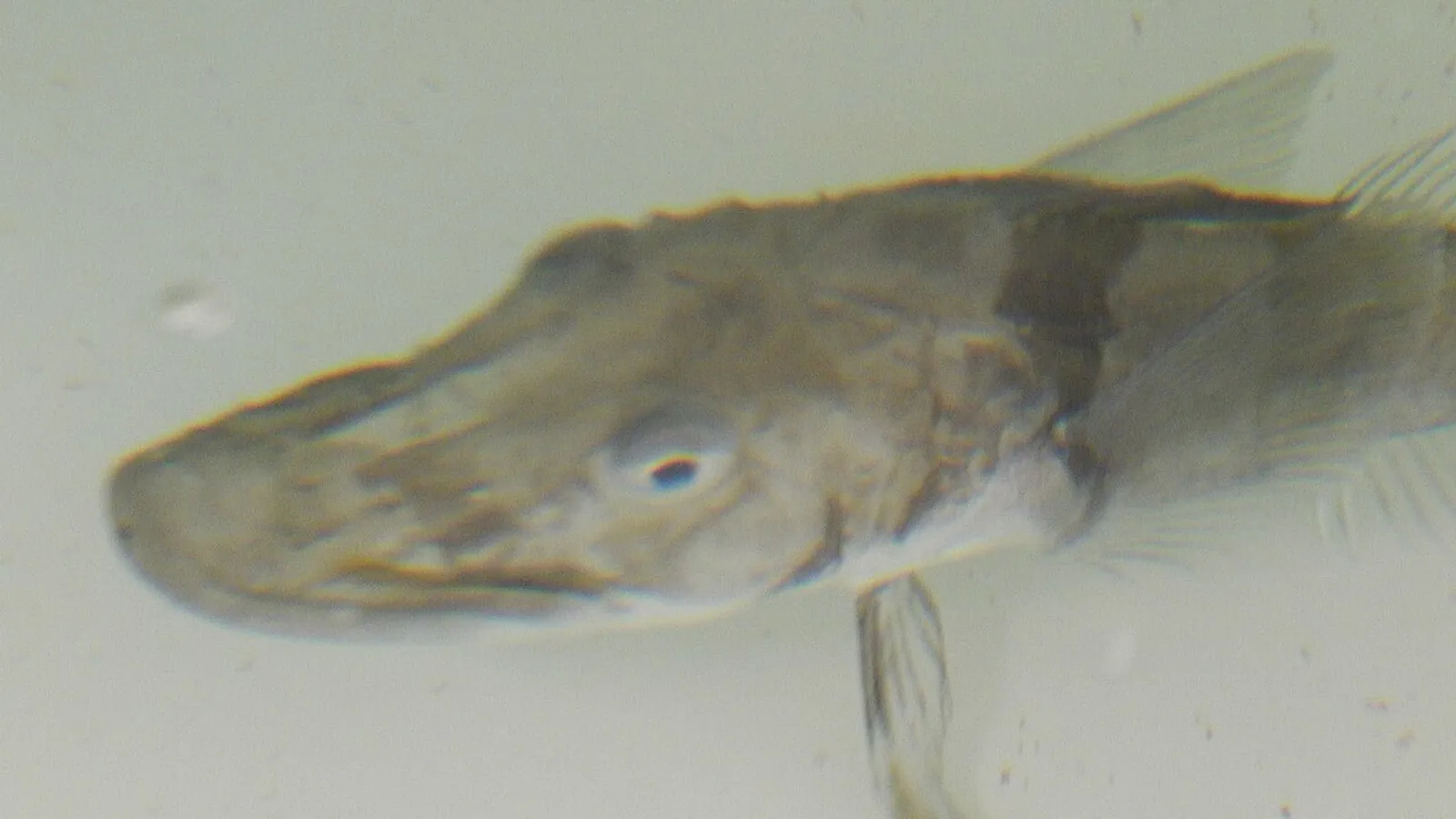
Chaenocephalus is “gaping head”, from chaínō, to open the mouth, and kephalḗ; aceratus means “hornless”, for the absence of the spines some relatives carry on the head. The common name comes from the colour: the gills are white instead of red, and the whole animal looks made of dirty glass.
— Facts
- Group
- Fish · Actinopterygii · Chondrichthyes
- Order
- Perch-likes
- Habitat
- Antarctic shelf bottoms between 5 and 770 metres
- Range
- The Southern Ocean, the Antarctic Peninsula, South Georgia
- Size
- 50–70 cm, up to 72 cm; 1–3.5 kg
- Diet
- Krill, small fish
- Lifespan
- 15 years
— Characteristics
- 01
Its blood is colourless: it contains neither haemoglobin nor red cells.
- 02
It has an enormous heart and very wide vessels to compensate.
- 03
Antifreeze glycoproteins in its blood stop ice crystals growing.
— What sets it apart
It is the only vertebrate in the world without haemoglobin. When the Norwegian biologist Ditlef Rustad caught one in Antarctica in 1928 and opened it, he found a fish with transparent blood and assumed it was diseased; it took twenty years to establish that the whole family is like that. It works because water at minus one and a half degrees holds a great deal of dissolved oxygen, and because these fish simply carry it dissolved in the plasma, pumping enormous volumes with a heart three times the normal size. In a warming ocean, it is a wager that cannot be made twice.
