
Electric catfish
Malapterurus electricus
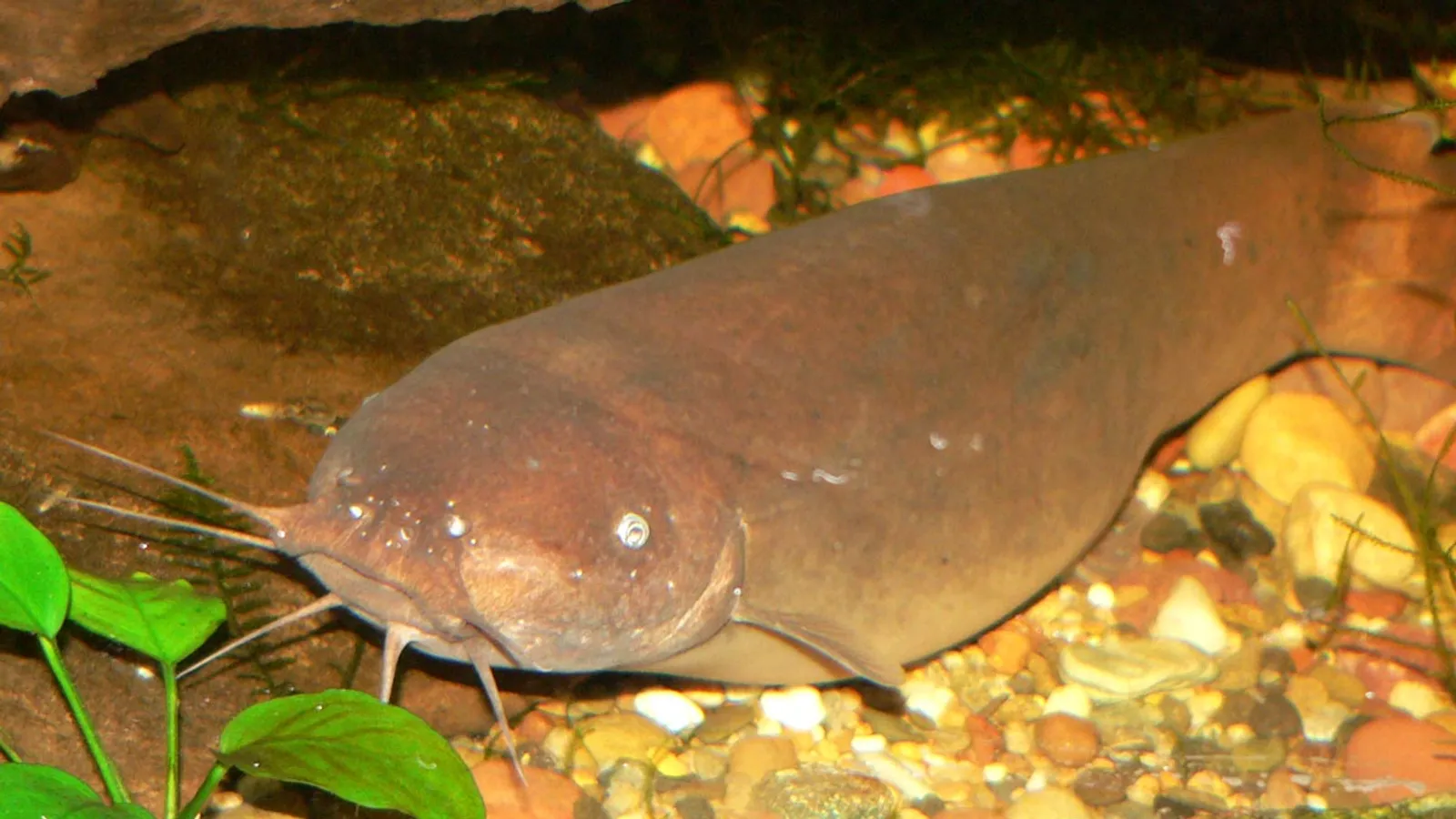
— Where the name comes from
Malapterurus is built from Greek elements alluding to the soft fin of the back and to the tail; electricus needs no explanation, though it is worth recalling that “electric” comes from ḗlektron, amber, which attracts light objects when rubbed. In Arabic it is raad, “the thunder”.
— Facts
- Group
- Fish · Actinopterygii · Chondrichthyes
- Order
- Catfishes
- Habitat
- Turbid rivers, lakes, swamps, slow water
- Range
- Tropical Africa, from the Nile to the Niger and the Congo
- Size
- 30–60 cm, up to 122 cm; 1–20 kg
- Diet
- Fish stunned by the discharge, invertebrates
- Lifespan
- 10 years
— Characteristics
- 01
The electric organ is a layer wrapping the whole body under the skin.
- 02
It produces discharges of up to three hundred and fifty volts.
- 03
It is nocturnal and spends the day motionless under undercut banks.
— What sets it apart
It appears in a relief in an Egyptian tomb at Saqqara four and a half thousand years old, in the middle of a fishing scene on the Nile, and it is the oldest known depiction of an electric animal. That the Egyptians knew what it did is likely: medieval Arab physicians used it against migraine and joint pain, applying it directly to the patient, exactly as the Romans did with the torpedo in the Mediterranean. Two different civilisations, two unrelated fish, the same therapy.
