
Hoplisoma paleatum
Corydoras paleatus
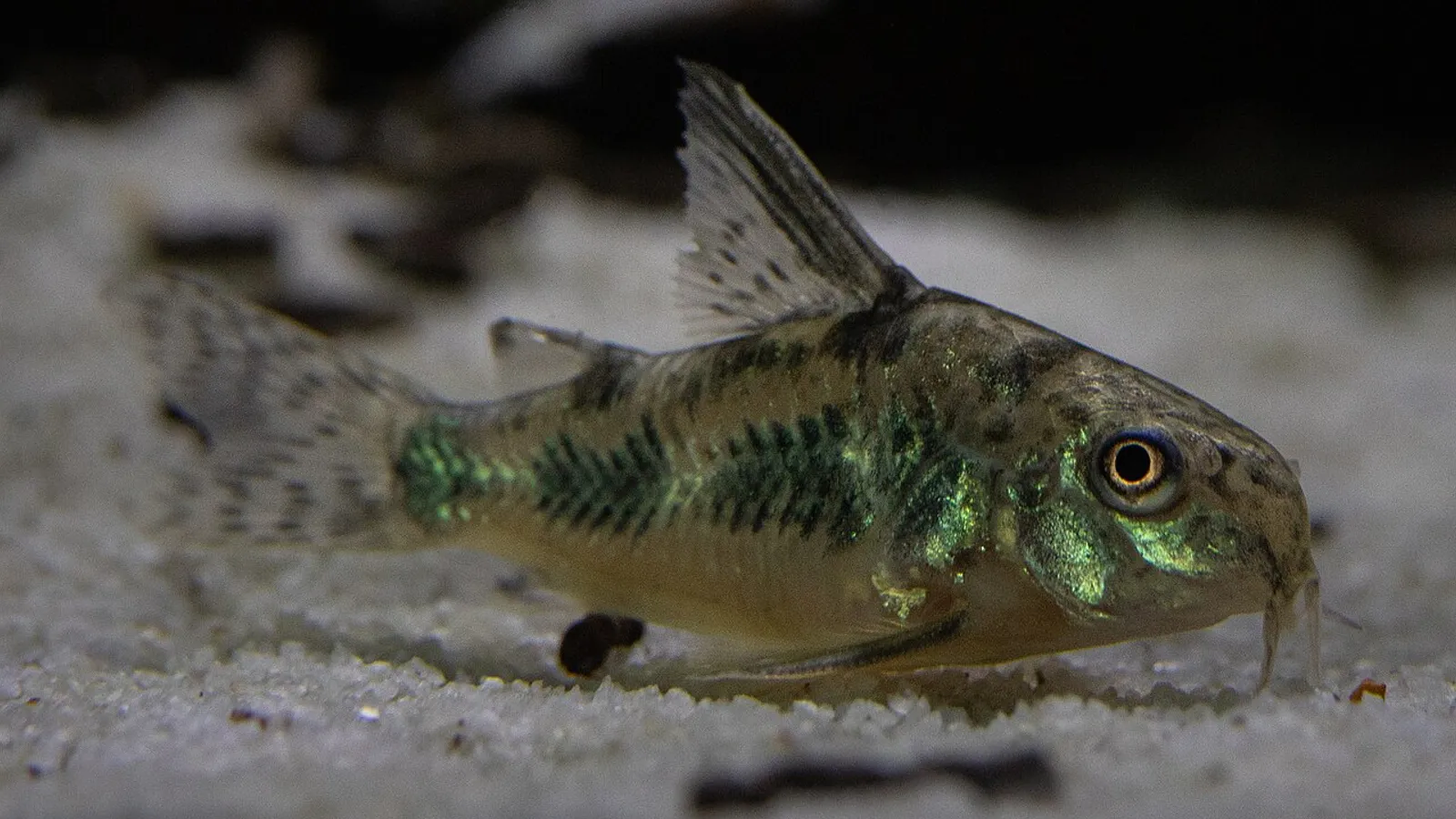
— Where the name comes from
Corydoras is “helmet skin”, from kórys, the helmet, and dorá, the hide: the body is protected by two overlapping rows of bony plates instead of scales. Paleatus comes from palea, chaff, for the mottling of the flanks. It was collected by Darwin during the voyage of the Beagle, in Argentina.
— Facts
- Group
- Fish · Actinopterygii · Chondrichthyes
- Order
- Catfishes
- Habitat
- Sandy and muddy bottoms of streams and ponds
- Range
- Southern South America: Argentina, Uruguay, Brazil
- Size
- 5–7 cm, 3–6 g
- Diet
- Worms, larvae, minute crustaceans rooted from the bottom
- Lifespan
- 10 years, up to 20 in an aquarium
— Characteristics
- 01
It lives in groups that root through the bottom together.
- 02
It rises to the surface to gulp a mouthful of air every few minutes.
- 03
The pectoral fin spines are linked to a mild venom.
— What sets it apart
It breathes with its gut. It rises to the surface, swallows a bubble of air and passes it into a modified stretch of intestine with thin, heavily vascularised walls, where the oxygen is absorbed and the rest expelled through the anus: it is why these fish survive in foul pools and badly aerated tanks where any other fish would die. And the oddity continues in reproduction: the female drinks the male’s milt, passes it rapidly through her gut and releases it onto the eggs she holds between her pelvic fins.
