Gymnarchus
Gymnarchus niloticus
— Where the name comes from
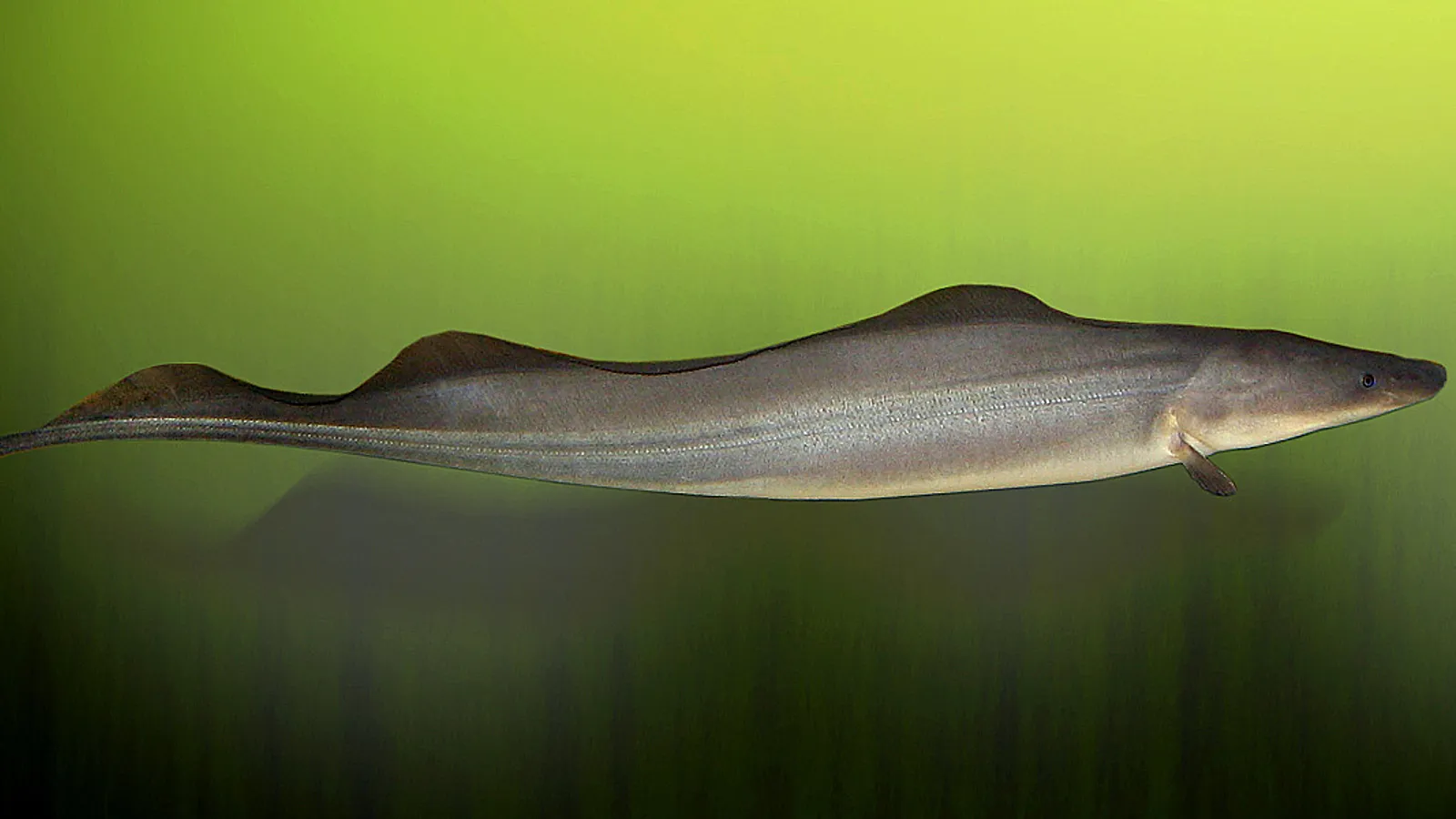
Gymnarchus is “naked anus”, from gymnós and archós: it lacks the anal fin entirely, and with it the pelvic and caudal fins. Niloticus names the river. What remains is a ribbon-shaped body with one very long undulating dorsal fin, and that is all it needs to move.
— Facts
- Group
- Fish · Actinopterygii · Chondrichthyes
- Order
- Bony tongues
- Habitat
- Swamps, reedbeds and still waters of the great African rivers
- Range
- The Nile, Niger, Chad, Volta, Senegal and Gambia basins
- Size
- 90–150 cm, 15–19 kg
- Diet
- Fish, insects, crustaceans
- Lifespan
- 10 years
— Characteristics
- 01
It swims forwards and backwards equally well by rippling the dorsal fin.
- 02
It generates a continuous electric field around itself and navigates by it.
- 03
It builds a floating nest of grasses a metre long.
— What sets it apart
It was on this fish that Hans Lissmann demonstrated electrolocation in the 1950s. He had wondered how it could swim backwards through turbid water without ever hitting anything, and found that it emits a continuous, extremely weak electrical discharge and senses the distortions of its own field caused by nearby objects: it sees the world as an electrical deformation. It was a sense nobody had suspected existed, and it is now known in hundreds of species.