
Atlantic herring
Clupea harengus
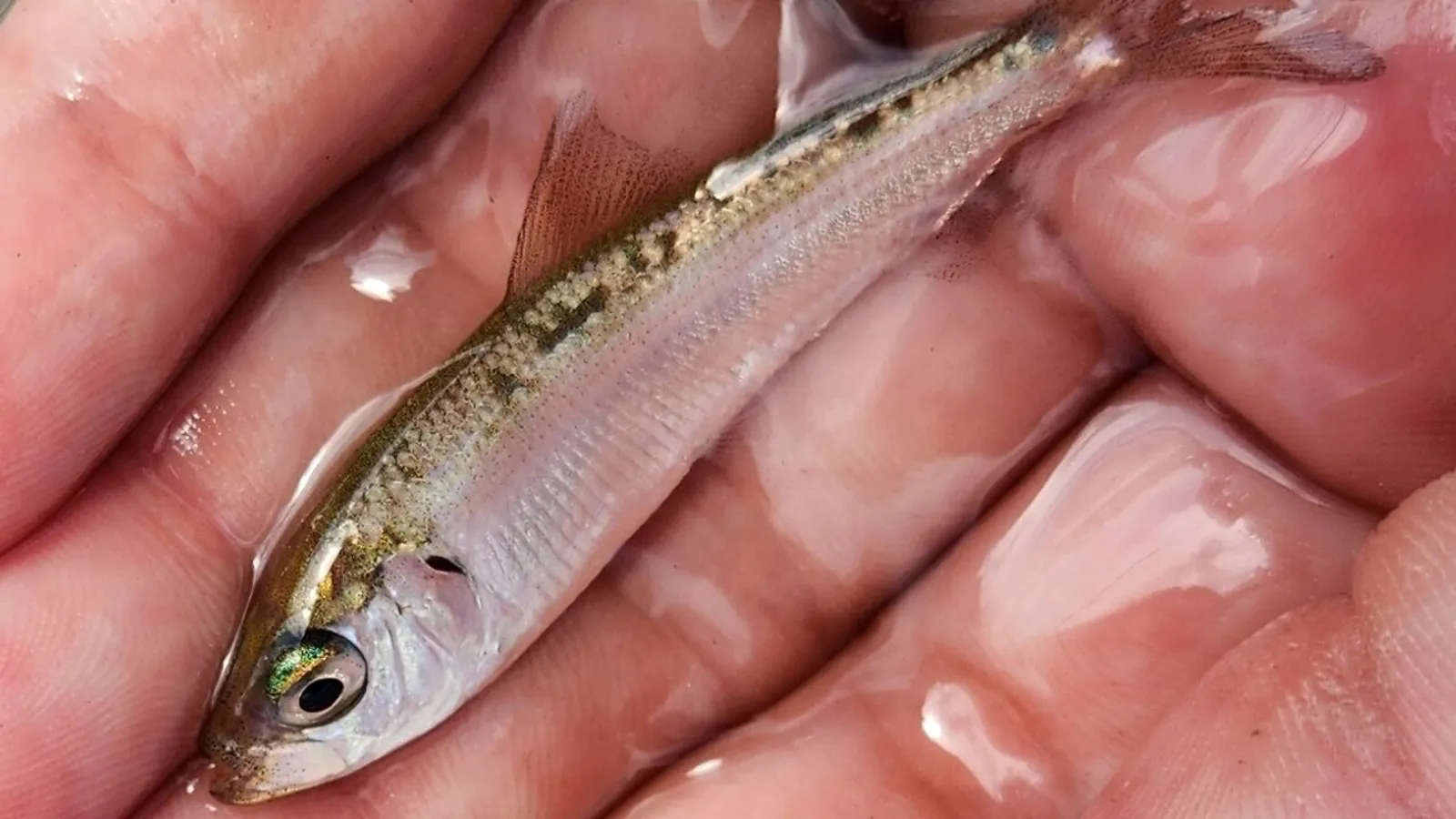
— Where the name comes from
Clupea was the Latin name of a small sea fish; harengus is medieval Latin of Germanic origin, the same root as the English herring and the German Hering. That the scientific name takes one word from classical Latin and one from the speech of northern fishermen sums up this fish’s story: it belongs to the northern seas but science christened it in Latin.
— Facts
- Group
- Fish · Actinopterygii · Chondrichthyes
- Order
- Herrings and sardines
- Habitat
- The coastal and oceanic water column, from the surface to 200 metres
- Range
- The northern Atlantic, the North Sea, the Baltic
- Size
- 25–35 cm, up to 45 cm; 200–500 g
- Diet
- Copepods, krill, fish larvae
- Lifespan
- 15 years, up to 25
— Characteristics
- 01
It forms shoals that can contain billions of individuals.
- 02
It lays its eggs on the bottom, in layers several centimetres thick.
- 03
It is the fish on which the economies of northern Europe were built.
— What sets it apart
Herring talk with their guts. In 2003 two independent groups, one Canadian and one Scottish, discovered that at night these fish expel bubbles of air from the swim bladder through the anus, producing bursts of high-pitched sound that their companions hear and that serve to hold the shoal together in darkness. The finding won an Ig Nobel Prize in 2004, which does not make it any less true: the commonest communication in the North Atlantic is made of flatulence.
