
European perch
Perca fluviatilis
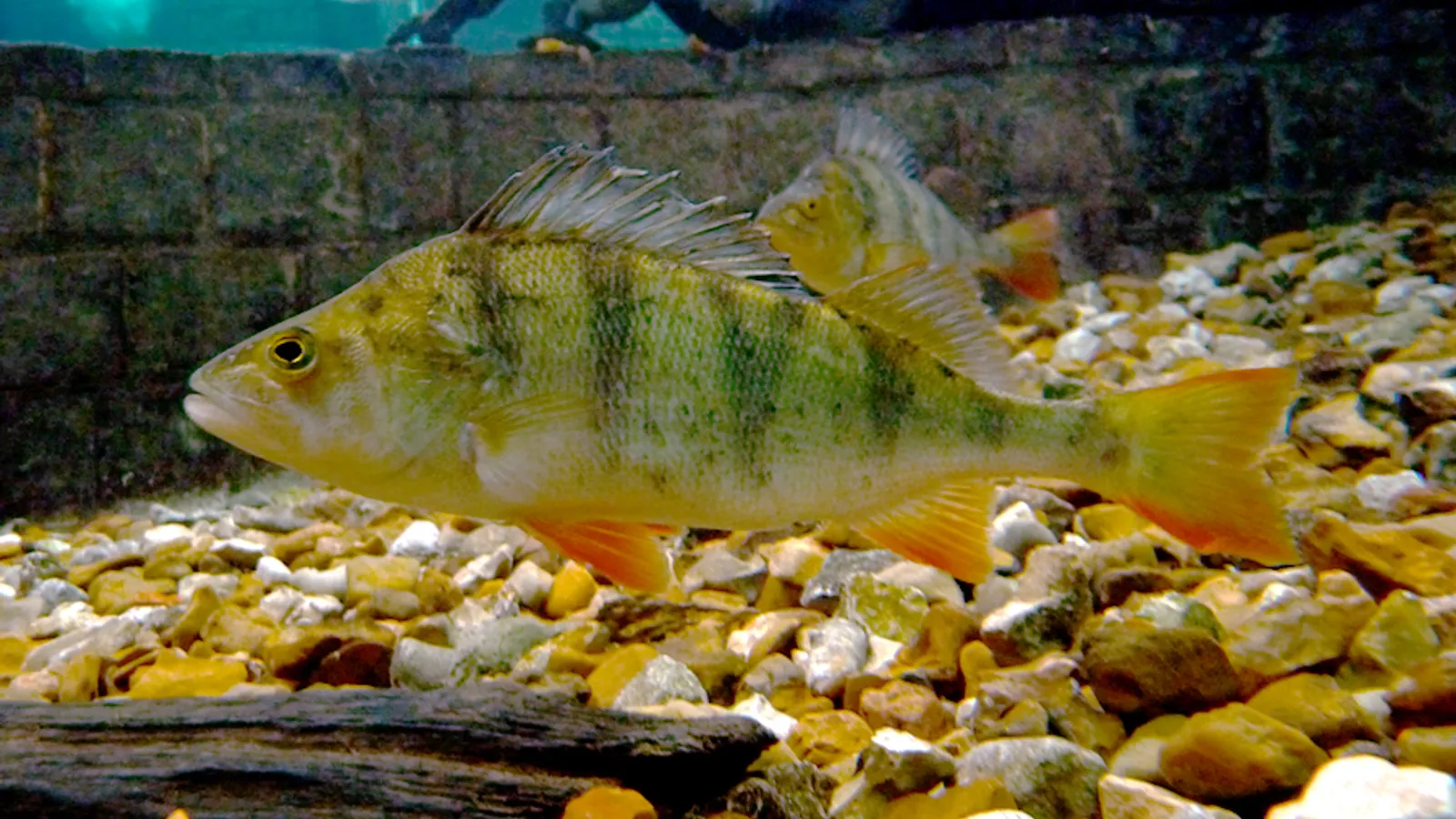
— Where the name comes from
Perca is the Greek and Latin name of this fish, source of the Italian persico, the English perch and the whole order of the Perciformes — which with over ten thousand species is the largest among vertebrates. Fluviatilis names the river. A lake fish thus gives its name to the most species-rich animal group on the planet.
— Facts
- Group
- Fish · Actinopterygii · Chondrichthyes
- Order
- Perch-likes
- Habitat
- Lakes, slow rivers, weedy canals
- Range
- Europe and northern Asia; introduced to Australia and South Africa
- Size
- 20–35 cm, up to 60 cm; 200 g–2 kg
- Diet
- Invertebrates when young, fish when adult
- Lifespan
- 15 years, some over 20
— Characteristics
- 01
It has five or six dark vertical bars and orange lower fins.
- 02
The young hunt in shoals, the adults alone among structures.
- 03
The first dorsal fin is a row of stiff spines with a black spot.
— What sets it apart
In Windermere, in England, this species has been counted without a break since 1941: it began as a war project, to see whether perch could feed the population in place of rationed meat, and it has never stopped. It has produced one of the longest running series in existence on a wild fish population, allowing the effects of warming water, agricultural fertiliser and epidemics to be measured: an entire generation of lake ecology rests on a wartime food plan.
