
Rock ptarmigan
Lagopus muta
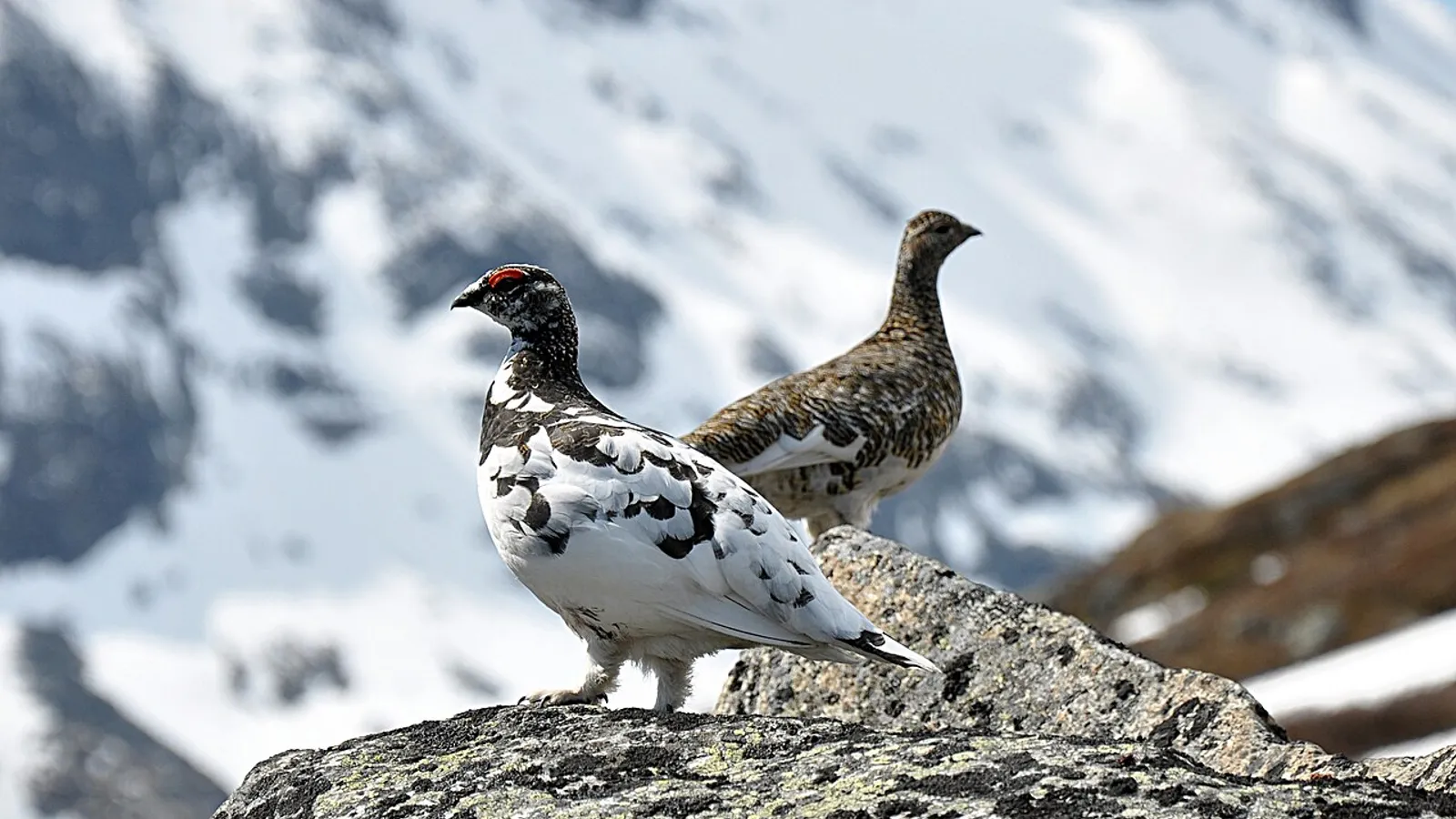
— Where the name comes from
Lagopus is “hare foot”, from lagṓs and poús: the legs and even the toes are covered in dense feathering, which in winter works as both snowshoe and sock. Muta comes from the Latin mutus, silent, which is an ungenerous verdict — the male gives a dry, rough croak, but only in spring and only for a few days.
— Facts
- Group
- Birds · Aves
- Order
- Gamebirds
- Habitat
- Alpine grassland, scree and ridges above the tree line
- Range
- The Alps, Pyrenees, Scotland, Scandinavia, Iceland, the Arctic, Japan
- Size
- 34–36 cm, wingspan 54–60 cm, 400–600 g
- Diet
- Shoots, buds, leaves, berries, seeds
- Lifespan
- 5 years in the wild
— Characteristics
- 01
It changes plumage three times a year: white, mottled, greyish brown.
- 02
In winter it digs a niche in the snow and spends the night sheltered in it.
- 03
In the Alps it lives between 2,000 and 3,000 metres and hardly ever comes down.
— What sets it apart
In the Alps it is a relic of the ice age. When the glaciers withdrew, the species of the tundra moved north or moved up, and those left on the southern mountains could only climb: today the Alpine populations are islands separated by thousands of kilometres from their Scandinavian relatives, and they keep climbing as the climate warms. The trouble is that above the ridges there is nothing left. It is one of the few European species for which the road, quite literally, runs out.
