
Helmeted guinea fowl
Numida meleagris
— Where the name comes from
Numida comes from Numidia, the Roman North Africa the bird was imported from; Meleagris recalls the myth of Meleager, whose sisters the gods turned into guineafowl and who went on weeping for him — the tears, says Ovid, became the white drops of the plumage. The Italian name alludes instead to Egypt and to the regal way it carries itself.
— Facts
- Group
- Birds · Aves
- Order
- Gamebirds
- Habitat
- Savannah, bush, cultivation, village edges
- Range
- Sub-Saharan Africa; farmed worldwide
- Size
- 53–63 cm, 1.3 kg
- Diet
- Seeds, tubers, insects, ticks
- Lifespan
- 12 years
— Characteristics
- 01
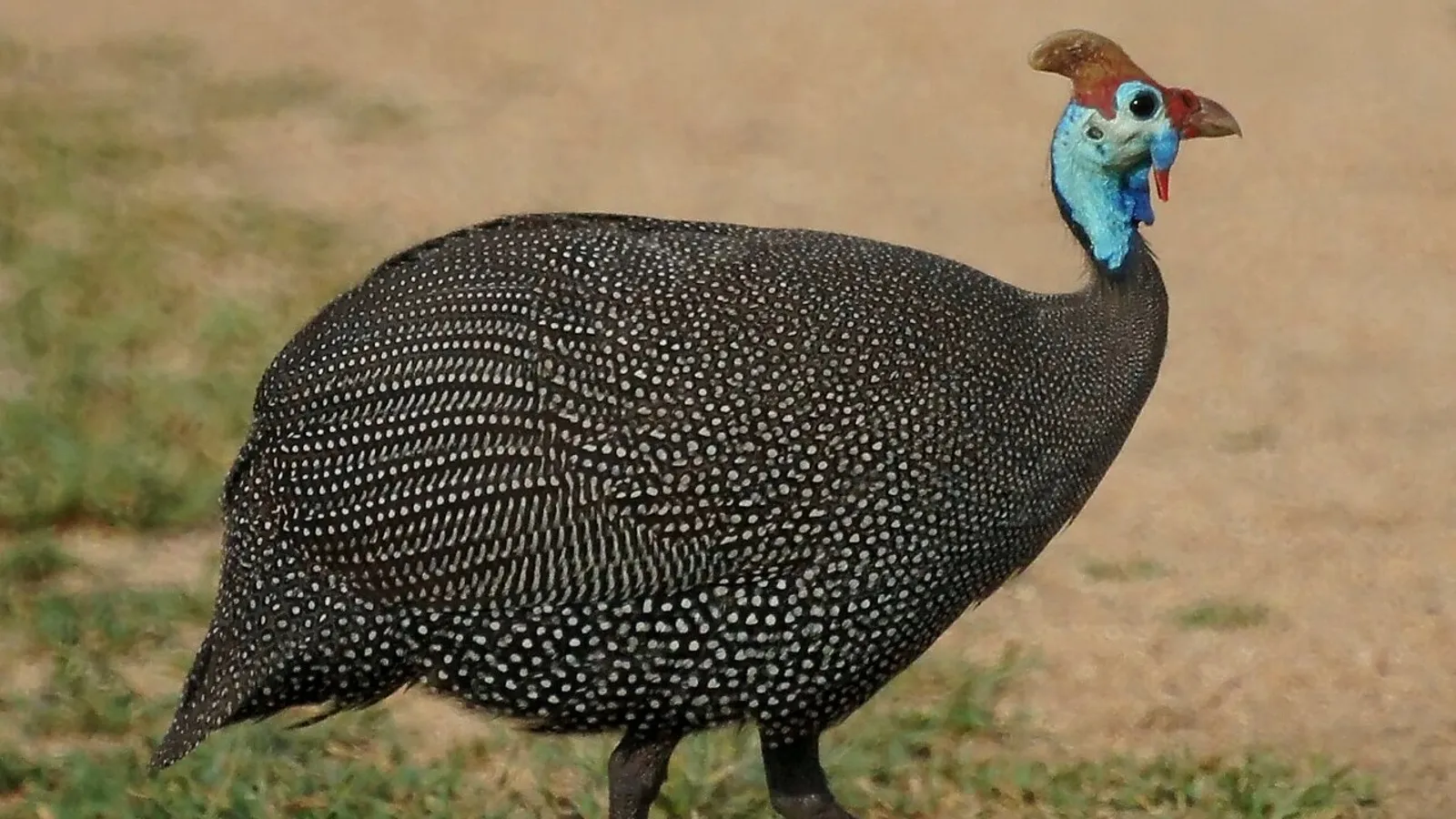
The grey plumage is covered in extraordinarily regular white drops.
- 02
It has a bony casque on the head and two red wattles beside the bill.
- 03
It runs rather than flies and roosts in trees in a group at night.
— What sets it apart
It shouts at anything, and that is why people have kept it for three thousand years. Greeks and Romans already reared it, and across half the world it is put in with the poultry not for meat but as an alarm: a party of guineafowl that sees a fox, a snake or a stranger raises a din that cannot be ignored. In American vineyards they are let loose for a more modern reason — they eat ticks, and where they forage the density of the parasites that carry Lyme disease measurably falls.
