
Stonefly
Perla marginata
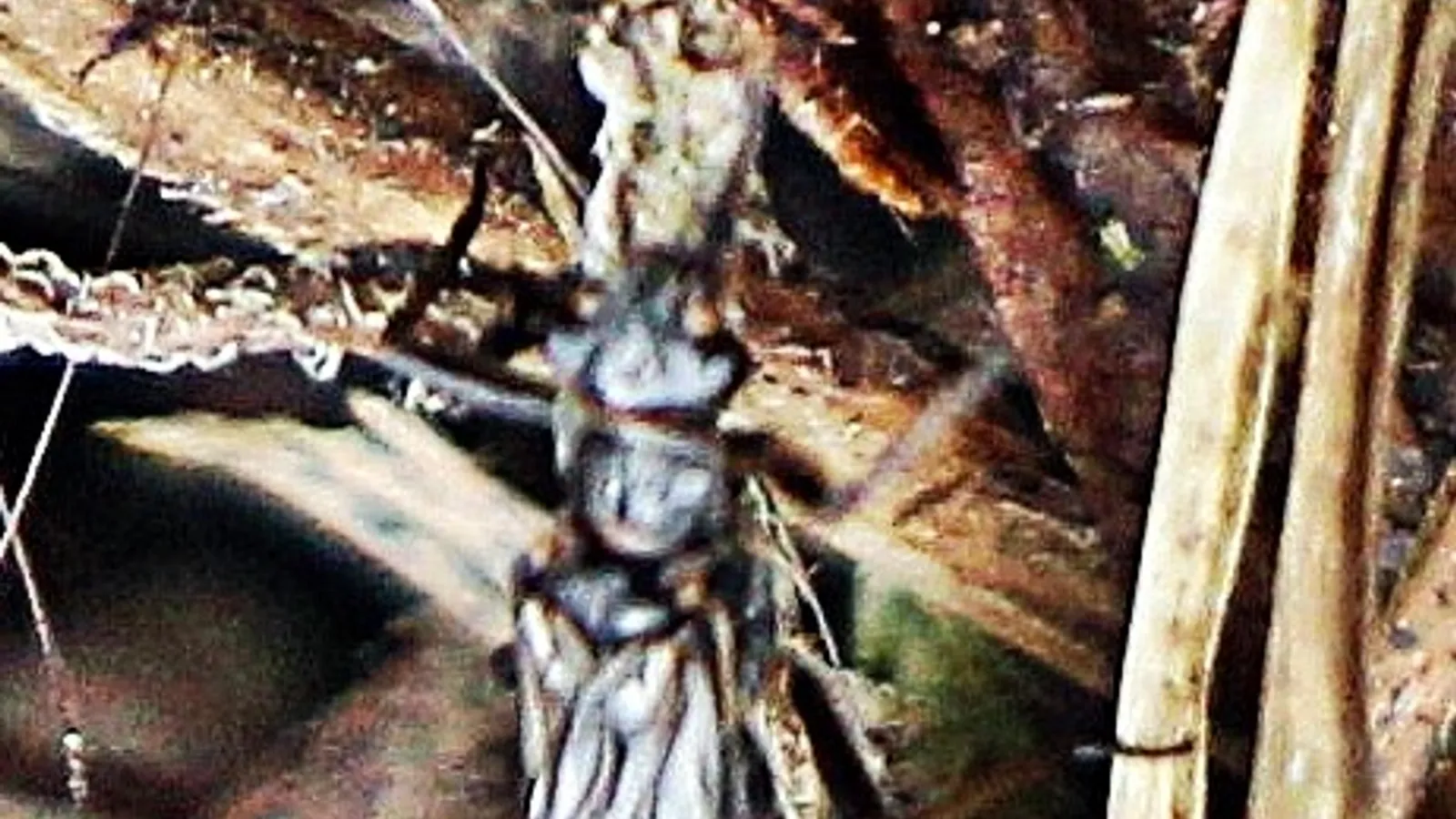
— Where the name comes from
The order’s name is the part that speaks: Plecoptera comes from the Greek plékō, to plait or fold, and pterón, the wing — because at rest the wings fold flat over the back, one on top of the other. Marginata is Latin and names the dark border that edges the wings. The genus name, coined by Geoffroy in the eighteenth century, has no secure explanation.
— Facts
- Group
- Insects · Insecta
- Order
- Stoneflies
- Habitat
- Cold, fast, well-oxygenated streams with stony beds
- Range
- Europe, from Scandinavia to Italy
- Size
- 20–25 mm of body
- Diet
- Larvae of other aquatic insects as a nymph; little or nothing as an adult
- Lifespan
- 2–3 years as a nymph, a few weeks as an adult
— Characteristics
- 01
The nymph breathes through tufts of gills at the base of its legs.
- 02
The adult flies badly and mostly sits on stones by the bank.
- 03
It tolerates neither warm water nor water poor in oxygen.
— What sets it apart
It is a stream’s thermometer and chemical analysis in one. The nymphs breathe through external gills that work only in cold, fast, oxygen-saturated water: a rise of a few degrees, or a load of organic matter, and the population is gone. That is why European indices of biological water quality give stoneflies the highest score — finding them means the stream is intact, and not finding them is a fact no instantaneous water analysis can provide, because it reports the last two years rather than the last hour. To call to one another, the adults drum their abdomens against wood in rhythmic sequences that differ from species to species.
