
Common scorpionfly
Panorpa communis
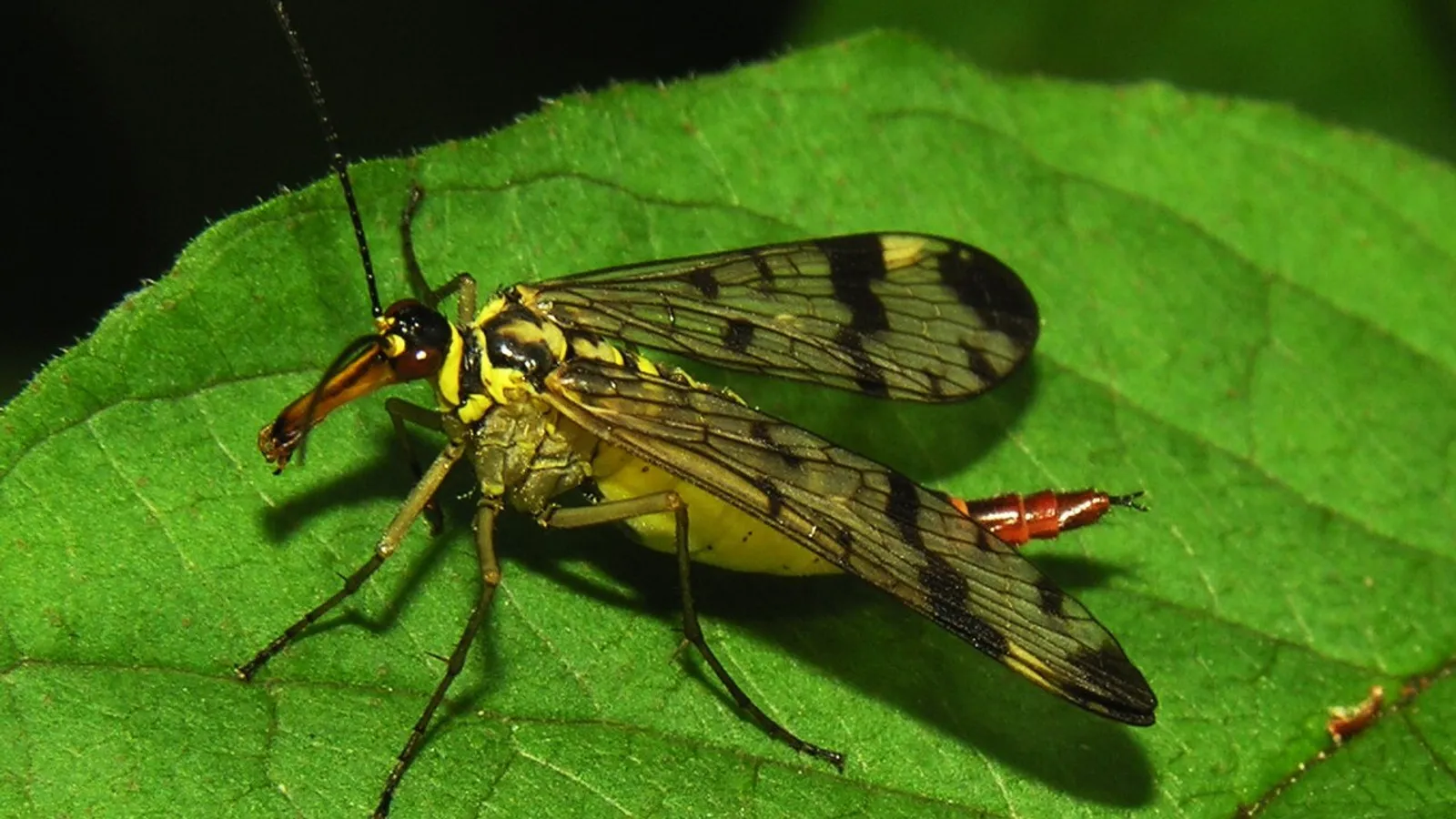
— Where the name comes from
The common name comes from what the male carries at the end of his abdomen: a swollen genital capsule curved upwards, identical to a scorpion’s tail poised to strike. It neither stings nor is venomous: it serves only for mating. Mecoptera, the name of the order, means “long wings”, from mêkos and pterón. The head is drawn out into a vertical beak ending in minute mandibles.
— Facts
- Group
- Insects · Insecta
- Order
- Scorpionflies
- Habitat
- Damp undergrowth, hedges, shady gardens
- Range
- Europe
- Size
- 25–35 mm wingspan
- Diet
- Dead insects, often stolen from spiders’ webs
- Lifespan
- A few weeks as an adult
— Characteristics
- 01
The head extends into a vertical rostrum with mandibles at the tip.
- 02
It enters spiders’ webs to steal the spider’s prey.
- 03
The scorpion tail belongs only to the male and is not a sting.
— What sets it apart
It lives by theft. It walks along the threads of a web — moving over them without being caught, because it secretes a saliva that dissolves the spider’s glue — and carries off insects already parcelled up. Courtship works the same way: the male offers the female a nuptial gift, a prey item or, failing that, a hardened drop of saliva, and as long as she is eating he may mate; if the gift is small she leaves first. The group is very ancient, and fleas and, more distantly, butterflies are thought to have descended from the scorpionflies.
