
Eastern dobsonfly
Corydalus cornutus
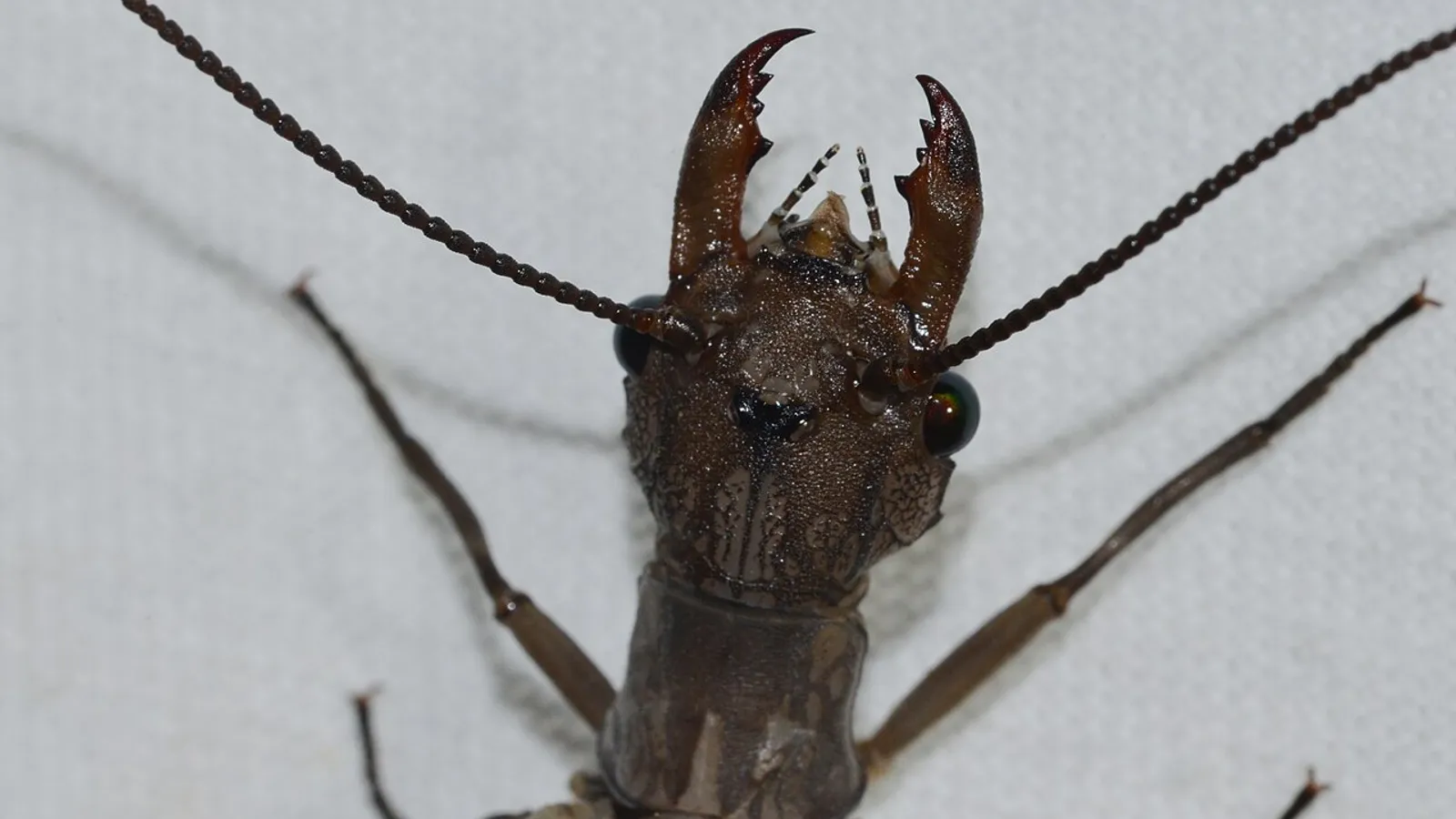
— Where the name comes from
Cornutus is the word that counts: the male carries mandibles a third as long as his body, curved like the antlers of a stag. Megaloptera, the name of the order, means “large wings”, from mégas and pterón, and for an insect approaching thirteen centimetres across it is no exaggeration. The Greek word korydalós, which lies behind the genus name, denoted the crested lark.
— Facts
- Group
- Insects · Insecta
- Order
- Dobsonflies and alderflies
- Habitat
- Fast-flowing rivers and streams with stony beds
- Range
- Eastern North America, from Canada to Mexico
- Size
- 10–13 cm wingspan
- Diet
- Larvae of other aquatic insects as a larva; nothing as an adult
- Lifespan
- 2–3 years as a larva, a week as an adult
— Characteristics
- 01
The male’s enormous mandibles cannot bite: they are ornamental.
- 02
The female’s, far shorter, bite in earnest and hurt.
- 03
The aquatic larva, the hellgrammite, is the finest bait in American angling.
— What sets it apart
The male has the most conspicuous and most useless weapons in the insect world: his mandibles are so long that the leverage is all wrong and they cannot close with force enough to hurt — they serve for display before females and for shouldering rivals aside. The female’s short mandibles, by contrast, break the skin. The larva lives two or three years under the stones of streams, breathing through lateral filaments, and in the rivers of the Appalachians is so prized as bait that it has a market of its own. The adult lives a week and does not eat at all.
