
Sheep
Ovis aries
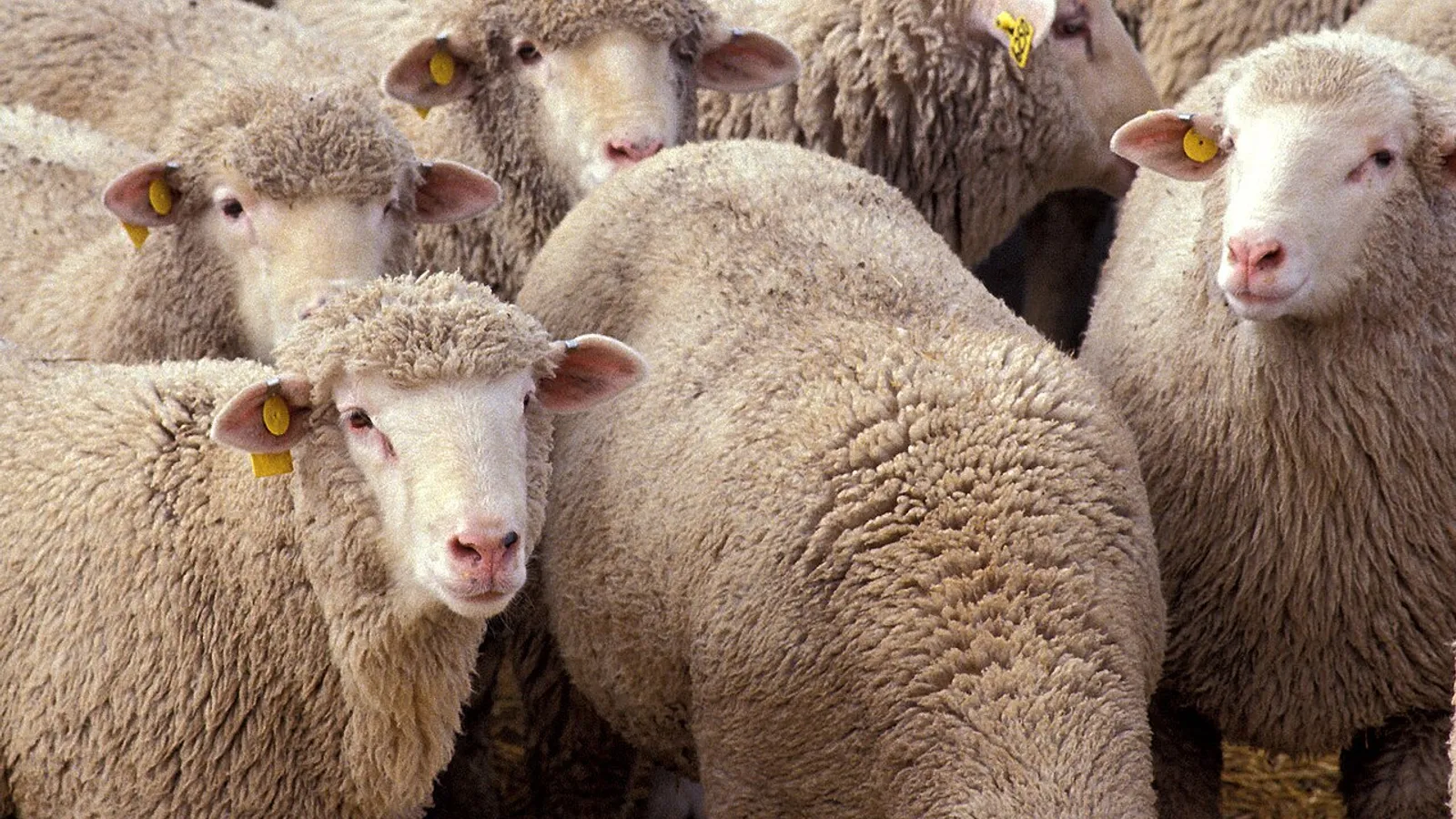
— Where the name comes from
Latin had ovis, whence “ovine”, but the Italian word comes from pecus, “livestock”, through the diminutive pecora. And here the notable thing opens up: from pecus also comes pecunia, money. Before coinage, wealth was counted in head of stock, and whoever owned flocks owned value. Every time we speak of pecuniary matters we are, quite literally, speaking of sheep.
— Facts
- Group
- Mammals · Mammalia
- Order
- Even-toed ungulates
- Habitat
- Pasture, mountain grassland, folds
- Range
- Cosmopolitan; over a billion head
- Size
- 110–130 cm long, 45–100 kg
- Diet
- Ruminant herbivore — short grass, cropped close to the ground
- Lifespan
- 10–12 years
— Characteristics
- 01
The pupil is horizontal and rectangular, and rotates to stay parallel to the ground even with the head down.
- 02
It recognises and remembers at least fifty faces, of sheep and of people, for years.
- 03
The fleece never stops growing: without shearing the animal grows so heavy it cannot move.
— What sets it apart
That endless wool is not natural but an artifice of ours. Wild sheep, such as the mouflon, moult every spring; we selected for millennia the individuals that did not, until the species could no longer shed it on its own. In 2015 a ram lost in Australia, named Chris, was found after five years under forty-two kilos of fleece: he could barely walk and would have died. It is an exact portrait of a dependence we built — an animal that cannot survive without shears.
