
Goat
Capra hircus
— Where the name comes from
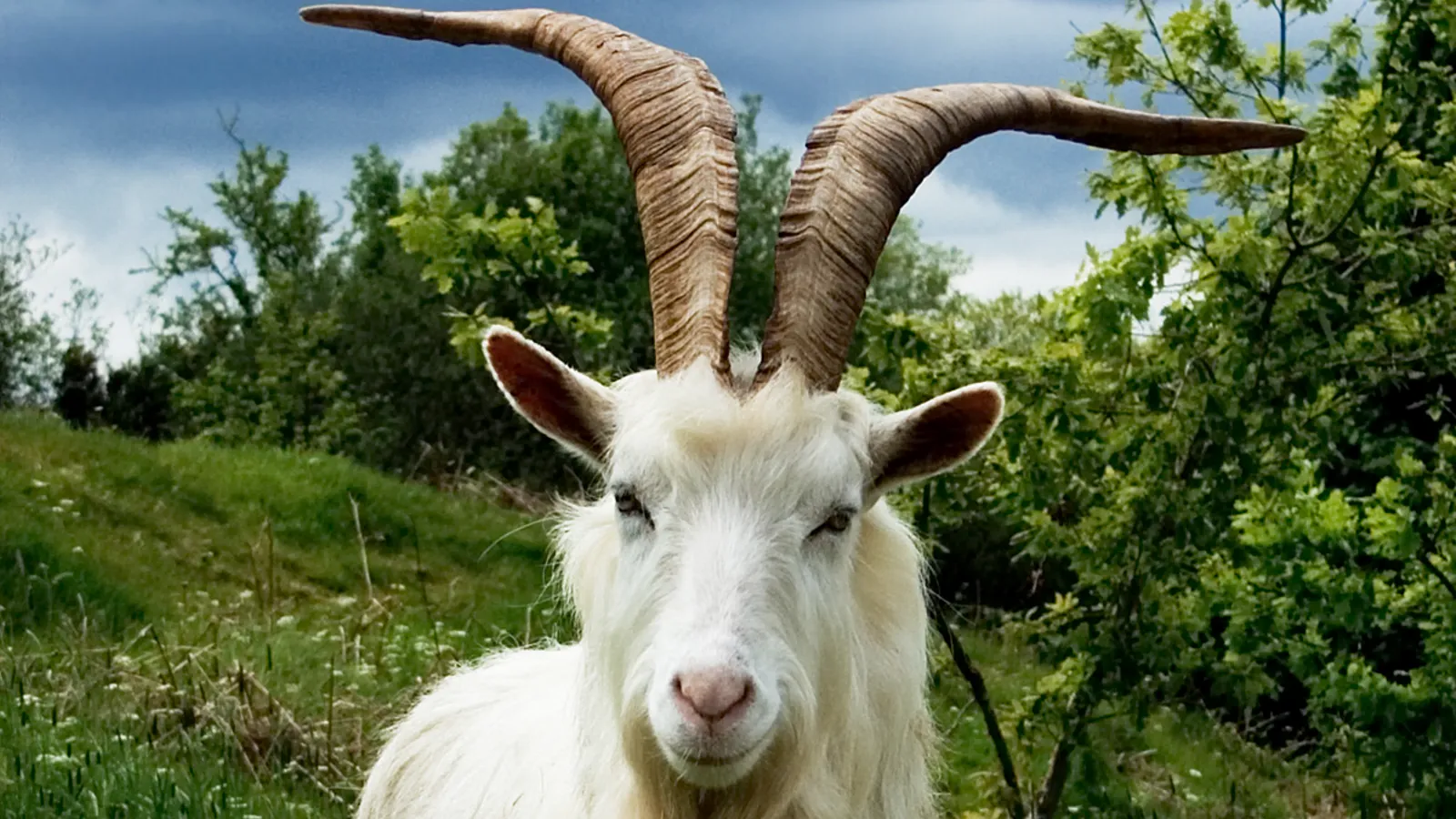
Capra is Latin and stays intact; hircus names the male, the billy goat. From the Greek trágos, “he-goat”, comes instead a word nobody now connects to the animal: tragedy, tragōidía, “song of the goat” — perhaps for the prize at stake in the dramatic contests of Athens, perhaps for choruses dressed as satyrs. The most solemn theatrical genre in the West bears the name of a beast browsing among stones.
— Facts
- Group
- Mammals · Mammalia
- Order
- Even-toed ungulates
- Habitat
- Rocky slopes, scrub, marginal pasture, byres
- Range
- Cosmopolitan; about a billion head
- Size
- 80–120 cm long, 30–90 kg
- Diet
- Ruminant herbivore — shrubs, leaves, bark, tough grasses
- Lifespan
- 15–18 years
— Characteristics
- 01
It browses in mid-air, off branches, and in Morocco regularly climbs argan trees.
- 02
It digests leathery, bitter plants the other domestic herbivores refuse.
- 03
It solves mechanical puzzles in several steps and remembers the solution ten months later.
— What sets it apart
Its ability to eat anything made it the first animal of the frontier and, at once, an agent of desertification: by grazing to the root and stripping the shrubs it has helped turn whole Mediterranean hillsides into stone. It has been the salvation of shepherds on land where nothing else survived and the ruin of that same land within a few generations. Few species show so clearly that an animal is neither useful nor harmful in itself: it becomes so depending on how many we put out, and where.
