
Pig
Sus domesticus
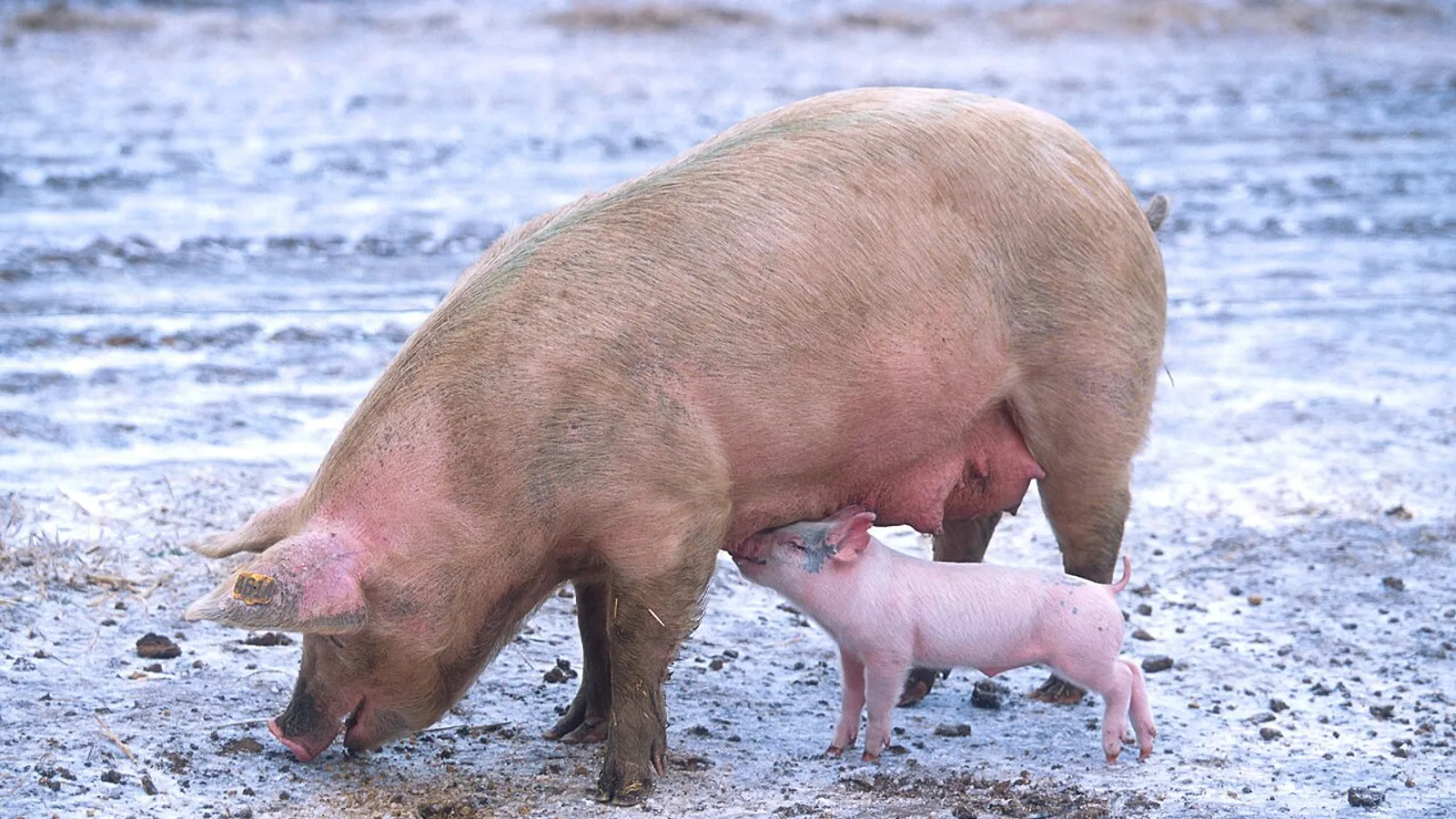
— Where the name comes from
Sus is the Indo-European root *sū-, which gives the Greek hŷs and the English sow. But the Italian word comes from a rite: maialis was, in Latin, the castrated pig sacrificed to Maia, goddess of spring fertility. From a votive animal to an everyday word, while porco, from the Latin porcus, remains the generic term. The pig of our language is, at root, an offering to a deity.
— Facts
- Group
- Mammals · Mammalia
- Order
- Even-toed ungulates
- Habitat
- Farms, sties, woodland in free-range systems
- Range
- Cosmopolitan; about a billion head
- Size
- 90–180 cm long, 50–350 kg
- Diet
- Omnivore — roots, tubers, acorns, insects, scraps
- Lifespan
- 15–20 years, a few months in intensive farming
— Characteristics
- 01
The snout is a tactile organ with a bone of its own, the rostral bone, and a density of nerve endings comparable to a fingertip.
- 02
It hardly sweats at all: wallowing in mud is not filth but the only cooling system it has.
- 03
It passes cognitive tests that defeat dogs, and learns to use a mirror to find hidden food.
— What sets it apart
It was domesticated at least twice independently, in Anatolia and in China, from different wild boar populations. And it is the animal with which we share enough physiology to have become, today, its recipient: pig heart valves have been implanted in people for decades, and in 2022 the first genetically modified pig heart was transplanted into a patient. The animal the West has used as a byword for baseness is the one that resembles it enough to keep it alive.
