
Donkey
Equus asinus
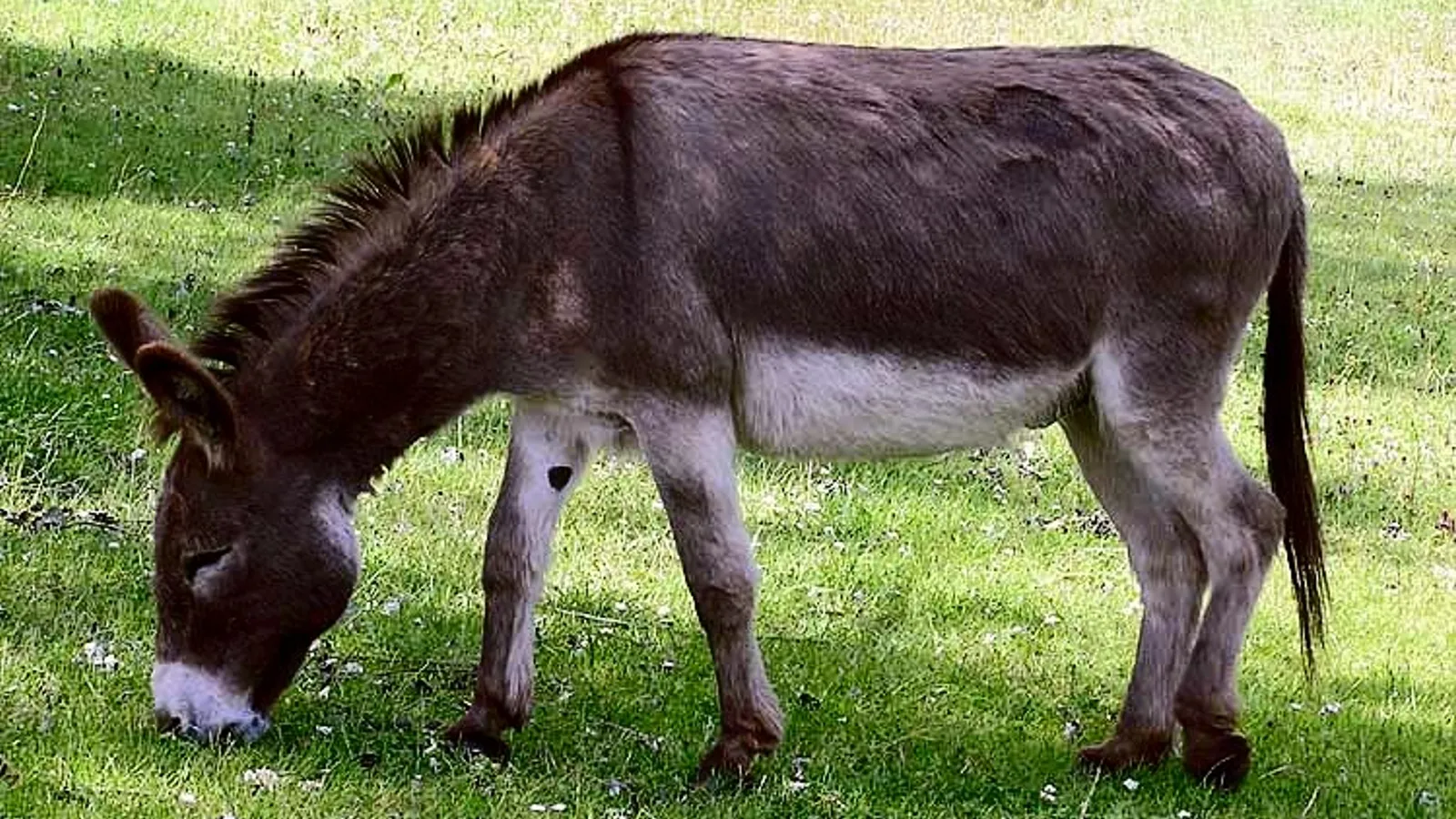
— Where the name comes from
Asinus is not Latin in origin: it is almost certainly a loan from a Near Eastern language, perhaps the Sumerian anše, which arrived in Italy with the animal by way of traders. From it come the Italian asino, the Spanish asno, the English ass. The Italian somaro comes instead from the Greek sagmárion, “pack beast”, and says everything we asked of it: to carry. None of its names speaks of the animal, all of them speak of the load.
— Facts
- Group
- Mammals · Mammalia
- Order
- Odd-toed ungulates
- Habitat
- Arid and mountainous country, rough ground, farms
- Range
- Cosmopolitan; wild forms in the Horn of Africa, feral populations in Australia and the Americas
- Size
- 90–150 cm at the withers, 80–480 kg
- Diet
- Herbivore — dry grasses, straw, fibrous shrubs
- Lifespan
- 30–40 years
— Characteristics
- 01
It draws nourishment from the poorest fodder and drinks far less than a horse of the same size.
- 02
Its bray carries three kilometres, an adaptation to deserts where groups live scattered.
- 03
The huge ears shed heat and catch distant sounds in the arid silence.
— What sets it apart
What we call stubbornness is in fact prudence. Unlike the horse, which bolts from danger, the donkey stops and weighs it up: it comes from a desert environment where running blindly among gullies meant dying, and where the right choice was to freeze until the situation was clear. A donkey that will not go on is not disobeying, it is signalling that something about that ground does not add up. We have called an animal stubborn for the one trait that allowed it to survive.
