
Ferret
Mustela furo
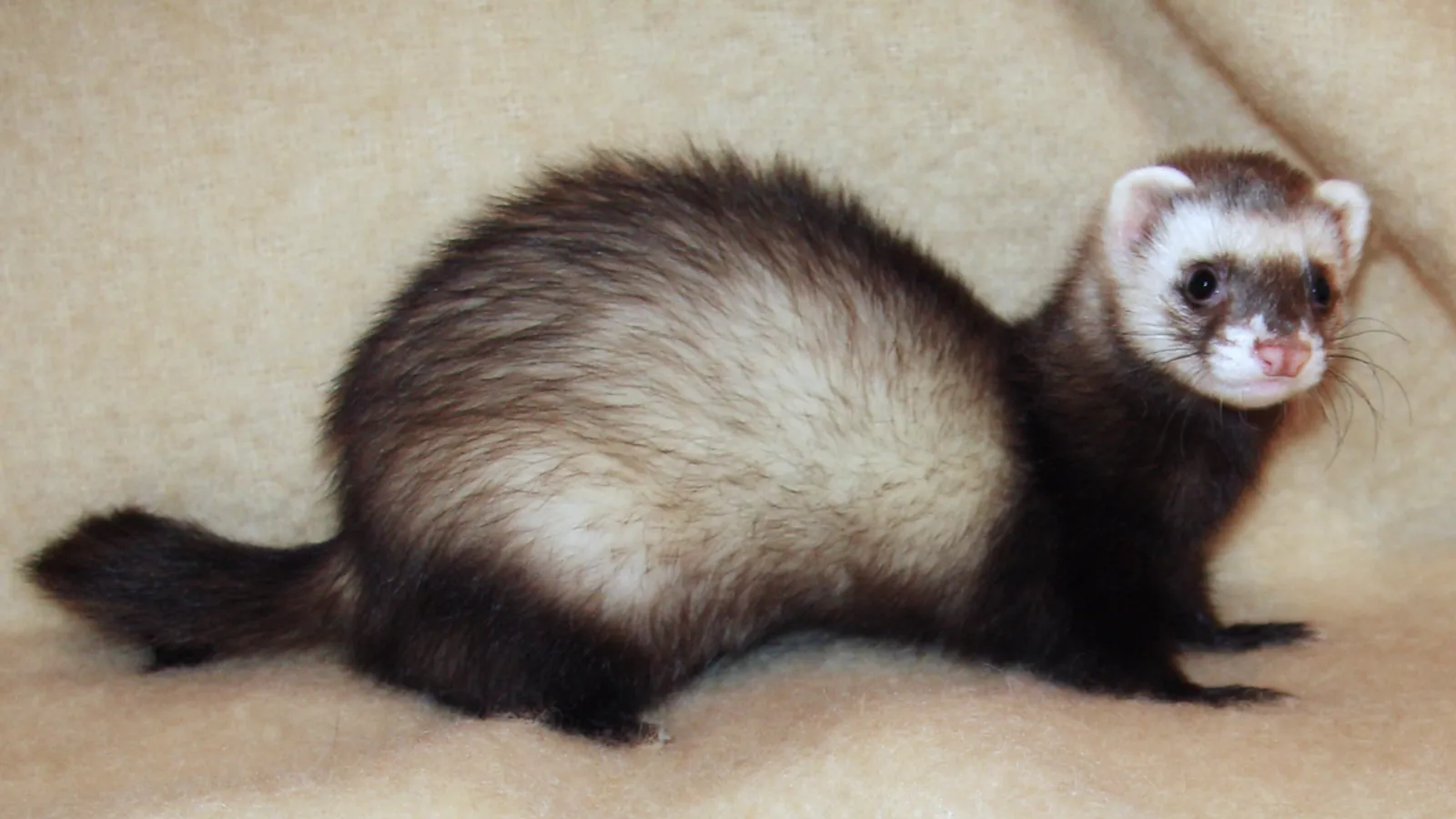
— Where the name comes from
Furo comes from the Latin fur, “thief”: the little thief, for the habit of slipping into burrows and carrying off what it finds. It is the same root as furtive. The name states exactly the trade for which we domesticated it — to be pushed into rabbit tunnels to drive them out into the hunters’ nets, work it has done for us for over two thousand years.
— Facts
- Group
- Mammals · Mammalia
- Order
- Carnivores
- Habitat
- Domestic; used for hunting in burrows and as a companion animal
- Range
- Cosmopolitan in our wake; feral populations in New Zealand
- Size
- 35–50 cm long plus 13 of tail, 0.7–2 kg
- Diet
- Strict carnivore — meat, with a gut transit of only three hours
- Lifespan
- 6–10 years
— Characteristics
- 01
The very long, supple body lets it turn round on itself inside a tunnel.
- 02
It sleeps up to eighteen hours a day, so deeply as to seem senseless.
- 03
It descends from the European polecat, probably domesticated in the ancient Mediterranean.
— What sets it apart
Its respiratory system resembles ours closely enough to have made it the animal on which influenza has been studied for nearly a century: in 1933 it was ferrets that proved human flu is caused by a virus, and since then every flu vaccine passes through them. They fall ill as we do, with fever, sneezing and a runny nose, and infect one another through the air — which mice do not. An animal bred to squeeze into burrows has become the model on which we measure pandemics.
