
Collared peccary
Pecari tajacu
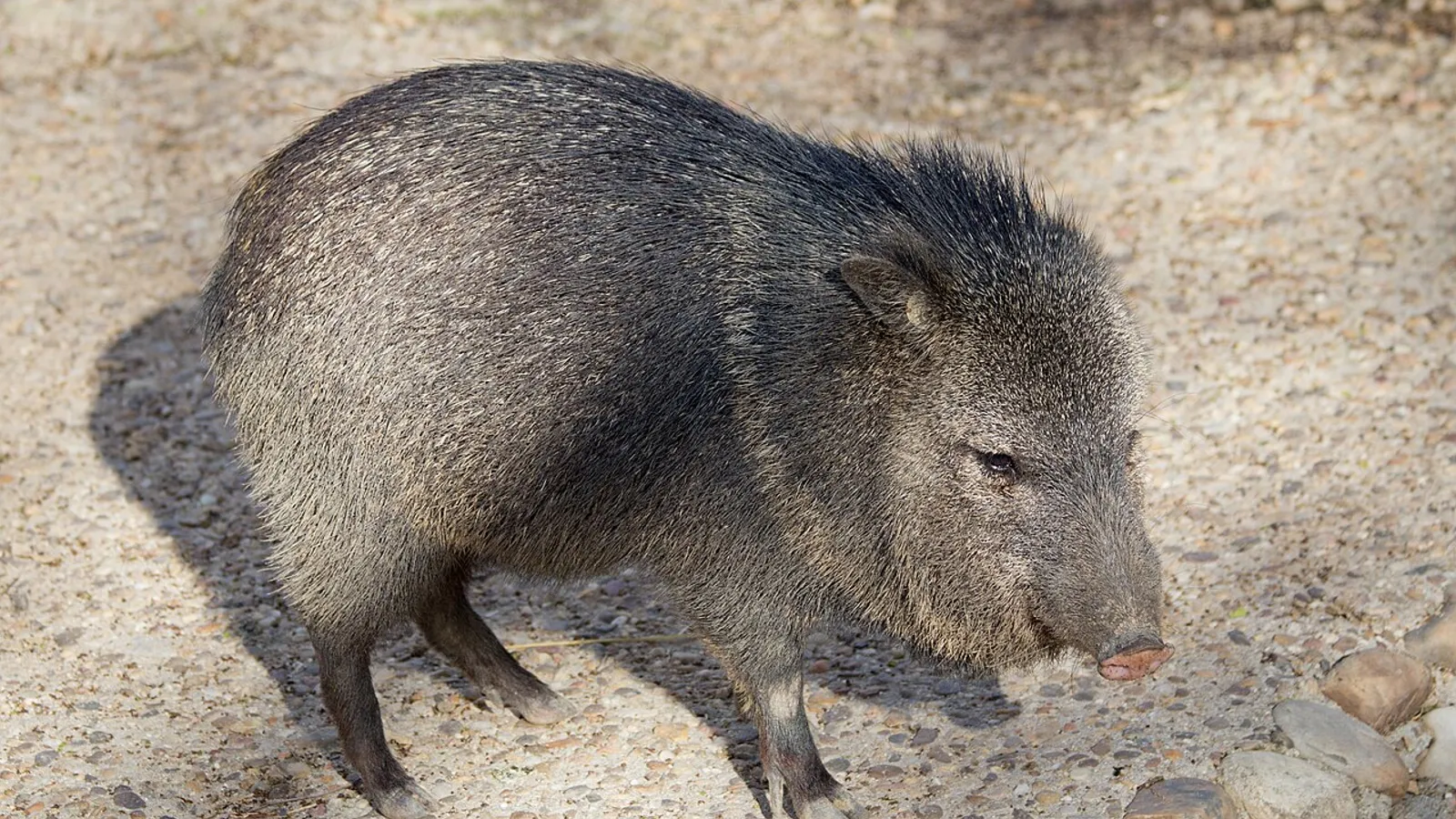
— Where the name comes from
Both genus and species come from indigenous South American languages: pecari from a Carib language and tajacu from the Tupi tajaçu. The Italian common name follows the first, and there is no trace of Greek or Latin in either. It resembles a pig but is not one: it belongs to the peccaries, an American family separated from Old World pigs for over thirty million years.
— Facts
- Group
- Mammals · Mammalia
- Order
- Even-toed ungulates
- Habitat
- Tropical forest, arid scrub, cactus desert
- Range
- From the southern United States to northern Argentina
- Size
- 90–130 cm long, 16–27 kg
- Diet
- Omnivore — roots, tubers, fruit, cactus, invertebrates
- Lifespan
- 10–20 years
— Characteristics
- 01
It has a scent gland on its back with which members of the band rub one another.
- 02
In the desert it eats prickly pears spines and all, protected by a leathery lining of the mouth.
- 03
Its canines are straight and vertical, not curved upwards as in wild boar.
— What sets it apart
The band shares a single smell, produced by rubbing against one another with the dorsal gland: whoever carries that scent belongs, whoever does not is a stranger. It is a chemical identity card, continually rewritten by every contact, and it serves an animal with poor eyesight living in very dense vegetation. The band does not recognise itself by looking — it recognises itself by smelling, and membership must be renewed every day with the body.
