
Northern lapwing
Vanellus vanellus
— Where the name comes from
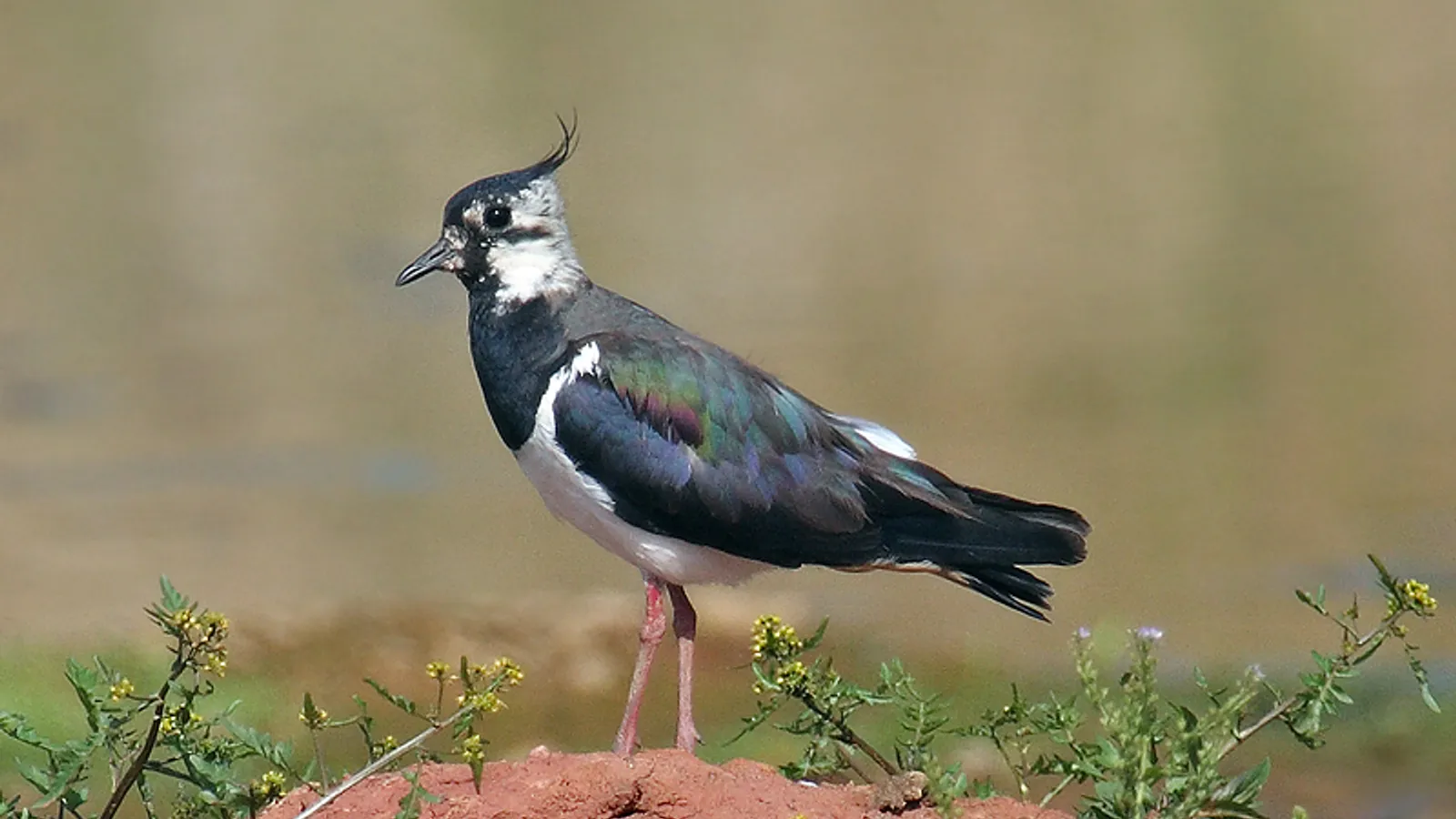
Vanellus is the diminutive of vannus, the winnowing fan used to separate grain from chaff: the flapping, noisy flight of this bird reminded farmers of that gesture. The Italian name alludes instead to the long thin crest and to the green and violet gloss of the back, which from a distance suggest a peacock in miniature.
— Facts
- Group
- Birds · Aves
- Order
- Shorebirds
- Habitat
- Damp meadows, ploughed fields, rice paddies, flooded pasture
- Range
- Europe and temperate Asia; winters around the Mediterranean and in North Africa
- Size
- 28–33 cm, wingspan 67–87 cm, 128–330 g
- Diet
- Earthworms, insects, larvae, seeds
- Lifespan
- 20 years in the wild
— Characteristics
- 01
The flight is wavering and floppy, on broad rounded wings.
- 02
It nests in a scrape on bare ground, out in the middle of the fields.
- 03
The call is a nasal wail that accompanies the flocks in winter.
— What sets it apart
When a predator nears the nest the adult limps away with one wing trailing on the ground, as though injured, and keeps up the performance until the intruder has been led far enough off; then it takes wing in perfect health. In the Netherlands the search for the season’s first lapwing egg was for centuries a village competition, and the first egg found was presented to the monarch; the custom ended when it became clear the species was collapsing. The crest that gave it its Italian name, incidentally, is longer in the males.
