Monk parakeet
Myiopsitta monachus
— Where the name comes from
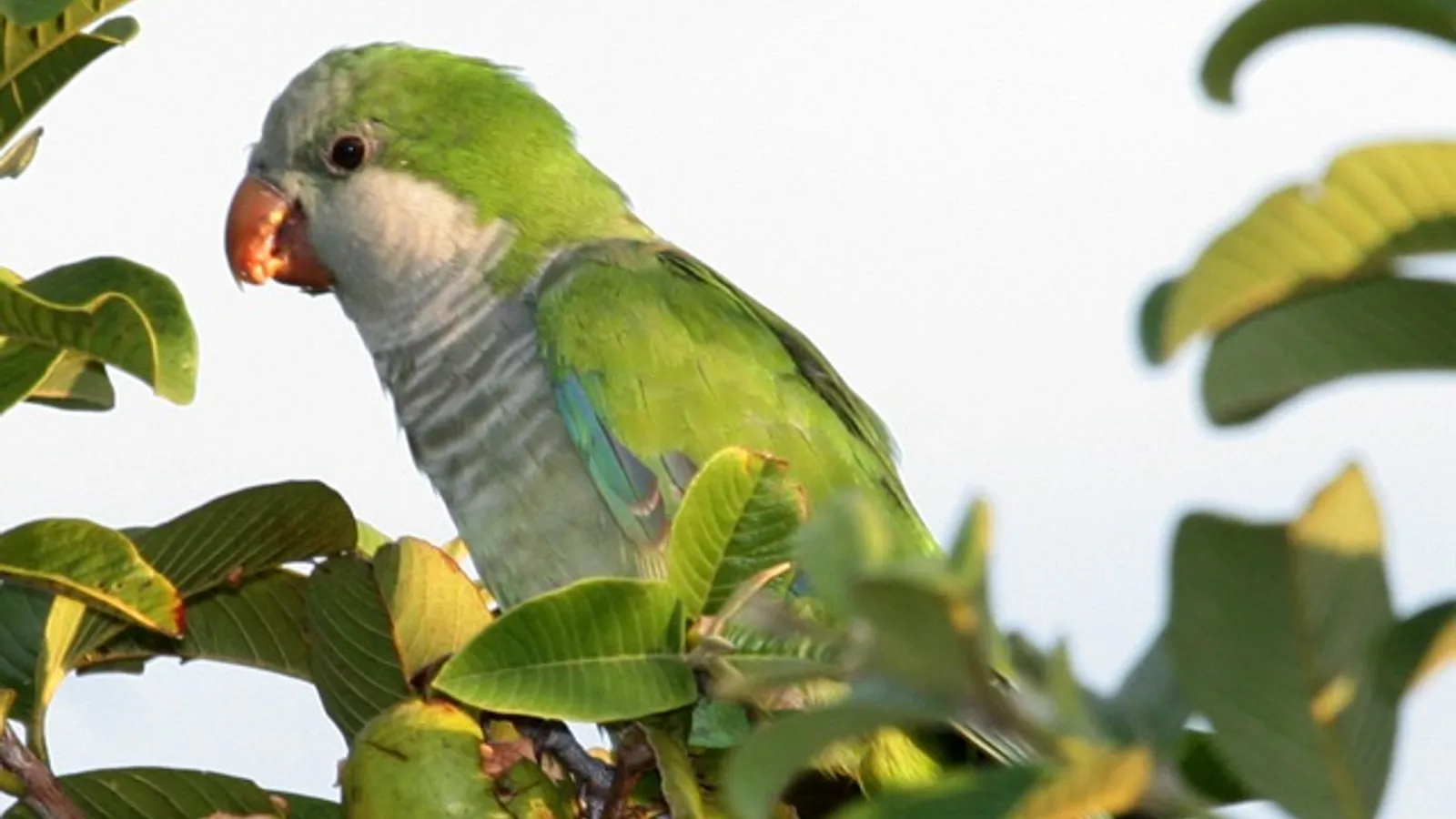
Myiopsitta joins the Greek myîa, “fly”, and psítta, parrot: literally “fly parrot”, probably for its small size next to the macaws. Monachus is the monk, for the grey forehead and breast that look like a hood above the green body.
— Facts
- Group
- Birds · Aves
- Order
- Parrots
- Habitat
- Savannah, open woodland, orchards and city parks
- Range
- Argentina, Uruguay, Paraguay, Bolivia and southern Brazil; introduced to Europe and North America
- Size
- 28–31 cm, 90–150 g
- Diet
- Seeds, fruit, buds, cultivated grain
- Lifespan
- 15–20 years, over 25 in captivity
— Characteristics
- 01
It is the only parrot that builds nests of twigs instead of using holes.
- 02
It lives in noisy colonies all year round.
- 03
It copes well with winter, which is why it has colonised cold cities.
— What sets it apart
It builds apartment blocks. Each pair weaves its own chamber of twigs next to its neighbours’, with a private entrance facing downwards, and a communal nest can grow to the size of a car and house dozens of pairs, sometimes with a floor for the year’s young. Precisely because it needs no natural cavities, birds escaped from aviaries settled easily on city pines and pylons: in Italy there are colonies in several cities, from Rome to Genoa, and in Spain Madrid and Barcelona hold thousands.