Palm cockatoo
Probosciger aterrimus
— Where the name comes from
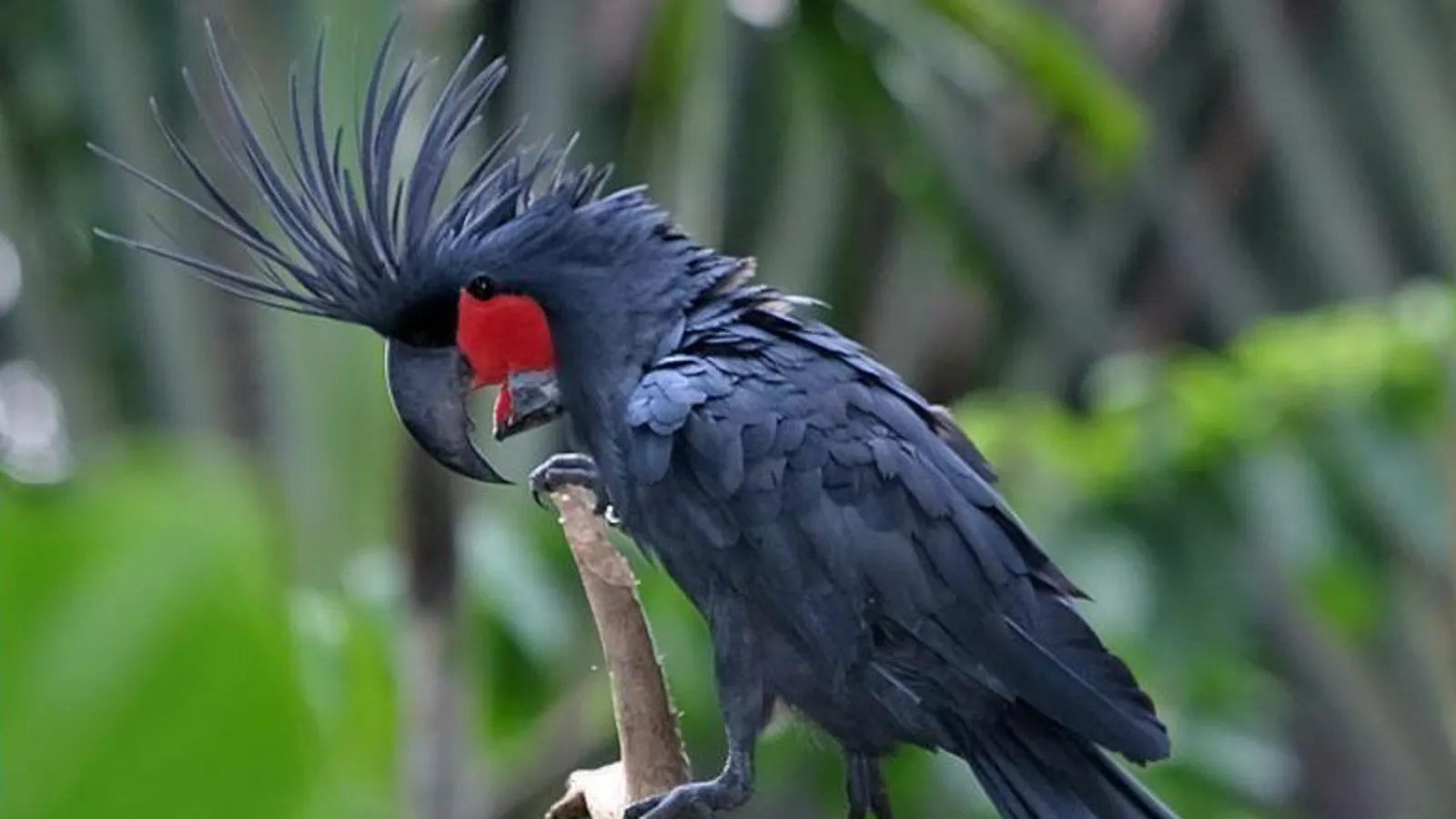
Probosciger is Latin, “bearer of a proboscis”: Kuhl chose it in 1820 for the enormous beak, outsized even for a cockatoo. Aterrimus is the superlative of ater, “black”: “blackest”. In all that black the only colour is the bare red cheeks, which flush even brighter when the bird is excited.
— Facts
- Group
- Birds · Aves
- Order
- Parrots
- Habitat
- Rainforest, open woodland and wooded savannah
- Range
- New Guinea, the Aru Islands and the Cape York Peninsula in Australia
- Size
- 55–60 cm, 0.9–1.2 kg
- Diet
- Hard seeds and nuts, pandanus and canarium fruit
- Lifespan
- Several decades; over 50 years in captivity
— Characteristics
- 01
It has the largest beak of any cockatoo.
- 02
It lays a single egg, usually every two years.
- 03
Its bare cheeks change colour with its mood.
— What sets it apart
It is a drummer. The male breaks off a stick or a seed pod, trims and shapes it with his beak, then grips it in one foot and beats it rhythmically against the hollow trunk where he nests. A 2017 study recorded hundreds of performances and found that each male has his own recognisable, regular rhythm, with beats at steady intervals: it is one of the very few known cases, outside our own species, of a tool made on purpose to beat out a rhythm.