
Kākāpō
Strigops habroptila
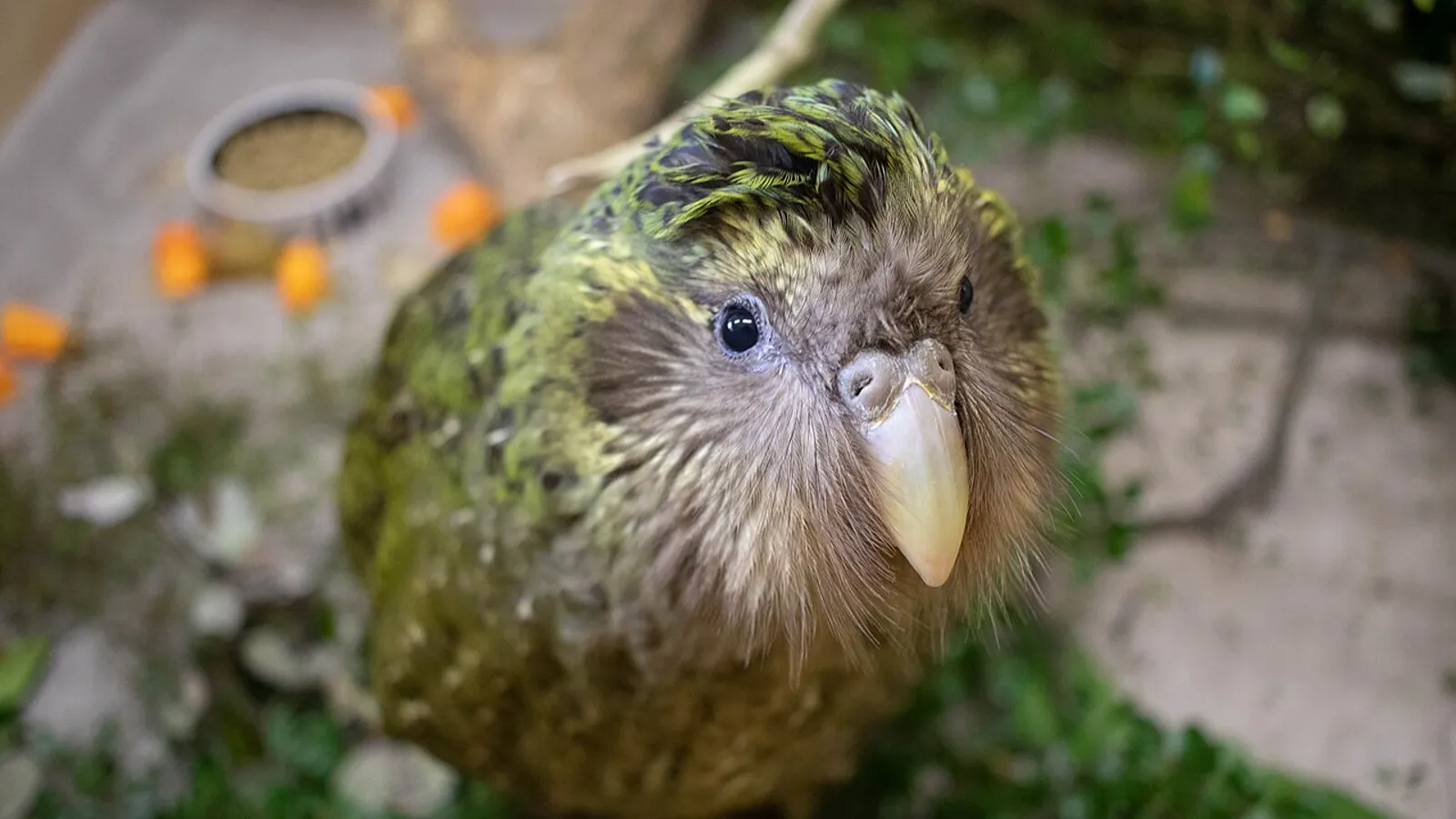
— Where the name comes from
Strigops is “owl-face”, from strix and ōps, for the disc of stiff feathers around the eyes; habroptila comes from habrós, “delicate”, and ptílon, the feather. Kākāpō in Māori means “night parrot”. Every part of the name describes a parrot that has stopped behaving like one: nocturnal, flightless, soft as a stuffed toy.
— Facts
- Group
- Birds · Aves
- Order
- Parrots
- Habitat
- Forest on islands free of introduced predators
- Range
- New Zealand: the few islands it has been moved to
- Size
- 58–64 cm, 0.9–4 kg
- Diet
- Leaves, seeds, fruit, bark, rhizomes
- Lifespan
- estimated up to 90 years
— Characteristics
- 01
It is the heaviest parrot in the world and cannot fly: it climbs.
- 02
It gives off a sweet honeyish smell, which introduced predators follow.
- 03
It breeds only in years when the rimu fruits, every two to four years.
— What sets it apart
The male digs a bowl in the ground, settles into it and produces a very low boom that travels for kilometres: the hollow works as a resonating chamber, and he uses it for twenty hours a night, for months, losing half his weight. The trouble is that a sound that deep is nearly impossible to locate, and the females have to search a long time. Today there are little more than two hundred left, each with a name, a transmitter and a medical file: it is probably the most closely watched animal population on the planet.
