
Grey parrot
Psittacus erithacus
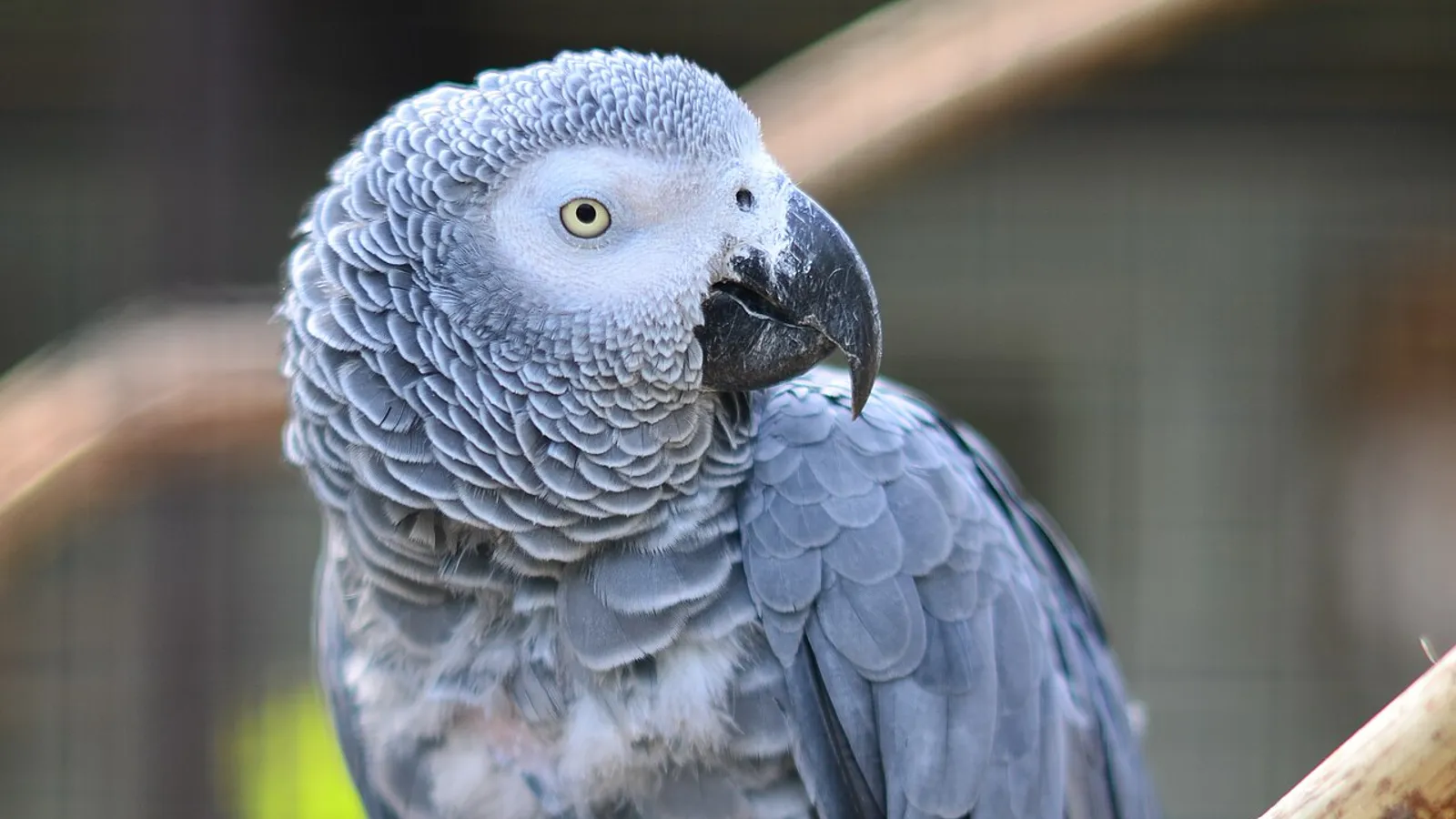
— Where the name comes from
Psittacus is the Greek and Latin word for parrot, which reached Europe from the East along with the first birds brought back from Alexander’s campaigns; erithacus was the name of a different bird in Aristotle, reused by Linnaeus without much care. The grey of the plumage, unbroken as far as the tail, which is red and sudden, gave it its Italian name.
— Facts
- Group
- Birds · Aves
- Order
- Parrots
- Habitat
- Primary rainforest, gallery forest, edges, oil palm groves
- Range
- Central and West Africa, from Côte d’Ivoire to Uganda
- Size
- 30–33 cm, 400–490 g
- Diet
- Seeds, palm nuts, fruit, bark
- Lifespan
- 50 years in captivity
— Characteristics
- 01
It imitates the human voice with an accuracy no other animal reaches.
- 02
It lives in noisy flocks that sleep in traditional roosting trees.
- 03
Pairs stay together for decades.
— What sets it apart
One bird of this species, called Alex, worked for thirty years with the researcher Irene Pepperberg and learned to name over a hundred objects, to count to six, to answer questions about the colour and material of things he had never seen before, and to use the concept of “none” for zero — something children master at around four. His last words, the evening before he died, were the ones he said every evening: “You be good, I love you, see you tomorrow.”
