
Budgerigar
Melopsittacus undulatus
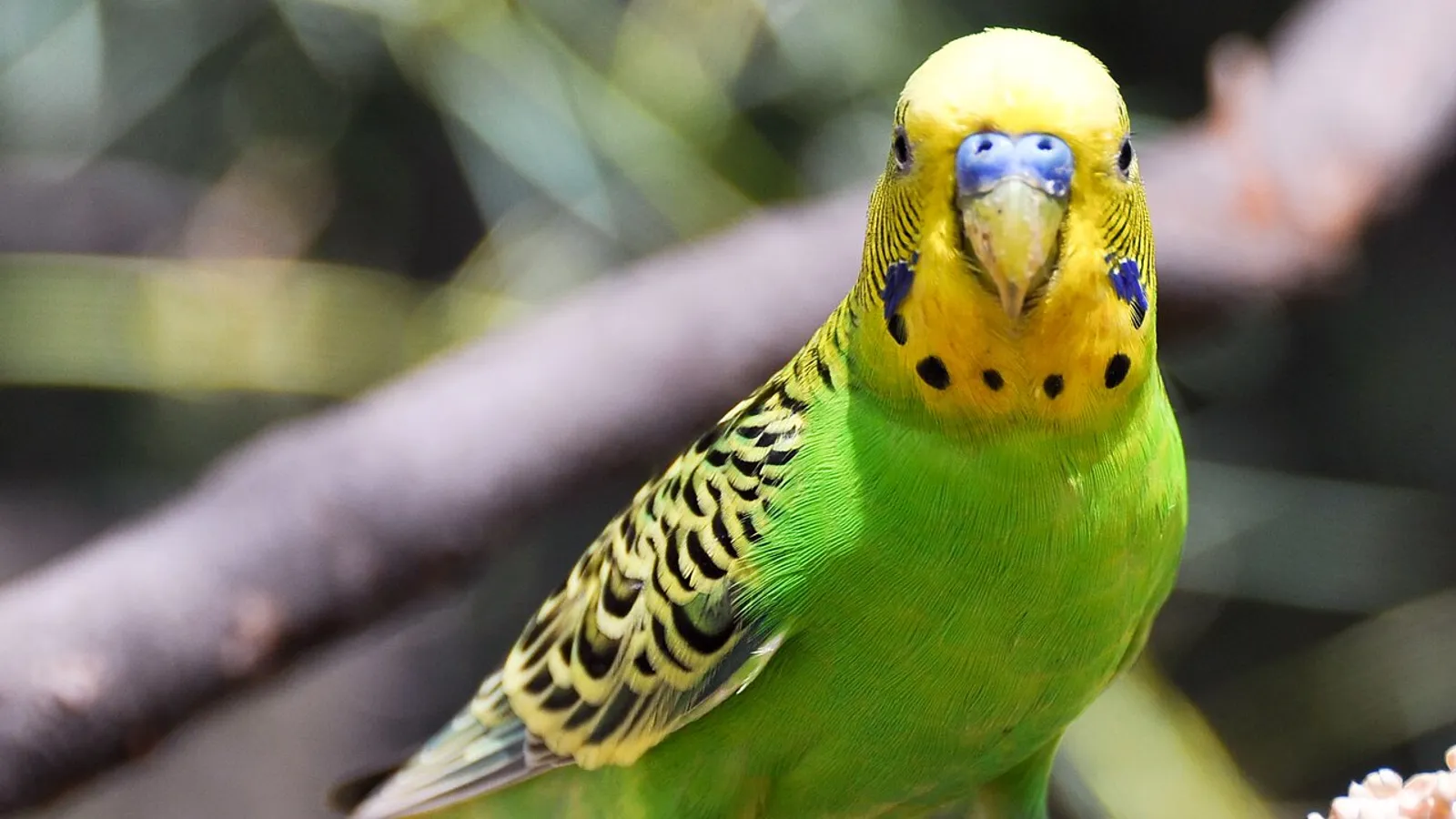
— Where the name comes from
Melopsittacus is “song parrot”, from mélos, the melody; undulatus describes the fine black barring that ripples across its back and nape. The English name, budgerigar, comes from an Australian Aboriginal language and the most repeated gloss is that it means “good food”, though the sources disagree. It is the most numerous parrot in the world and the commonest in people’s houses.
— Facts
- Group
- Birds · Aves
- Order
- Parrots
- Habitat
- Arid scrub, savannah and steppe of the Australian interior
- Range
- Mainland Australia
- Size
- 18 cm, 30–40 g
- Diet
- Seeds of wild grasses
- Lifespan
- 8 years in captivity
— Characteristics
- 01
In the wild it is green and yellow: blues, whites and pure yellows are bred varieties.
- 02
It forms nomadic flocks that may number tens of thousands.
- 03
It nests as soon as it rains, wherever it finds a hole in a eucalypt.
— What sets it apart
The yellow feathers of the head are fluorescent: they absorb ultraviolet and give it back as visible light, which we do not notice and budgerigars do, because their eyes see ultraviolet. In an experiment where the fluorescence was switched off with a transparent sunscreen, the treated birds abruptly became less attractive to partners. There is therefore a sexual signal, switched on in every budgerigar kept in a cage since the 1940s, that no owner has ever seen.
