
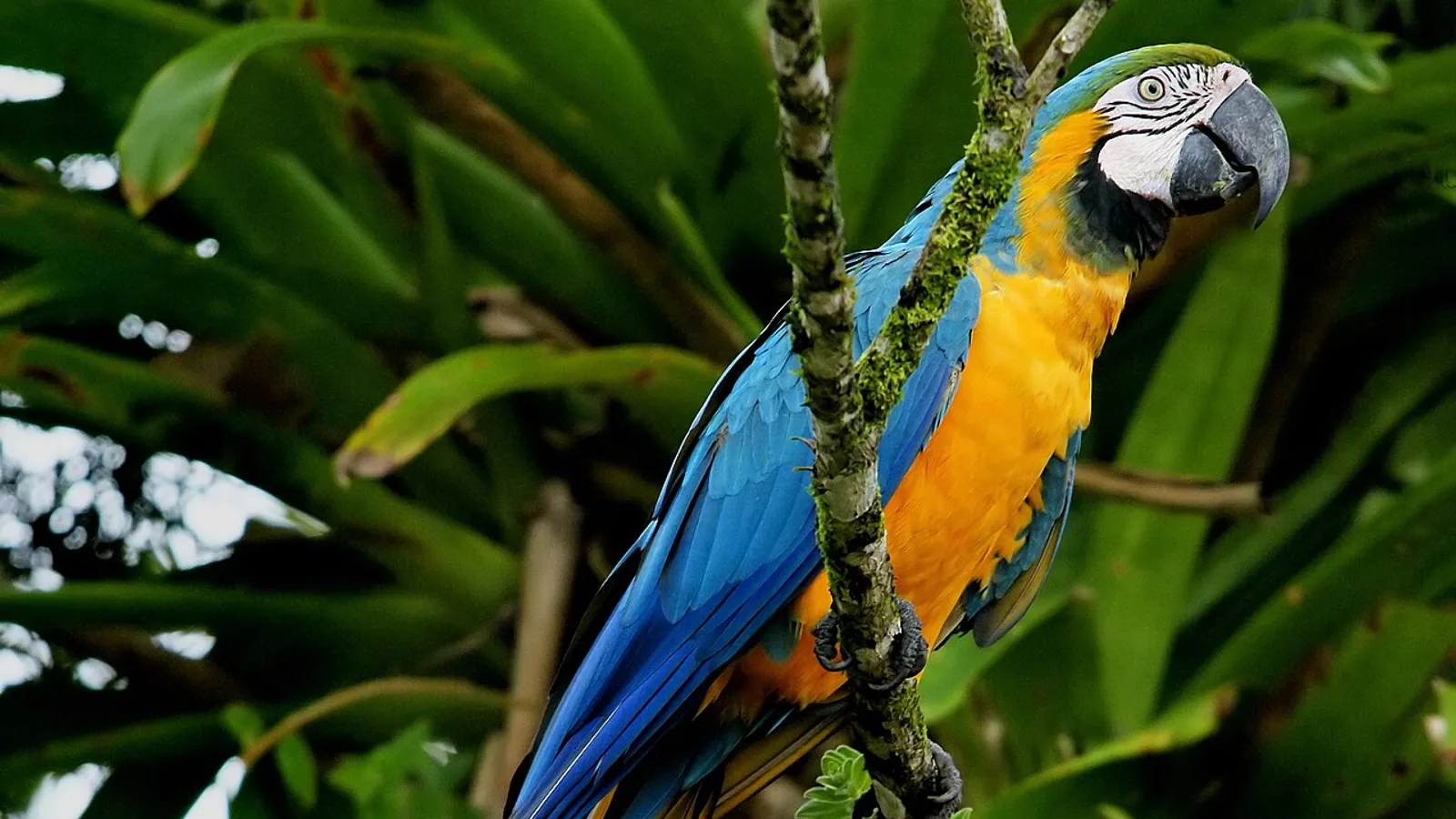
Blue-and-yellow macaw
Ara ararauna
— Where the name comes from
Ara reproduces the bird’s cry in the Tupi language of Brazil, and it is one of the American words Europe adopted without changing a letter. Ararauna is still Tupi and means “dark macaw”, which is curious for a blue and yellow bird: it probably referred to the dark parts of the wings or to a different specimen, and Linnaeus took the name down as it was given to him.
— Facts
- Group
- Birds · Aves
- Order
- Parrots
- Habitat
- Flooded forest, palm groves, wooded savannah, river margins
- Range
- From Panama to Brazil, Bolivia and Paraguay
- Size
- 76–86 cm, 0.9–1.3 kg
- Diet
- Seeds, nuts, fruit, palm fruit
- Lifespan
- 35 years in the wild, over 50 in captivity
— Characteristics
- 01
The bill cracks nuts a man would open only with a hammer.
- 02
The face is bare and crossed by lines of black feathers, different in each bird.
- 03
It flies in pairs for life, wing to wing.
— What sets it apart
At certain spots in western Amazonia hundreds of macaws and parrots gather every morning on the same clay banks and eat them. For years it was thought the clay neutralised the poisons of unripe seeds; analysis then showed that the favoured banks are not the most absorbent ones but the richest in sodium, which in the middle of the continent, immensely far from the sea, is the hardest substance to come by. The parrots do not go there for medicine: they go for salt.
