
Common swift
Apus apus
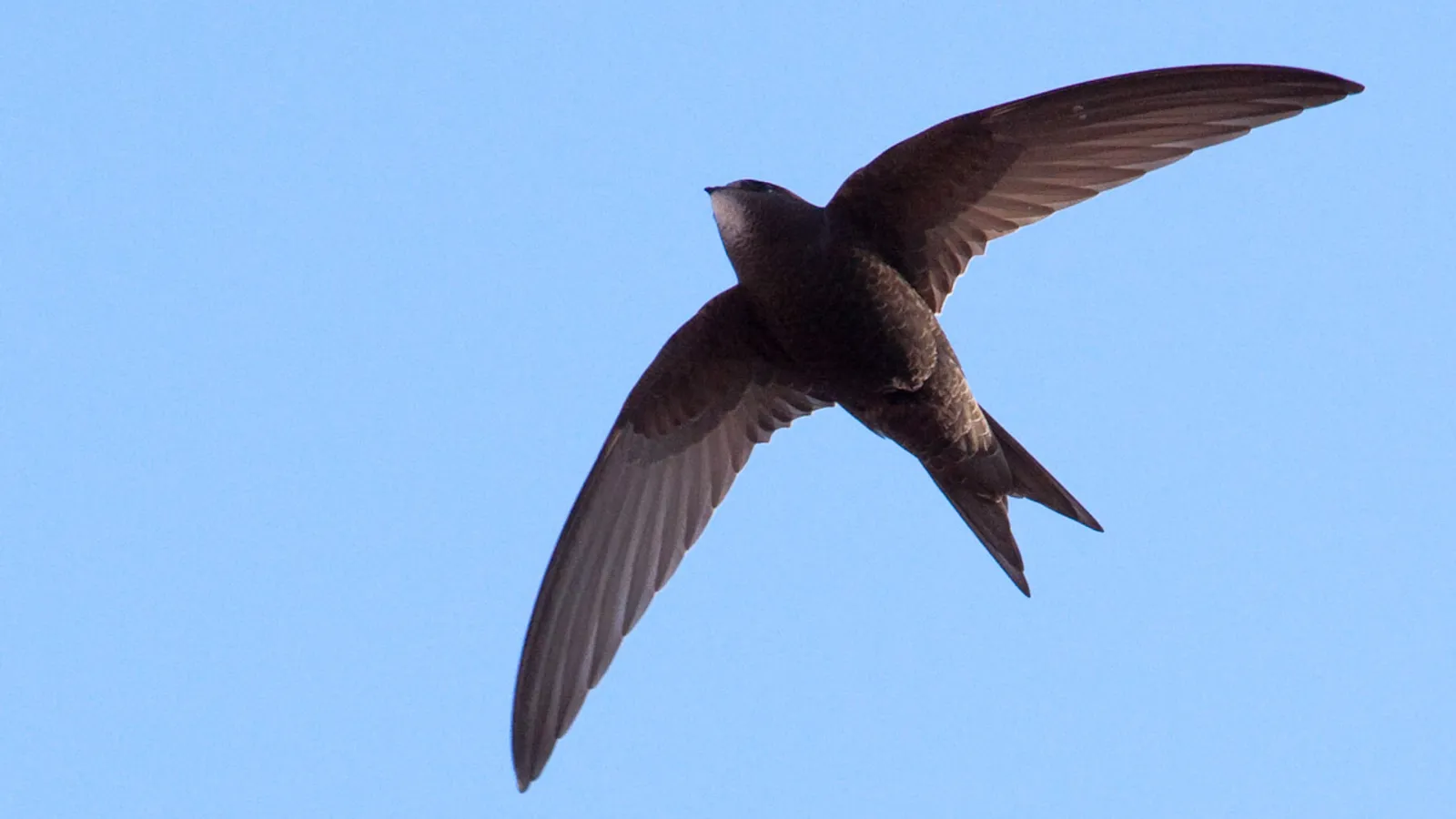
— Where the name comes from
Apus means “footless”, from the privative a- and poús: nobody ever saw these birds perched, and it was concluded that they had no legs. The misconception ended up in medieval heraldry, where the martlet — the little bird without feet on coats of arms — is born of the same belief. The feet are there, tiny and with all four toes pointing forward, and serve only to cling to vertical walls.
— Facts
- Group
- Birds · Aves
- Order
- Hummingbirds and swifts
- Habitat
- Open sky over towns and countryside; nests under roofs
- Range
- Europe, North Africa, Asia; winters in sub-Saharan Africa
- Size
- 16–17 cm, wingspan 38–40 cm, 31–56 g
- Diet
- Insects and spiders carried on the air currents, taken in flight
- Lifespan
- 21 years in the wild
— Characteristics
- 01
It eats, drinks, mates and sleeps on the wing.
- 02
The screaming parties tearing between buildings are the sound of June evenings.
- 03
Grounded, it struggles to take off: its wings are too long and its legs too short.
— What sets it apart
Fitting adults with accelerometers has measured how long their flights last: up to ten consecutive months without once settling, from departure in August to the return the following spring. The young do worse — they leave the nest and touch nothing for two or three years, until they come back to breed themselves. That means a ten-year-old swift has covered a distance in the order of millions of kilometres, and that the first solid thing it touches after the nest is, nearly always, the wall where it will build its own.
