
Red panda
Ailurus fulgens
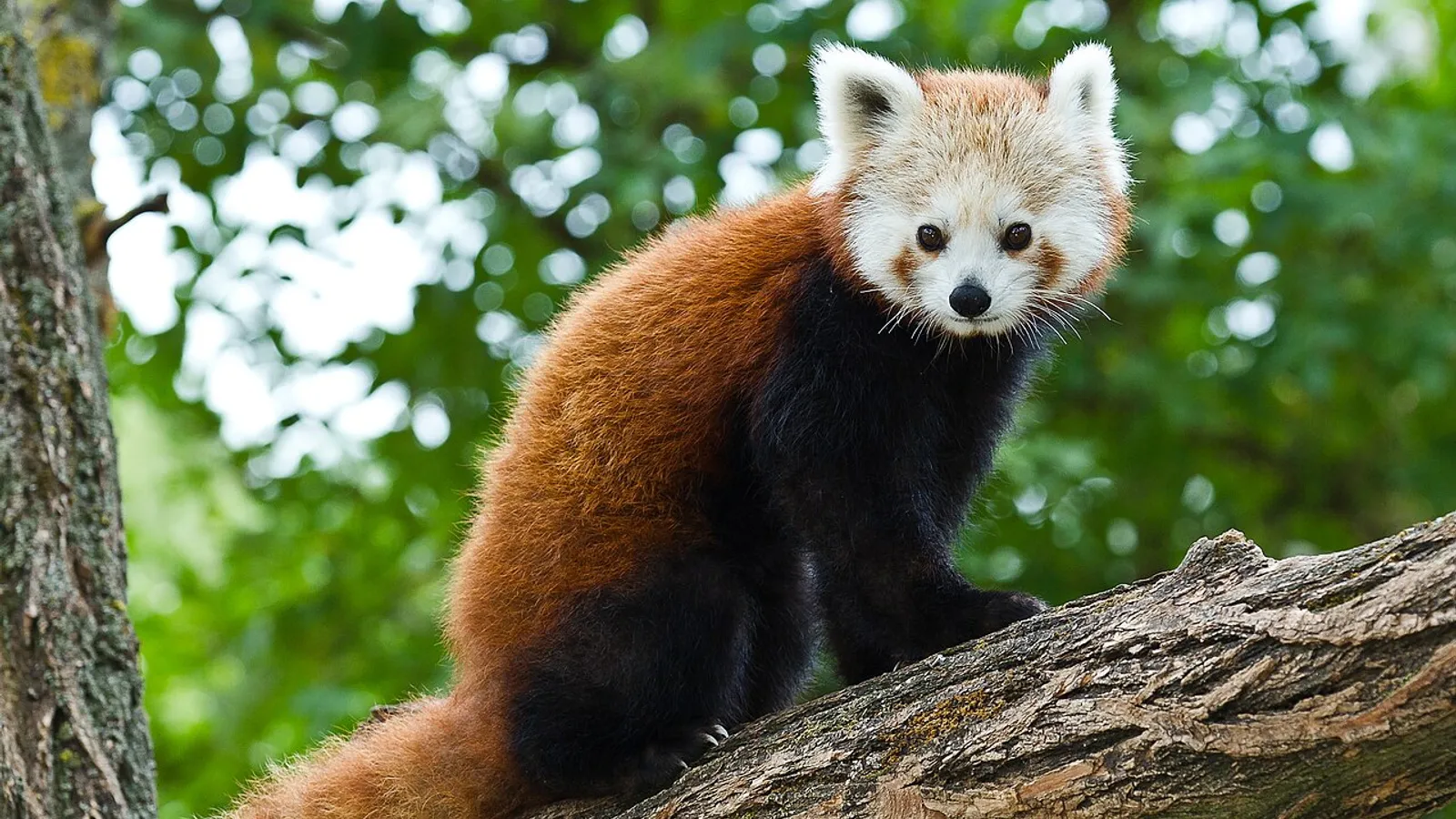
— Where the name comes from
Ailurus is Greek for “cat”; fulgens is Latin for “shining”, from the coppery coat. “Panda” probably comes from the Nepali nigalya ponya, “bamboo eater”: and it was this animal, not the giant one, that carried the name first. The giant panda only borrowed it later, when it was thought to be a relative.
— Facts
- Group
- Mammals · Mammalia
- Order
- Carnivores
- Habitat
- Temperate mountain forest with dense bamboo understorey, 2,200–4,800 m
- Range
- The eastern Himalaya and south-western China
- Size
- 50–65 cm of body, 3–6 kg, with a tail almost as long again
- Diet
- An almost exclusive bamboo eater, with the odd fruit and egg
- Lifespan
- 8–14 years
— Characteristics
- 01
It has a “false thumb”, a widened wrist bone, for gripping bamboo stems.
- 02
It is not related to the giant panda: it is the only living member of its family, the Ailuridae.
- 03
The ringed tail serves as a blanket and as a balance among the branches.
— What sets it apart
The red panda and the giant panda evolved the same extra thumb — a wrist bone turned into a finger — despite being distant relatives, one a failed raccoon, the other a bear. Both eat bamboo, and both had to invent a hand to hold it. It is one of the finest examples of convergent evolution among mammals: two identical answers to one problem, arrived at entirely separately.
