
Caribbean hermit crab
Coenobita clypeatus
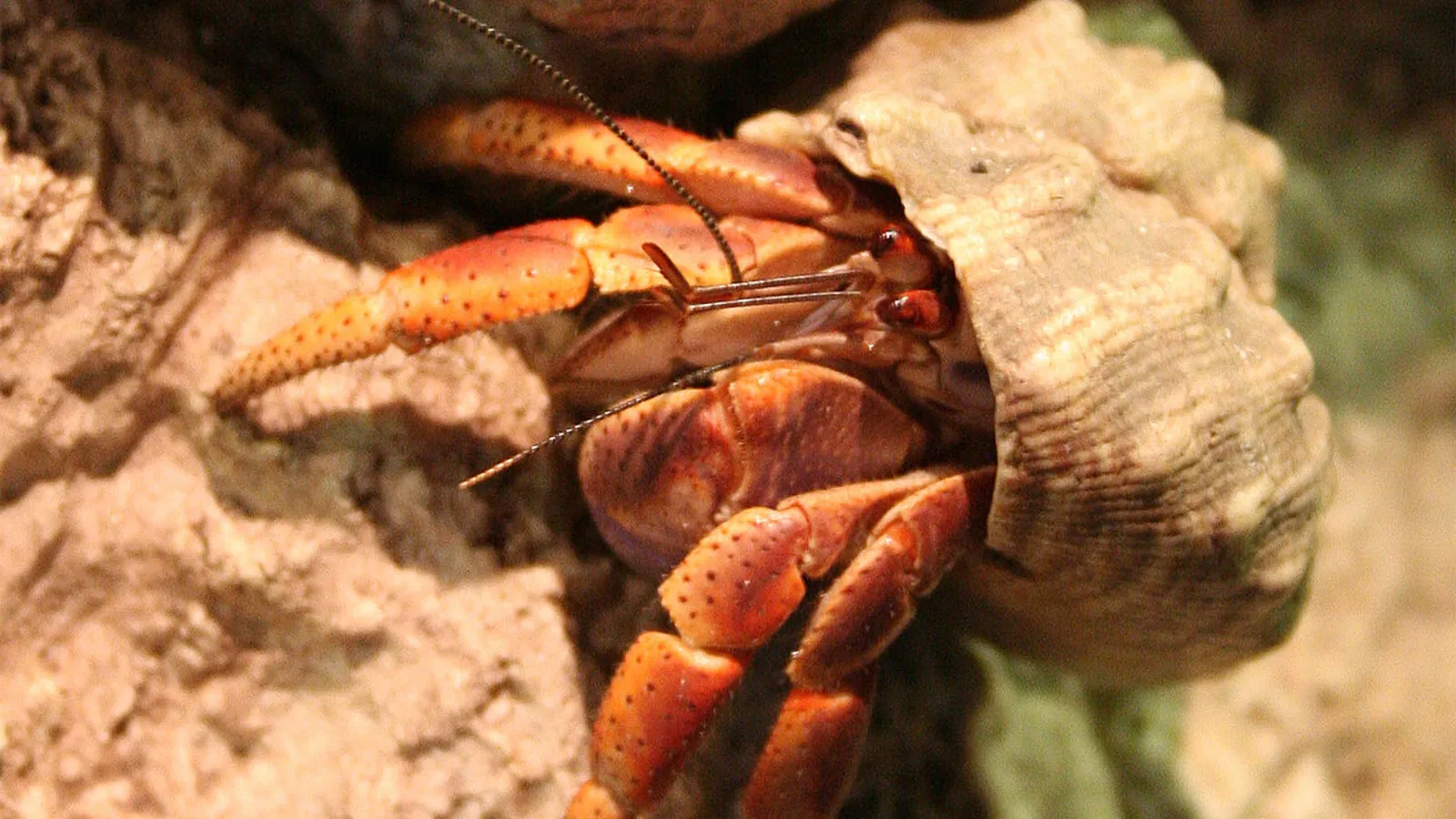
— Where the name comes from
Coenobita is the cenobite, the monk who lives in community, from the Greek koinóbios, “living together”: it joins the image of the hermit to that of group life, and it is accurate, because these hermit crabs gather by the dozen. Clypeatus is Latin, “armed with a shield”, for the large left claw with which the animal plugs the shell’s mouth once it has withdrawn. A monk with a shield across the door.
— Facts
- Group
- Crustaceans · Malacostraca · Maxillopoda
- Order
- Crabs, lobsters and shrimps
- Habitat
- Coastal scrub and tropical beaches; returns to the sea only to spawn
- Range
- The Caribbean, from Florida to Venezuela
- Size
- Up to 12 cm
- Diet
- Fallen fruit, leaves, carrion, dung
- Lifespan
- Over 30 years
— Characteristics
- 01
It lives on land but breathes through gills kept damp inside the shell.
- 02
It must return to the sea to release its larvae, which are aquatic.
- 03
It recognises the smell of a dead neighbour and comes running: a shell is free.
— What sets it apart
It has learned to read an obituary. The smell a dead hermit crab releases into water or air draws the others within minutes, and it is not cannibalism: it is the news that a house has come vacant. From there follow the queue by size, the exchanges and sometimes the eviction of a neighbour judged too small for the shell it occupies. The catch is that a suitable shell is a finite resource, and on islands where shells are collected for souvenirs the population falls: hermit crabs are found living in plastic caps and bottle fragments, because nothing else is left.
