
Bat-eared fox
Otocyon megalotis
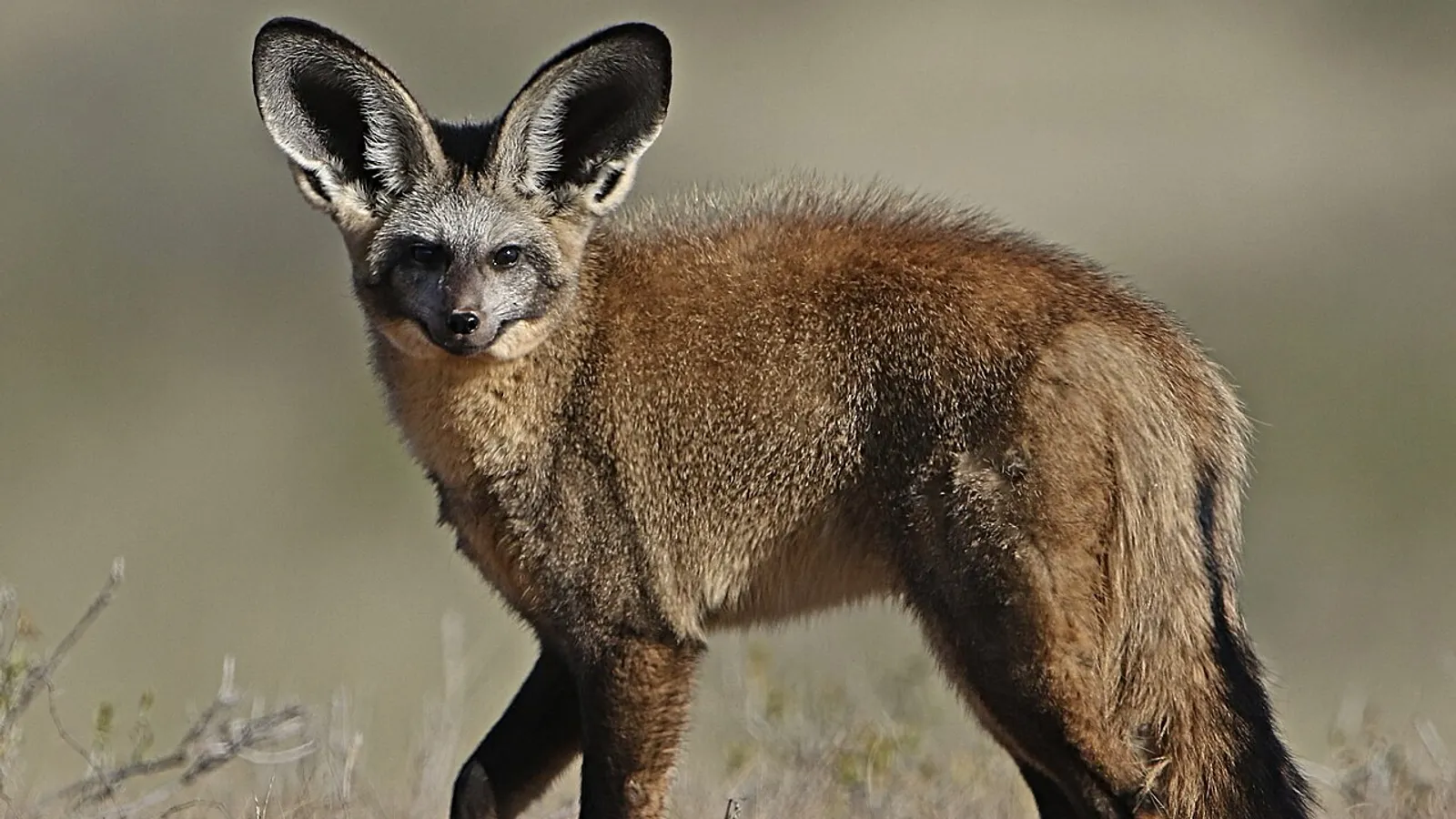
— Where the name comes from
The name is a Greek doubling that leaves no doubt: Otocyon is “ear-dog”, from oûs, ōtós, and kýōn; megalotis is “large-eared”, from mégas and oûs again. Said twice in two ways, as though the naturalist feared he had not been clear. In English it is the bat-eared fox.
— Facts
- Group
- Mammals · Mammalia
- Order
- Carnivores
- Habitat
- Arid short-grass savannah, grazed grassland, semi-desert
- Range
- Eastern and southern Africa, in two separate populations
- Size
- 46–66 cm long, 3–5.3 kg
- Diet
- Insectivore — harvester termites for eighty per cent of the diet
- Lifespan
- 9–13 years
— Characteristics
- 01
It has up to fifty teeth, more than any other canid, but small ones suited to grinding insects.
- 02
Beneath the jaw it has a bony ridge anchoring a muscle able to chew at very high speed.
- 03
It locates termites underground by hearing them move, and digs exactly above the gallery.
— What sets it apart
It follows the herds of zebra and wildebeest, but not for their leavings: for their dung, where harvester termites gather. Where the big grazers feed the grass stays short and the termites are plentiful, and the bat-eared fox comes along behind them like a gleaner behind a reaper. It is a carnivore that has given up hunting vertebrates and built its whole existence on an insect and on a chain of events that begins with a zebra’s mouth.
